The Ink and Integrity of Iron Man
Peary Rader's Gift to Physical Culture
There are figures in the Iron Game whose influence spreads far beyond the competitive stage — people whose greatest contribution was not a title won or a weight lifted, but a magazine published, a letter answered, a struggling hardgainer encouraged. Peary Rader was one of those figures. For nearly five decades, he and his wife Mabel built Iron Man into something that reached lifters in living rooms and basements across the world — not because it was glamorous, but because it was honest.
In this latest piece from The Robert Sparkman Archive, Robert brings Peary and Mabel's story to life with the kind of personal authority that only a lifelong student of the Iron Game can bring to it. He was there. He subscribed from 1969. He looked forward to every issue arriving in the mailbox the way a young lifter looks forward to almost nothing else. That memory — vivid, specific, earned — runs through every paragraph of what follows.
What makes this piece exceptional is what Robert has built around his own recollections. Through the generosity and historical knowledge of Wayne Gallasch — who visited Peary and Mabel in Alliance, Nebraska, in July 1983 and had the foresight to bring his camera — we have something rare: a firsthand account of the people and working facilities behind Iron Man Industries. The photographs Wayne preserved that day are reproduced here with his kind permission, and they transform this tribute into a genuine historical document.
Peary Rader passed away on November 24, 1991. We publish this piece on the anniversary of his passing, as Robert suggested — and as feels entirely right.
A Legacy Built with Ink and Iron
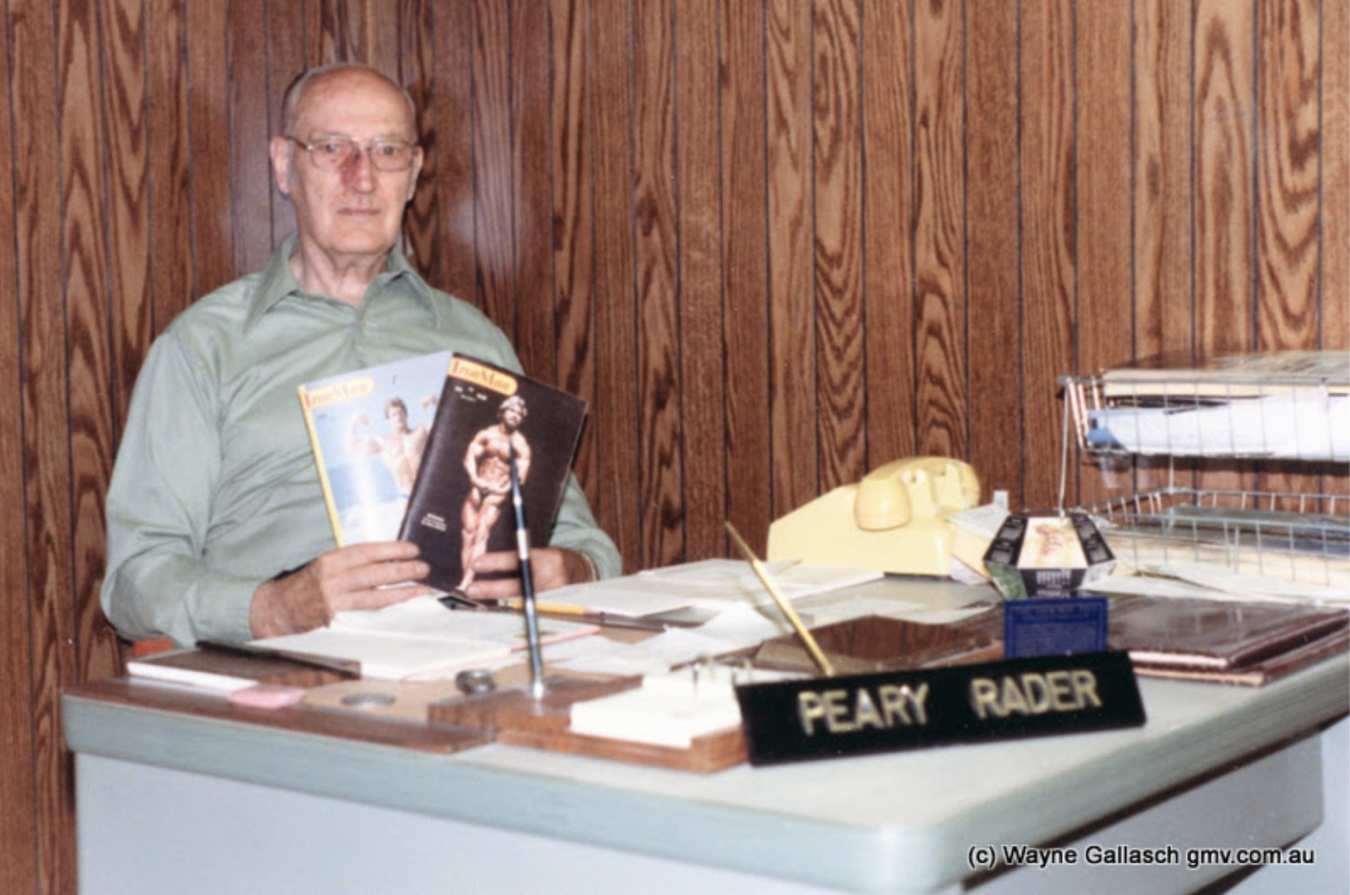
Photograph © Wayne Gallasch / GMV
In the grand history of physical culture, some men became famous beneath the bright lights of the competitive stage. Others made their most enduring contributions quietly, through the written word. Peary Rader was one of those remarkable individuals.
From Alliance, Nebraska, Peary and his wife, Mabel, built Iron Man magazine into a publication that would influence generations of bodybuilders, weightlifters, and everyday men and women who simply wanted to become stronger and healthier. The magazine began modestly in 1936, but its influence would extend far beyond the place where it was produced.
Peary believed that the Iron Game was about much more than developing an impressive physique. It was also about health, discipline, personal growth, and the lifelong pursuit of improvement. That philosophy resonated deeply with me — and it still does.
From a Struggling Hardgainer to a Teacher
Peary knew firsthand what it meant to struggle with physical development. As a young man, he was exceptionally thin and found that much of the conventional training advice he encountered did little to help him gain size and strength.
Through experimentation and persistent effort, he became an enthusiastic advocate of demanding, progressive training built around the basic barbell exercises — particularly the famous high-repetition breathing squat. His personal experience helped shape the practical advice he later shared with his readers.
What I admire most is that he never treated physical culture as a mysterious secret reserved for a fortunate few. He wanted ordinary people to discover that patient, intelligent effort could change their lives.
The Mailbox and the Magic of Iron Man
My admiration for Peary Rader is not based solely on what I have learned about his extraordinary life. It is also rooted in my own memories.
Beginning in 1969 and continuing into the early 1980s, I subscribed to Iron Man magazine. Over those years I accumulated approximately seventy-five to eighty issues. And oh, how I looked forward to every single one!
Every other month, I would anticipate the arrival of the next issue. Discovering another Iron Man gem in the mailbox was often the highlight of my week. I would eagerly open it and devour the articles, absorbing everything I could about training, nutrition, strength, and the remarkable people who inhabited the Iron Game.
Those magazines were more than reading material. They were part of my education as a young lifter. They made a much larger world of physical culture feel close enough to reach out and touch.
To me, it was, and remains, the finest physical-culture and Iron Game magazine ever published — bar none!
I may no longer possess those seventy-five or eighty treasured issues of Iron Man, but I still carry something far more enduring: the knowledge they imparted, the inspiration they awakened, and the memories they helped create. The magazines are gone. Their influence remains. And more than half a century later, the torch still burns.
"Discovering another Iron Man gem in the mailbox was often the highlight of my week."
The Words, the Photographs, and the People Behind Them
I have always believed that so much of what I accomplished throughout my training journey can be attributed to the extraordinary lifters who came before me, along with remarkable individuals like Peary Rader, whose Iron Man magazine played such an important role in shaping my understanding and appreciation of physical culture.
Peary, Mabel, and so many dedicated writers, publishers, photographers, and pioneers of the Iron Game generously shared their knowledge, experiences, wisdom, and remarkable photographs, inspiring countless young lifters like myself to pursue something greater.
Those images were every bit as inspirational to me as the words accompanying them. The written word informed me. The photographs inspired me. Together, they helped shape the Iron Warrior I became.
Their dedication, discipline, determination, and accomplishments motivated me to become the best version of myself I could be — not merely physically, but in body, mind, and spirit.
More than fifty-seven years after I first picked up a barbell, that inspiration remains very much alive. The magazines may have aged, the photographs may have faded, and many of those extraordinary individuals are no longer with us. But the lessons they imparted, the examples they set, and the spirit they awakened continue to accompany me every time I step into my training sanctuary.
Squats, Milk, and the Honesty of Hard Work
One of Peary's best-known training approaches was the classic weight-gaining system commonly called "Squats and Milk." I followed versions of that demanding routine off and on during those years.
Twenty-repetition breathing squats formed the heart of the program, supported by pullovers and basic upper-body compound exercises such as bench presses and barbell rows. The traditional approach also emphasized substantial food intake, sometimes including very large quantities of whole milk.
There was nothing fancy about it. A barbell. A few fundamental exercises. Progressive effort. Plenty of nourishment. And the willingness to keep working when the final repetitions became extraordinarily demanding.
Those twenty-repetition sets were not for the faint of heart! They demanded concentration, determination, and a willingness to endure serious discomfort. The satisfaction of completing one was something I never forgot.
I do not believe every person needs to drink a gallon of milk or attempt brutally hard breathing squats. Individual circumstances, health, and recovery always matter. But the central lesson remains timeless: meaningful progress does not require an endless collection of complicated routines. It requires consistency, sensible progression, and honest effort.
A Magazine That Opened So Many Doors
Another of Peary's greatest gifts was his willingness to introduce readers to a wide range of voices and training philosophies.
It was through Iron Man that I discovered the writings and teachings of Bradley J. Steiner, whose emphasis on the fundamentals and hard-working, progressive strength training would become an important part of my own Iron Game education.
If my memory serves me correctly, the magazine also introduced me to Ernest F. Cottrell, author of The Bodybuilder's Cookbook, and to Arthur Jones and his revolutionary Nautilus exercise machines. Each offered ideas worth examining, even when their approaches differed.
As I revisit those years, still more names come flooding back: Anthony Ditillo, Paul Anderson, Reg Park, Bob Peoples, Clarence Bass, Dr. Terry Todd, Bruce Page, Wayne Gallasch, and others. Some wrote for Iron Man; others appeared in its pages or were part of the larger community it chronicled. I am still checking which names I personally encountered there, and when.
That distinction is important to me. Memories can blur after more than fifty years. But one thing is beyond doubt: Peary's magazine encouraged me to read, question, experiment, and think for myself.
He did not simply give me training information. He helped introduce me to teachers whose lessons stayed with me long after the magazines were put away.
Mabel Rader: A Partner in the Legacy
No tribute to Peary Rader would be complete without recognizing his wife, Mabel.
The history of Iron Man is also the history of a husband and wife working together to build and sustain something they believed in. Mabel's contributions to the magazine's demanding daily operations helped make Peary's vision a reality. Wayne recalled that Mabel supervised the main office, while their son Gene oversaw printing. Gene and Janice Rader were also part of this family enterprise. The magazine was not merely the work of a single individual; it reflected the daily efforts, cooperation, and dedication of the Rader family.
I find that partnership especially meaningful. Behind the magazine that brought so much knowledge and encouragement into homes across the country were two people who devoted an extraordinary portion of their lives to serving the Iron Game.
Their partnership was practical as well as personal. As historian Terry Todd documented in 1992, when the Raders established their magazine headquarters in an old barracks at 512 Black Hills Avenue, they helped build the basement themselves: Peary laid concrete blocks while Mabel mixed the cement. The space eventually served as a gym, magazine office, and print shop. I cannot imagine a more fitting illustration of the work, determination, and shared purpose behind their enterprise.
Their achievement deserves to be remembered as a shared legacy.
Behind the Pages: The Work of a Lifetime
The magazines arrived in our mailboxes as finished treasures. But behind every issue was an immense amount of work: manuscripts, photographs, editing, correspondence, printing, and the countless details of operating a publishing business. The Raders and those who worked with them transformed that labor into something that reached lifters around the world.
Wayne Gallasch, who contributed photographs, covers, and articles to Iron Man and also served as a subscriptions agent, visited Peary and Mabel in Alliance, Nebraska, in July 1983. His firsthand recollections and photographs allow us a rare glimpse behind the scenes.
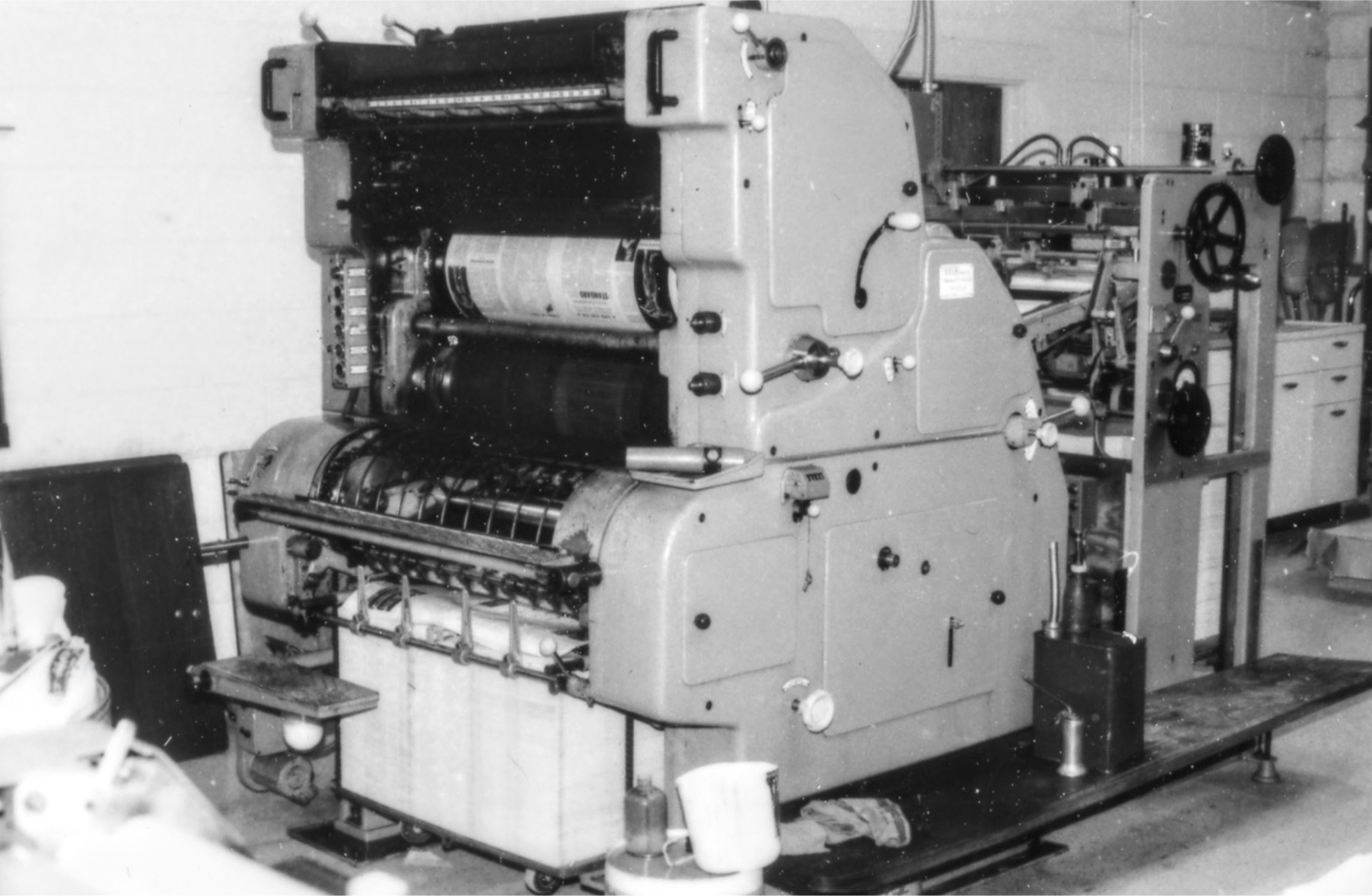
Photograph © Wayne Gallasch / GMV
Wayne described a printing operation capable of printing eight pages at a time. The Raders also handled commercial printing for outside customers. Their sons and other family members contributed to the wider enterprise; Wayne's account identifies Gene Rader in connection with the printing operation and Mabel supervising the main office. These details remind me that Iron Man was the product of a family's sustained labor, not merely the vision of a single publisher.
It was truly a family enterprise. Peary and Mabel's son, Gene, supervised the press room, bindery, and related operations, while Gene's wife, Janice, handled composition. Mabel oversaw the main office, and Peary worked from his own office, preparing the magazine that had become such an important part of countless strength enthusiasts' lives.
The sight of that substantial press is deeply moving to me. Those great mechanical components were part of the practical world behind a magazine that shaped so many lives. For a young subscriber, it was the arrival of the finished issue that mattered; today, I appreciate more fully the dedication required to create it.
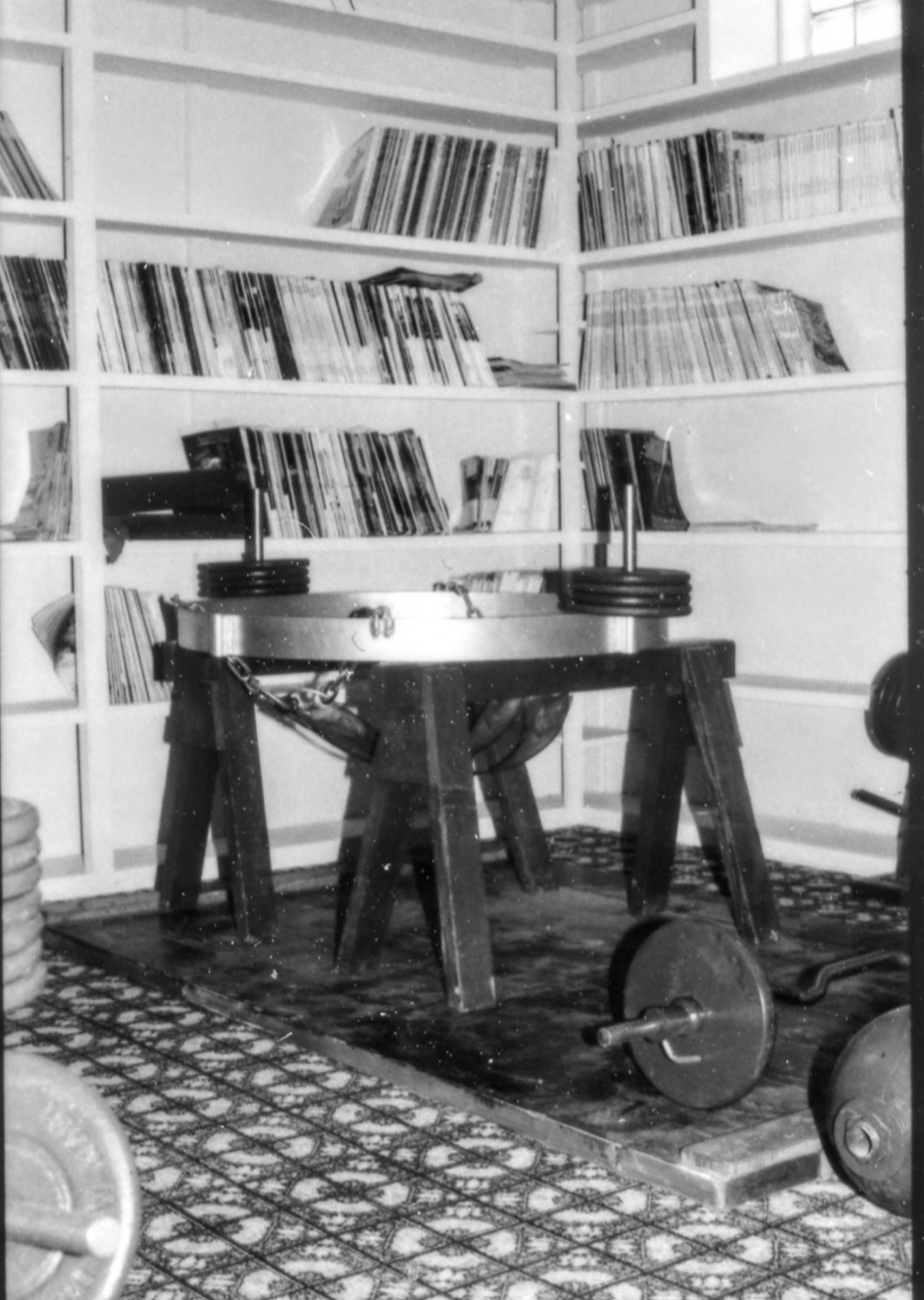
Photograph © Wayne Gallasch / GMV
One of Wayne's photographs shows the celebrated Magic Circle standing among shelves of physical-culture publications. It is a wonderful image of two worlds Peary cared about deeply: the iron itself and the knowledge he worked so hard to share.
The Magic Circle: Ingenuity in the Service of Strength
The Magic Circle was not originally Peary's invention. In his 1967 article, "The Magic Circle and Its Uses," he credited Utah lifter James Douglass with developing the apparatus to address the discomfort and breathing restrictions of heavy barbell squats. Peary recognized its usefulness and began offering it to Iron Man readers in 1964.
Its large circular frame, loading pegs, chains, and shoulder straps allowed the lifter to carry heavy resistance without balancing a conventional bar across the upper back. Peary described its use for full, half, and quarter squats, as well as heavy breathing shrugs. He especially appreciated the freedom to breathe deeply during demanding twenty-repetition squats — an approach that occupied such an important place in his training philosophy.
Peary's own detailed instructions reveal a practical teacher: he discussed sturdy supports, careful positioning of the straps, balancing the ring, different squatting styles, and how to manage demanding repetitions. Those instructions reflect the training ideas of his era, not a blanket modern guarantee of safety for every lifter.
A Chance Encounter in Montreal — 1976
Sometimes the most meaningful friendships begin with the simplest gestures.
Wayne recently shared a memory from the heavyweight weightlifting competition at the 1976 Olympic Games in Montreal. During a break, he noticed Peary seated in the press area, much closer to the action than Wayne's own seat. Wayne walked over and introduced himself.
Peary greeted him warmly and invited him to sit alongside him in the press section for the second half of the contest. Imagine what a treat that must have been! No grand ceremony, just a friendly invitation from a man who had already contributed so much to the Iron Game.
That was their first meeting. Seven years later, Wayne would travel to Alliance and experience Peary and Mabel's hospitality firsthand. To me, this small moment in Montreal says as much about Peary's character as any formal tribute could.
July 20, 1983: A Visit to Alliance, Nebraska
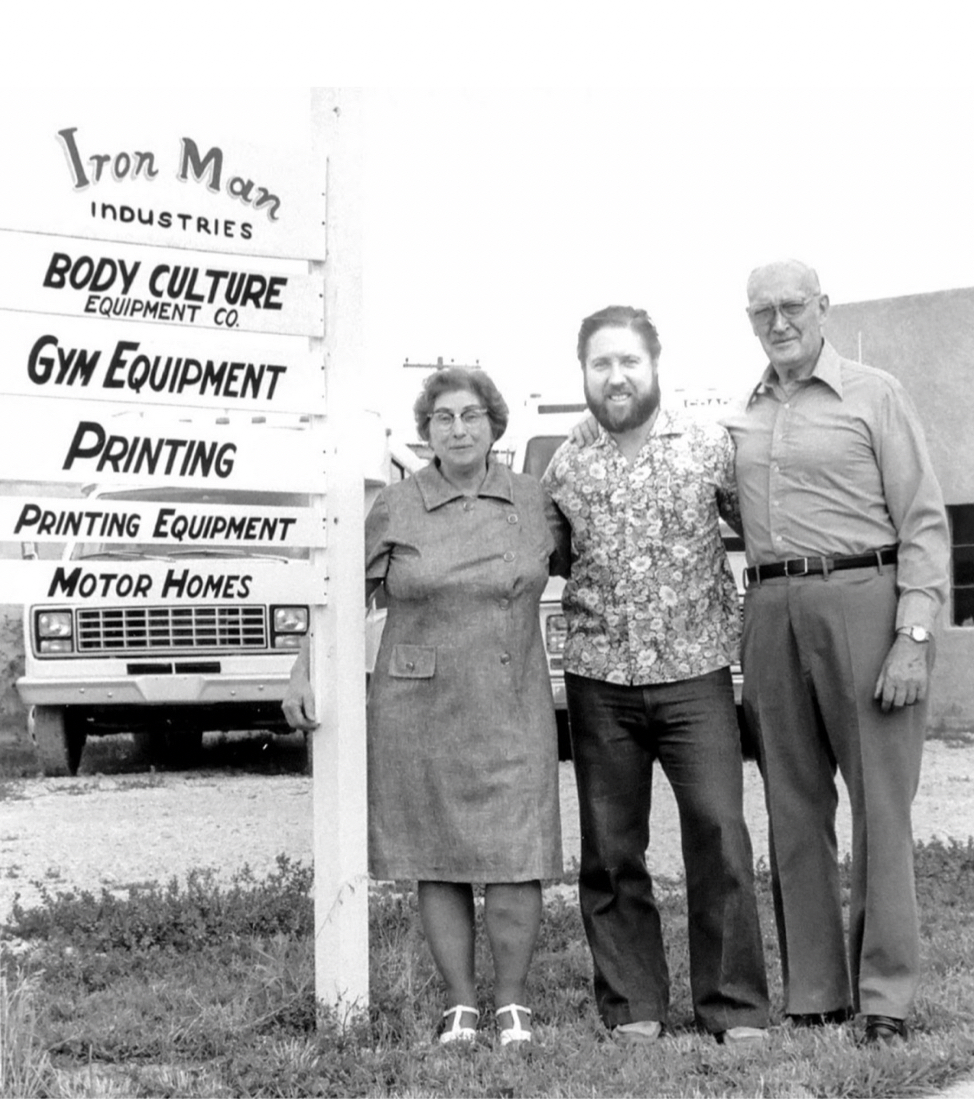
In July 1983, Wayne traveled to Alliance with his longtime friend and business associate Tom Lincir, who had founded the business that became the renowned Ivanko Barbell Company. Their visit offered an intimate look at the people and working facilities behind Iron Man Industries.
Wayne remembers Peary and Mabel as extraordinarily warm and welcoming. After an early start and the journey from Denver, Peary even offered Wayne the opportunity to rest in a spare bedroom. It is the kind of simple, considerate gesture that leaves a lasting impression.
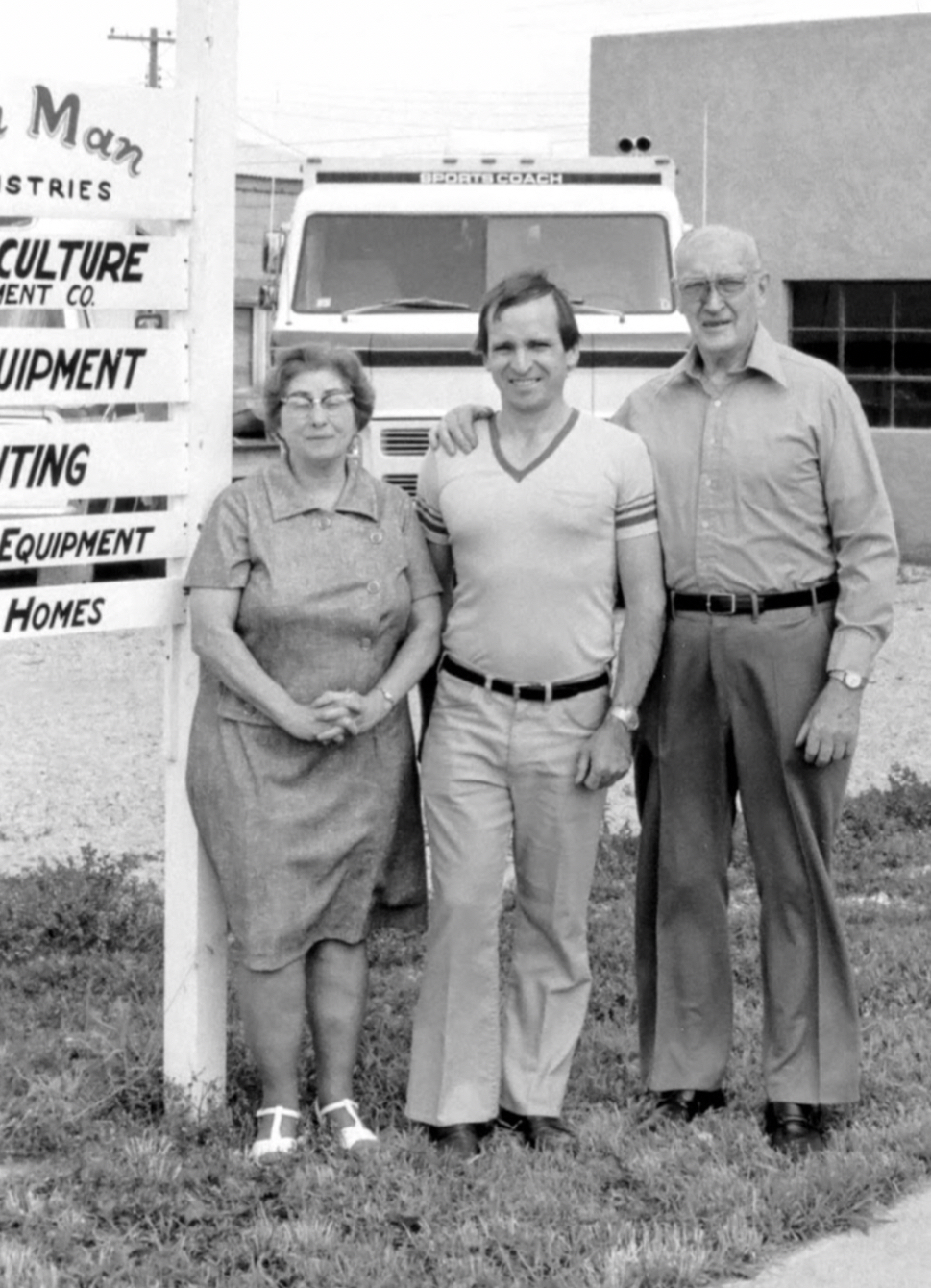
Photograph taken by Tom Lincir using Wayne's camera; courtesy of Wayne Gallasch / GMV
According to Wayne, Tom appeared genuinely awestruck by the scope of Peary and Mabel's operation. So impressed, in fact, that Wayne cannot recall him asking a single question or offering much commentary throughout their visit. Perhaps even a man who had built a remarkable business of his own needed a moment simply to take it all in.
Photograph © Wayne Gallasch / GMV
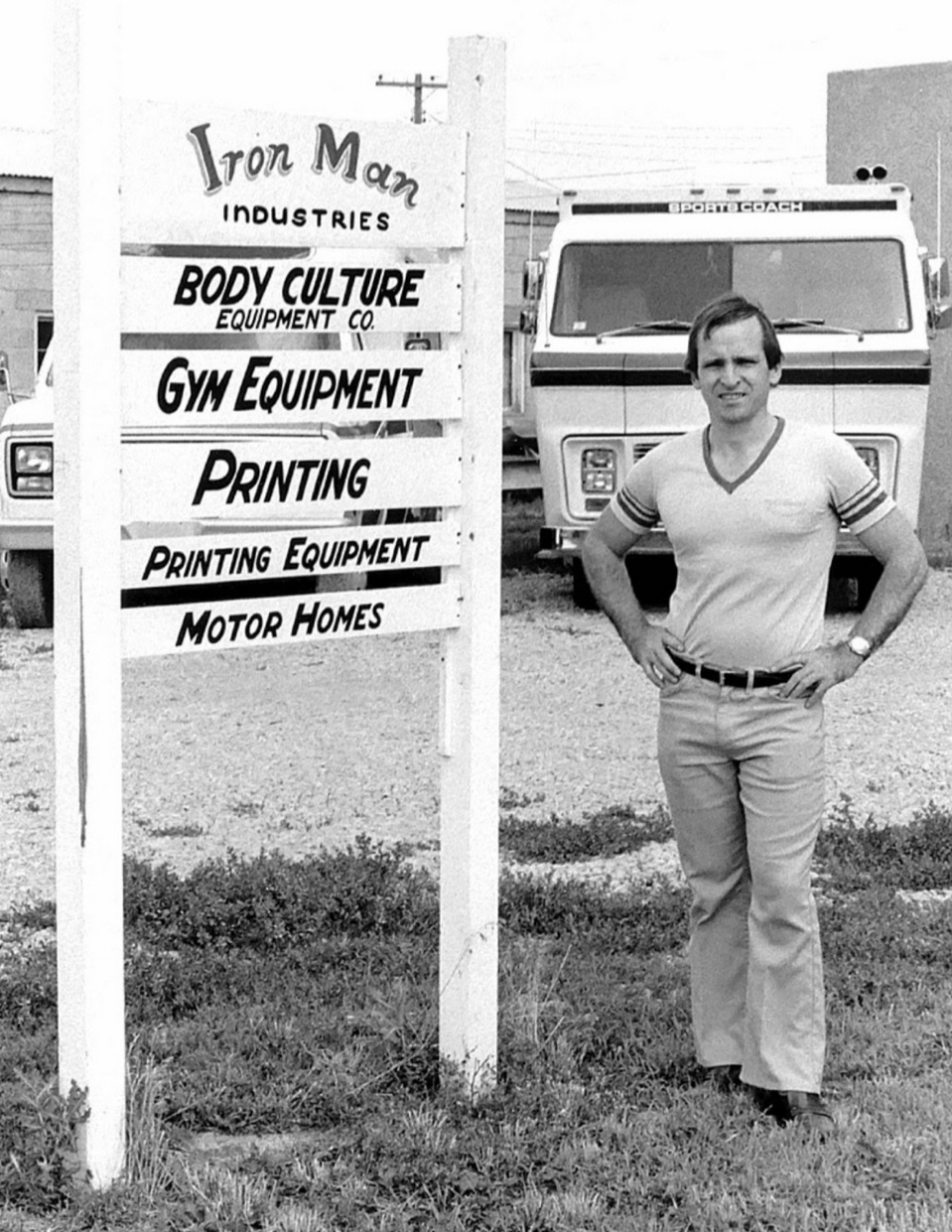
Wayne also clarified an important detail for the historical record: he took the photographs from that visit with his camera, except for those in which he appears. Tom stepped behind Wayne's camera for those images. Their cooperation preserved an extraordinary visual record of a remarkable day.
The Iron Man Industries sign in these photographs tells its own story. Alongside body-culture and gym equipment, it advertises printing, printing equipment, and motor homes — a vivid reminder that the Rader enterprise encompassed far more than the magazine alone.
Photograph taken by Tom Lincir using Wayne's camera; courtesy of Wayne Gallasch / GMV
The Modesty of a Remarkable Man
There is another observation in Wayne's original article that I find particularly revealing. Despite the considerable number of bodybuilders, weightlifters, and physical-culture enthusiasts who visited Alliance over the years, Wayne could not recall seeing another published account describing a visit to Iron Man Industries. He wondered whether Peary's extraordinary modesty might help explain that absence.
Decades later, Wayne still finds it remarkable that more people did not make similar visits and document the Raders' accomplishments. I find his question fascinating. Perhaps some assumed there would always be another opportunity. Perhaps others appreciated the magazine so deeply that they never considered the historical significance of documenting the people who created it.
Sometimes the remarkable things that seem permanently available to us are the very things we postpone experiencing.
But Wayne, traveling from Australia, recognized that his opportunity to visit Peary and Mabel might never come again. And so he made the journey. He brought his camera. He asked questions. He listened. And he preserved a little piece of Iron Game history that we can still appreciate more than four decades later.
I find myself profoundly grateful that he did.
The Photographs and the Legacy
Wayne's photographs mean so much to me because I have always been fascinated by the ability of an image to preserve history. A face, a gesture, a workplace, an ordinary object on a desk — each may tell a story that words alone cannot fully capture.
A photograph preserves more than a moment in time. It preserves a fragment of someone's life — a memory, an emotion, a story — that can continue speaking to hearts and minds long after the moment itself has passed.
Looking at these remarkable images today, I am reminded that their true value extends far beyond the people and places they depict. They let us revisit a chapter of Iron Game history through the eyes of someone who was there — someone who knew Peary and Mabel, appreciated their accomplishments, and experienced their kindness firsthand.
The photographs preserved the moments. Wayne preserved the memories. And now, together, we're helping preserve the legacy.
Sometimes the past doesn't simply return to us through memories. Sometimes it reaches across the years, bringing together people, places, and moments we never imagined would meet again.
"The photographs preserved the moments. Wayne preserved the memories. And now, together, we're helping preserve the legacy."
A Legacy of Kindness and Integrity
On November 24, 1991, the world of physical culture lost one of its most remarkable pioneers when Peary Rader passed away.
But the influence of a man like Peary cannot be measured simply by the years he lived, the magazines he published, or the accomplishments he achieved.
It must also be measured by the lives he touched — not merely for his extraordinary contributions to strength training, but for the kindness, humility, and unwavering moral integrity that distinguished his character.
Peary believed in helping ordinary people accomplish extraordinary things through honest effort, perseverance, and a willingness to work hard. His magazine offered encouragement to those who might never become champions but who nevertheless possessed the determination to become stronger, healthier, and better versions of themselves.
And throughout that remarkable journey, Mabel stood beside him, contributing her own dedication, hard work, and support to the enterprise they built together.
I find something deeply moving about that legacy.
More than half a century after discovering Iron Man, I remain one of the countless individuals whose lives were enriched by what Peary and Mabel created.
The pages may have yellowed. The presses may have fallen silent. And the remarkable people responsible for those treasured publications may no longer be with us.
But their influence remains.
Peary Rader may have departed this world on November 24, 1991, but the spirit of his life's work continues wherever someone picks up a barbell, embraces the value of honest effort, and discovers that genuine strength encompasses far more than physical power.
And that, to me, is a legacy worth remembering.
When I think of Peary Rader today, I do not think only of the publisher of a legendary magazine. I think of the anticipation I felt walking to the mailbox, the hours I spent studying each new issue, and the lessons I carried into my own workouts.
I think of the punishing twenty-repetition squats. The writers who challenged my thinking. The encouragement to pursue strength without losing sight of health, character, and the rest of life.
Peary and Mabel may never have known how much their work meant to a young lifter reading Iron Man in those formative years. But it meant a great deal to me.
And more than five decades later, I remain grateful.
The ink may have dried long ago. The old magazines may have yellowed with age. But the lessons — and the spirit behind them — continue to live wherever someone picks up a barbell, works with purpose, and discovers what honest effort can accomplish.
The iron started the journey. The friendships gave it meaning. And the memories ensure it never truly ends.
Build the body. Expand the mind. Lift the spirit.
And carry the torch! Upward and onward, always!