The Iron
Warrior's Journey
A memoir of grit, strength, and decades of training — by Robert Sparkman
When strength training writer Robert Sparkman first reached out to me, I was in the final stages of putting the M.E.S. system together. During our conversations, Robert showed a genuine enthusiasm for the philosophy behind the training — and it quickly became clear to me that his own story deserved to be told.
What follows is more than a simple account of workouts and routines. It is a lifetime spent beneath the barbell, with all the victories, frustrations, setbacks, and hard-earned lessons that serious training inevitably brings. Robert writes here with the kind of authority that cannot be borrowed from books or built through theory alone. It is the quiet authority earned through 57 years of showing up, putting in the work, and refusing to quit.
From those early basement workouts in 1969 to a brutal 63-minute squat challenge in 2001 — 101 repetitions with 400 pounds — his journey is a remarkable testament to grit, endurance, and persistence. Yet impressive as those feats are, the passage that resonated most deeply with me was something altogether more personal.
At one point, Robert reflects honestly on the reality that he will never again possess the massive 265-pound physique of his forties. He does not dwell there. Instead he speaks about shifting his focus toward durability, longevity, and continuing to train with purpose as the years advance. In doing so, he speaks a truth that no amount of training theory can say.
That, to me, is the real heart of this story.
Not merely the pursuit of strength — but learning how to carry that strength through life itself.
Stay strong — Lee
The Iron Warrior's Journey —
a memoir of grit, strength, and decades of training.
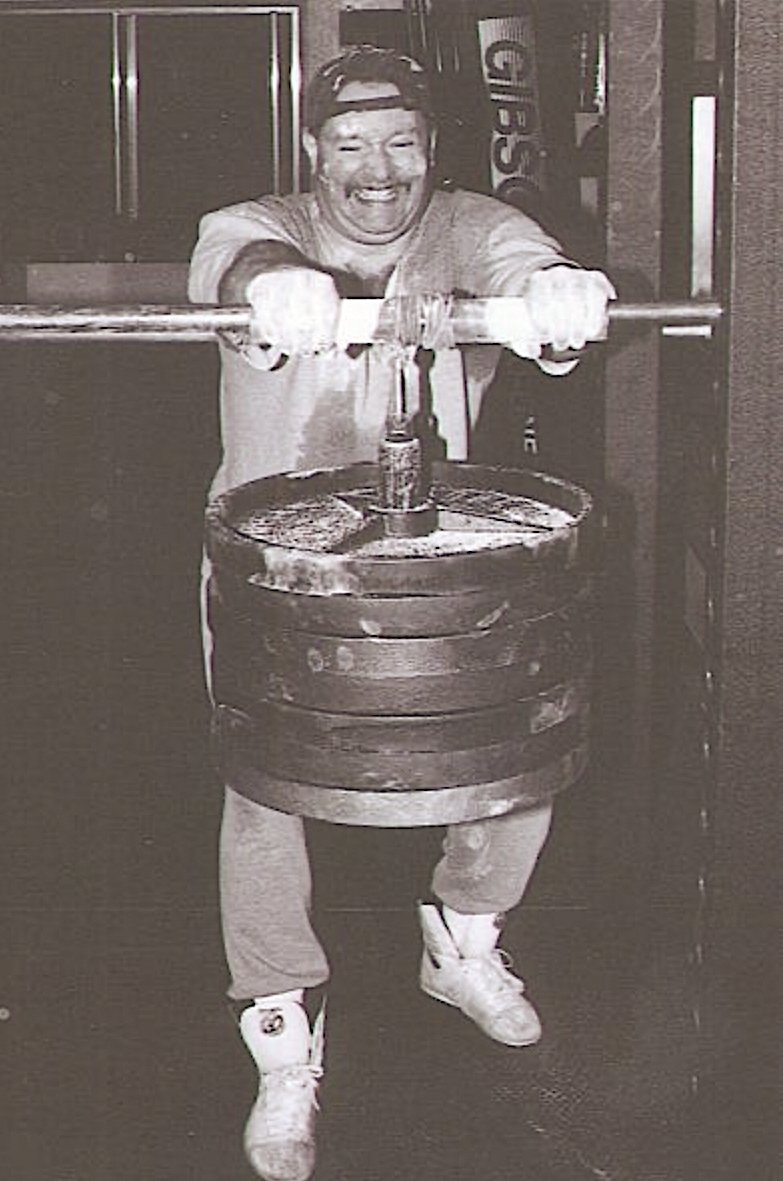
In the summer of 1969, using a vintage York Big 12 Special barbell and dumbbell set, my best friend Lew and I worked out for the first time in his basement, and the experience hooked me instantly. That simple, old-school training session became the defining moment of my life, sparking a lifelong passion for working out.
With 57 years of lifting experience under my belt, I believe weight training is the ultimate form of exercise for lifelong strength, health, and fitness. It offers immense benefits — stronger and more powerful muscles, improved heart and brain function, and increased bone density, to name a few. I plan to train with the iron until the very end, embracing it as the driving force behind my physical, mental, and spiritual well-being.
Looking back at my strength training journey, I wouldn't be where I am today without the guidance and inspiration of the following Iron Game legends: Peary Rader, Bradley J. Steiner, Stuart McRobert, Brooks Kubik, and Dr. Ken Leistner. They all had a highly positive and profound influence on my training. I currently own two complete, original collections of Stuart McRobert's Hardgainer magazine, one of which was previously owned by the late Dr. Ken. They are, without a doubt, my prized possessions.
In addition to the distinguished strength training experts I referenced above, I must include Lee Driver, creator of Ordinary Joe Muscle Building, whom I've been following for more than a decade. He's a visionary author and another definitive voice of reason in natural, drug-free strength training. He champions the "less is more" philosophy and the belief that ordinary people, busy individuals, and those of us 50 years old and above cannot make progress using the extreme, high-volume routines of elite or drug-assisted athletes.
Through his writing, the M.E.S. system, and his free guide Harder to Kill After 50, Lee empowers trainees to follow an ultra-abbreviated training program prioritising high-yield, compound movements that build lifelong strength and maximise muscle growth while minimising time spent in the gym. In addition to focusing on the importance of proper recovery, Lee is a man of many talents that I've come to admire and respect tremendously.
Robert's journey is exactly what the Minimum Effective Strength System is built for — a lifelong commitment to compound training, intelligently managed across the decades that follow peak strength. The system that carried him through recovery and continues to drive his training today.
- First training session — Lew's basement, York Big 12 set Summer 1969
- 101 reps with 400 lbs — 63-minute squat challenge 2001 — age 37
- Peak bodyweight 265 lbs
- Bodyweight lost following 2016 stress-induced illness 100 lbs
- 20-rep deadlift at double bodyweight — trap bar, age 65 340 lbs at 170 lbs bodyweight
- Years of lifting experience 57 years
After an undiagnosed, stress-induced illness in 2016, my bodyweight dropped 100 pounds and forced my early retirement. I overcame years of gruelling recovery through an unwavering faith, strong family support, a basic home gym, eating nutrient-rich whole foods, and getting plenty of fresh air and sunshine — culminating in a 20-rep set of deadlifts at double bodyweight, performed at age 65 with my custom-made trap bar. At the time I weighed 170 pounds.
Sixty-three minutes. That's all it took to change my perspective on limits forever. Of all the milestones in my lifting career, none match the gruelling physical and mental tenacity required to successfully complete 101 total reps with 400 pounds squatting from a dead stop over that hour-long grind. With the massive poundage of the bar crushing my entire body, I felt as if I were fused to the pins in the bottom position. That feeling turned this punishing challenge into a cornerstone achievement that I am forever proud of. This occurred back in 2001 when I was at my biggest and strongest — 265 pounds — writing the Herk's Log column on the Cyberpump website.
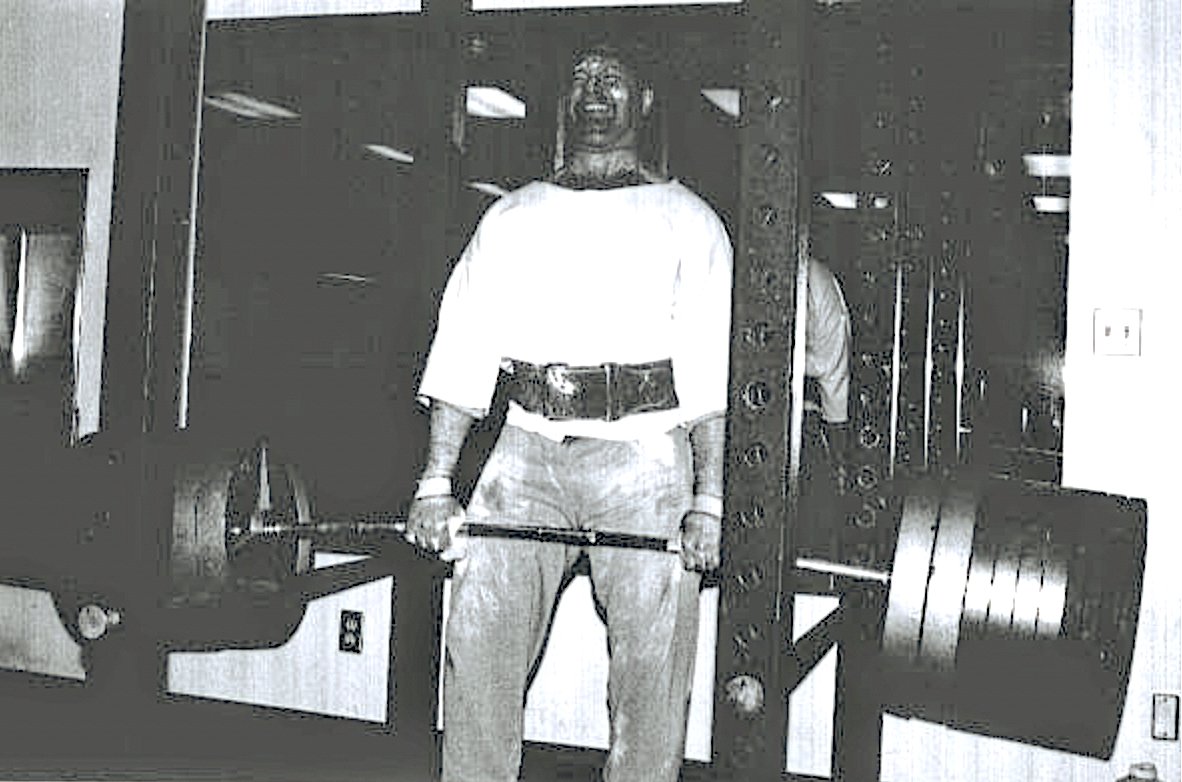
Due to ageing and safety concerns, I have shifted away from extremely heavy, low-rep lifting and high-impact rack work to avoid injury. I now focus on higher-rep training for additional cardiovascular benefits, utilising a belt for heavy squats and deadlifts, and keeping workouts abbreviated, intense, and safe. Despite the discouragement of these physical limitations, I am adapting, staying focused, and forging ahead with a tailored ultra-abbreviated training approach utilising Lee's M.E.S. way of training.
Accepting that I will never again reach the peak, 265-pound natural physique of my forties is a tough reality, despite my decades of brutal, maximum-intensity training. While I deeply miss that strength and raw power, I am now grateful to be healthy, lean, and still able to pursue my passion for Physical Culture, strength training, and bodybuilding.
They say you can't lift heavy forever, but I've decided to redefine "forever." Between a total hip replacement, notoriously cranky shoulders, and chronic arthritis in my lower back and left elbow, I've had plenty of reasons to stop — but I chose to get smarter instead. Training through the years taught me that durability beats intensity, and I've never felt more in tune with my body than I do right now. Longevity isn't an accident; it's a choice to adapt and master the technique.
Robert SparkmanIn my honest opinion, utilising a handful of basic compound exercises for most of my training journey — squats, deadlifts, presses, and rows — made it possible for me to build a very solid, muscularly strong and powerful physique. Even nowadays, entering my home gym means an intense, no-excuses workout. If I'm not drenched in sweat and chalk by the end, I know I haven't worked hard enough.
The M.E.S. system has been an absolute game-changer, perfectly aligning with my need for intelligent, high-impact muscle activation without joint strain. I'm not just staying in the game — I'm thriving in it, and proving that resilience and smart programming can turn obstacles into pure motivation.
Lee's training philosophy and inspiration have instilled a renewed enthusiasm for my physical culture lifestyle. It truly has been the spark I needed at this time in my life.
The E.M.S. Athlete of Ageing Training —
Robert's current programme.
A two-week rotating programme built on quality over quantity — abbreviated, intense, and safe.
Wide-Grip Partial Deadlift — 1 × 30 (primary/heavier load)
Wrist Roller — 2 × 10
WednesdayBench Press — 1 × 30 (lighter load)
Bike — 12 minutes, hill programme, level 8
Squats — 1 × 20 (moderate load)
Farmer's Walk — 1 × ¼ mile (25 lb sandbags)
WednesdayBench Press — 1 × 30 (lighter load)
Bike — 12 minutes, hill programme, level 8
Daily: 20-minute Qigong/Tai Chi sessions including Luohan patting — meditation, breathing, and movement for immunity, balance, flexibility, mood, and focus.
I absolutely love the wide-grip partial deadlift because it's a superlative total back builder. It simulates the natural physics of the floor pull without the leg drive. The wider hand placement forces a low torso angle and places intense mechanical tension on the entire back musculature. I use lifting straps to remove my hands and forearms as the weak links, which allows me to safely overload my entire back without dropping the bar. Because it eliminates the bottom half of the movement, it shifts the focus away from the hamstrings and quads, which get hit hard with my squats.
My current routine prioritises quality over quantity. By attacking my wide-grip partial deadlifts and moderately heavy squats on Saturdays, the high reps create massive neuromuscular demands, stimulating a growth hormone response that's far better than endless sets. Leaving a couple of reps in the tank allows me to push hard while still prioritising proper form and recovery. Pairing that with gruelling quarter-mile sandbag carries helps build core stability, grip and forearm strength, and mental toughness, while my Wednesday active-rest work keeps the blood flowing for optimal recovery. The 12-minute hill intervals on the bike act as a finisher that spike my metabolic rate and boost cardiovascular fitness.
Along with strength training, daily Qigong and Tai Chi sessions — including Luohan patting — have provided immense benefits. This combination of meditation, breathing, and movement has boosted my immunity, balance, flexibility, mood, and focus while reducing stress.
I'm not just lifting — this fairly intense, low-volume approach is keeping my workouts brief while providing a substantial training stimulus to build a leaner, stronger, and more resilient physique. In addition, I'm finding this less-is-more mindset is delivering new, unexpected gains in both strength and stamina while keeping my joints feeling fresh.
In closing, I'd like to add that as Iron Warriors, we can make the world better by helping others and sharing kindness, even through small, effortless gestures that don't interfere with training. Let's use our strength to lead with honour, set a positive example, and persevere in our training. Remember, "A journey of a thousand miles begins with a single step." — Lao Tzu
57 years. A 100-pound illness. A hip replacement, arthritis, and a collection of Hardgainer magazines that once belonged to Dr. Ken Leistner. And still training — intelligently, purposefully, and with the conviction that durability beats intensity. If Robert's story resonates with where you are, the Minimum Effective Strength System is where to begin.