Body Fat
Percentage vs Body
Weight Over 50 —
Why the Scale Lies
The bathroom scale delivers one number with no context — and after fifty that distinction becomes critically important
Step onto a bathroom scale and it delivers a single cold number. No context. No nuance. No understanding of whether the weight sitting on your frame comes from hard-earned muscle or slowly accumulating body fat. After fifty, that distinction becomes critically important — because one of the most common mistakes ageing trainees make is obsessing over body weight while ignoring body composition entirely.
The result is something deeply counterintuitive. Many people proudly maintain the same scale weight they carried twenty years ago while quietly becoming softer, weaker, and metabolically older underneath the surface. The bathroom scale masks the very physical decline they are trying to avoid.
Why the same number can represent
two entirely different physical realities.
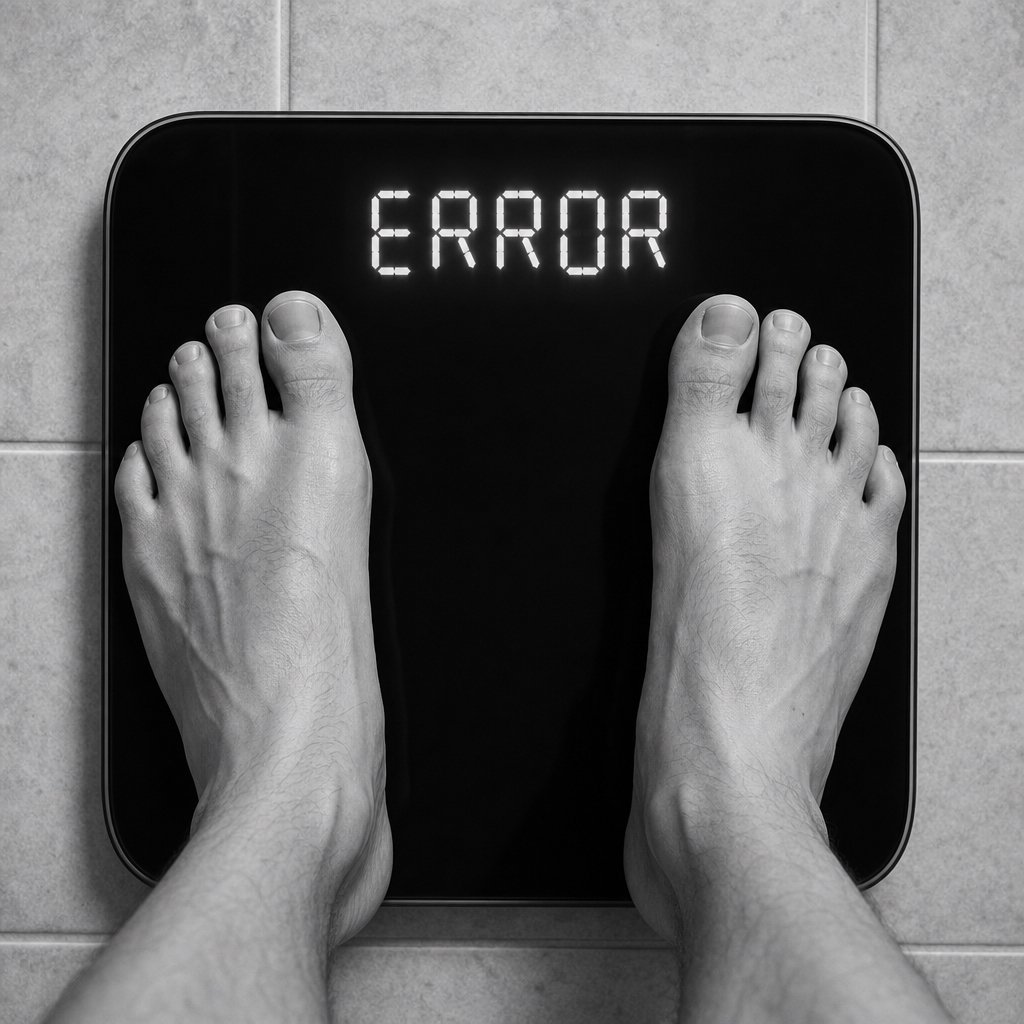
A curious thing happens as many people age. The scale barely moves — yet the body changes dramatically. The shoulders narrow. The waist thickens. The arms lose density. Strength fades. Energy dips. And still the bathroom scale reports roughly the same number year after year.
180 pounds of muscle and fat produce the same number. The scale cannot tell them apart.
Strong and visibly capable
High resting metabolic rate
Good insulin sensitivity
Stable energy levels
Functional in daily life
Soft and visibly diminished
Slow resting metabolic rate
Reduced insulin sensitivity
Fluctuating energy levels
Declining functional capacity
The scale views both people as identical. The body — and everyone who interacts with them — knows the difference immediately. Body weight alone tells you almost nothing about the quality of that weight. It measures muscle, fat, water, bone, stored glycogen, and the contents of the digestive system simultaneously, with no ability to distinguish between productive and non-productive tissue.
Sarcopenia and creeping obesity —
how the scale stays stable while the body deteriorates.
One of the primary reasons the scale lies after fifty is age-related muscle loss — a process researchers call sarcopenia. Without deliberate resistance training intervention, skeletal muscle tissue declines gradually with ageing, beginning earlier than most people realise and accelerating after fifty.
Muscle tissue is metabolically expensive — the body only maintains it if it is regularly challenged through resistance training and physical activity. When activity levels decline, muscle slowly disappears. And here is where the process becomes deceptive: as muscle decreases, body fat frequently rises at almost the same rate. Total body weight may remain relatively unchanged while body composition quietly deteriorates beneath the surface. Some researchers and practitioners refer to this as creeping obesity — the scale stays stable, the body gets softer, strength disappears, and metabolism slows. Because the change happens gradually over years, most people never recognise the extent of the decline until it becomes substantial.
The cruel irony of the bathroom scale is that it often masks the very physical decline people are trying to avoid. Maintaining the same body weight as twenty years ago is not the same as maintaining the same body composition — and after fifty the difference between those two things grows wider every year that passes without resistance training.
Building and preserving muscle mass after fifty is not vanity — it is the single most effective intervention available against the metabolic consequences of sarcopenia. The Minimum Effective Strength System is built for exactly this purpose — progressive compound training that stimulates muscle retention and growth with the recovery respect that post-fifty training requires.
What muscle does for the body
that the bathroom scale will never show.
Strength training is frequently dismissed as a vanity pursuit — an activity for people who want to look better rather than age better. This misunderstands muscle's role profoundly. Muscle is one of the body's most important anti-ageing tools, with benefits that extend far beyond appearance and directly determine the quality of life in later decades.
Seven reasons muscle preservation becomes more important after fifty — not less.
- Insulin sensitivity — muscle tissue is the body's primary glucose disposal site, directly reducing type 2 diabetes risk
- Joint health — strong surrounding musculature reduces the mechanical load on joint surfaces and protects against degeneration
- Bone density — resistance training is the most effective stimulus available for maintaining bone mineral density after fifty, protecting against osteoporosis
- Balance and coordination — lower body strength and proprioception directly reduce fall risk and fracture vulnerability
- Metabolic rate — each pound of muscle raises resting caloric expenditure, countering the metabolic slowdown associated with ageing
- Physical independence — functional leg and grip strength determines whether an ageing adult can manage daily tasks without assistance
- Longevity markers — grip strength and overall muscular strength are among the most reliable predictors of all-cause mortality in older adults
This is why aggressive dieting can backfire after fifty. If weight loss comes primarily from muscle tissue rather than body fat — as it frequently does with crash diets and excessive cardio combined with insufficient protein — metabolism slows further, strength decreases, and the body becomes more vulnerable to future fat gain. Losing weight is not always the same thing as improving health. The composition of what is lost matters as much as the amount.
What to monitor instead of — or alongside —
the bathroom scale after fifty.
The scale is not useless — it is simply incomplete. Used as one data point among several, body weight still provides useful information. Used alone as the primary measure of progress, it conceals as much as it reveals. The measures below provide a more complete picture of what is actually happening to body composition over time.
The scale is one data point. These seven provide the context it cannot.
- Waist circumference — the most revealing single measurement A shrinking waist combined with stable or improving strength levels almost always indicates improving body composition — even when scale weight barely changes. Measure monthly at the same point, at the same time of day.
- Strength on compound movements If the squat, deadlift, and press are gradually improving over months, body composition is almost certainly improving simultaneously — the direct result of the progressive overload that the muscle retention and development the scale cannot measure depends on.
- Progress photographs — monthly The eye notices physical changes that numbers fail to capture — particularly in posture, shoulder width, and waist definition. Monthly photographs taken at the same angle and lighting provide a visual record that is often more motivating than any set of numbers.
- How clothing fits Trousers that loosen at the waist while shirts fill at the shoulders is a body composition improvement that the scale may not show at all — particularly when muscle gain and fat loss are occurring simultaneously.
- Energy and work capacity Subjective energy levels, the ability to sustain effort across a training session, and recovery speed between sessions all improve reliably as body composition improves and muscle mass increases.
- Body fat percentage measurement DEXA scans, skinfold calipers, and bioelectrical impedance scales all provide estimates of body fat percentage, none with perfect accuracy, but all with useful directional information when measured consistently over time.
- Functional daily markers Moving more easily, recovering better from physical activity, managing stairs and carrying loads with less effort — these real-world capability markers reflect the physical condition that the bathroom scale completely ignores.
The goal after fifty is not to be lighter. It is to be stronger, leaner, more capable, and more resilient. The bathroom scale can only tell you how heavy you are. Your muscle, your strength, your energy, and your waist circumference tell you how well you are ageing. The Minimum Effective Strength System addresses the variables that determine all four.