Building Muscle
After 40 — Why
Recovery Becomes
Your Superpower
The turning point most lifters miss — and the approach that produces results for decades rather than months
There comes a moment in nearly every lifter's journey when the rules quietly begin to change.
You walk into the gym feeling much the same as you did years earlier. The iron still calls to you. The desire to push hard, build muscle, and challenge yourself remains very much alive. Yet somewhere along the way, the recovery process starts behaving differently.
The workout itself may still feel manageable. The heavy squat session that once required a good night's sleep now lingers in the hips and knees for three days. The hard deadlift workout leaves the lower back tight until the weekend. Elbows ache. Shoulders grumble. What once felt like ordinary training now carries a recovery cost that simply did not exist in younger years.
And this is precisely where many trainees become frustrated — assuming the solution is to push even harder.
The body remains adaptable —
but adaptation becomes slower.
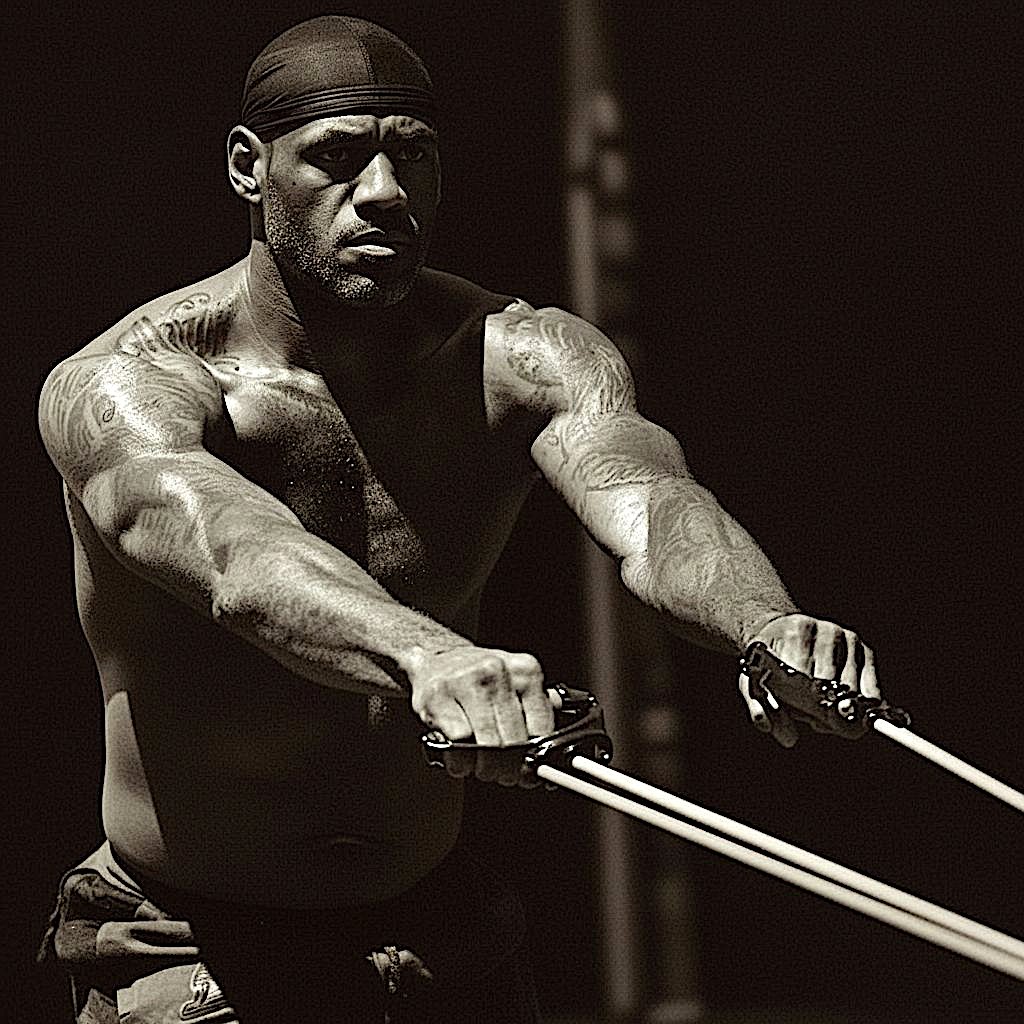
One of the biggest mistakes people make about ageing is assuming that the body suddenly falls apart once middle age arrives. The human body remains remarkably adaptable well into later life, and countless men and women continue building strength, muscle, and athleticism long after their fortieth birthday. But adaptation does become slower — and that difference changes everything about how training should be structured.
Recovery capacity gradually changes due to a combination of factors. Hormonal output slowly declines. Connective tissues lose some elasticity. Joint wear accumulates from decades of physical labour, sports, lifting, injuries, and everyday life. Sleep quality often becomes lighter and more fragmented. Chronic stress levels rise as careers, finances, and family responsibilities compete for attention.
The nervous system also becomes less tolerant of endless high-intensity work — and that matters enormously. Heavy strength training does not only challenge muscles. It taxes the nervous system, joints, connective tissues, and recovery reserves simultaneously. When recovery resources are abundant in youth, the body can absorb astonishing amounts of punishment. After 40, those reserves become increasingly precious.
This does not mean older trainees are fragile. Many mature lifters are mentally tougher, more disciplined, and more technically proficient than they were in their twenties. But successful training now demands greater respect for recovery management — and those who fail to recognise this often find themselves trapped in a frustrating cycle of soreness, fatigue, stalled gains, and recurring injuries.
After 40, muscle-building success increasingly depends not on how much work you can perform — but on how much work you can successfully recover from. This is the great turning point many lifters fail to understand.
The Minimum Effective Strength System is built on exactly this understanding — delivering the minimum effective training dose that triggers the full adaptive response, within the recovery capacity that the natural trainee actually possesses rather than the one a twenty-five-year-old would have.
More work no longer equals more results —
and after 40 it often means fewer.
Modern fitness culture rarely helps matters. Social media rewards extremes. Endless workouts, brutal training montages, and "no days off" slogans dominate the industry. The message constantly pushed onto trainees is that more work automatically equals more results.
Unfortunately, this philosophy becomes disastrous for the over-40 trainee. Many lifters attempt to train exactly as they did in their twenties, despite the fact their recovery abilities have changed dramatically. They pile exercise upon exercise into their routines, hammer muscle groups multiple times per week, chase exhaustion at every session, and wear their soreness like a badge of honour.
For a short while this may even appear productive. But eventually the cracks begin to show. Progress slows. Motivation drops. Nagging injuries accumulate. Joints begin protesting under constant stress. Sleep quality worsens. Enthusiasm gradually gives way to fatigue and frustration. The cruel irony is that many trainees experiencing these symptoms assume the answer is even more work — when the opposite is invariably true.
Muscle growth has always been governed by a simple principle: the body can only adapt to stress it can successfully recover from. Once training volume consistently exceeds recovery ability, progress begins moving backwards. And after 40, this line becomes far easier to cross.
Fewer exercises. Shorter workouts.
Better results.
This is precisely why abbreviated training becomes so powerful later in life. Rather than trying to overwhelm the body with endless volume, abbreviated training focuses on efficiency and stimulation — triggering muscular growth while conserving recovery reserves.
Concentrate effort where it matters. Protect the recovery capacity that makes adaptation possible.
- Fewer exercises — compound movements that recruit the most muscle and produce the strongest growth signal
- Shorter workouts — focused, purposeful sessions rather than exhausting marathon gym sessions
- Greater recovery time between sessions — allowing adaptation to complete rather than piling new stress on unresolved fatigue
- Progressive loading on the basics — squats, rows, presses, deadlifts, carries — the movements that have always worked
- Sustainability built in — training that can continue year after year without grinding the body into breakdown
Many mature trainees discover they build better muscle with less volume precisely because recovery quality improves dramatically. Joints calm down. Energy stabilises. Strength progression becomes more consistent. Motivation remains higher because workouts feel challenging but manageable rather than punishing and depleting.
Perhaps most importantly, abbreviated training allows longevity — and longevity matters enormously. The greatest physiques are rarely built through six months of heroic effort. They are built through decades of intelligent consistency. For the specific exercise selection and programme structure, see the free weight training routines over 50.
Recovery is not passive —
it is something you actively build into your life.
One of the most important lessons older trainees must learn is that recovery is not the absence of training. It is something built deliberately into the lifestyle. The trainees who continue progressing after 40 are the ones who take these five pillars as seriously as they take their training sessions.
Each one contributes directly to the body's ability to adapt, grow, and remain durable.
Where repair and hormonal regulation occur. Poor sleep undermines strength, recovery, energy, mood, and muscle growth more consistently than almost any other single variable.
Protein supports tissue repair. Whole foods regulate inflammation and energy. Many trainees obsess over supplements while neglecting the basic nutritional habits that actually drive recovery.
Enhances recovery without taxing the nervous system. Unlike exhausting cardio sessions, daily walking improves cardiovascular conditioning, reduces stress hormones, and supports joint function. For the measurable outcomes, see the 10,000 steps page.
The body does not separate gym stress from life stress. Work pressures, financial worry, poor sleep, and emotional strain all drain recovery reserves — affecting training adaptation in exactly the same way as excessive training volume.
Sensible movement choices, thorough warm-ups, and appropriate loading for the body's current condition. The goal is not merely to survive workouts — it is to emerge from them stronger without unnecessary joint and connective tissue wear.
The master pillar. Every other recovery variable supports this one. A sustainable training practice maintained for years produces more cumulative development than any aggressive short-term programme followed by enforced rest.
Train for decades —
not just months.
Once you truly understand recovery, it stops feeling like a limitation. It becomes a genuine advantage. Many younger trainees train emotionally — constantly chasing fatigue, intensity, and exhaustion without understanding the recovery consequences. Mature trainees who learn restraint often surpass them precisely because they stop wasting energy on unnecessary work.
They train with purpose instead of ego. They understand pacing. They respect progression. They recognise when to push and when to back off. This wisdom allows them to continue building muscle long after reckless trainees have burned themselves into stagnation or injury.
In many ways, the over-40 trainee possesses enormous advantages. Patience improves. Discipline improves. Exercise technique improves. Consistency improves. And when recovery management is added to that equation, extraordinary long-term progress becomes possible. The body may no longer tolerate foolishness quite so easily. But it still responds beautifully to intelligent effort.
Muscle is not built during workouts. Workouts merely provide the stimulus. Growth happens afterwards — when the body repairs, adapts, and prepares itself for future demands. The trainees who continue progressing deep into their forties, fifties, sixties, and beyond are rarely the ones who train the hardest every single day. They are the ones who recover the smartest.
If you truly want to keep building muscle after 40, stop viewing recovery as weakness or laziness. See it for what it really is: your greatest long-term strength-building weapon.
Abbreviated training. Compound movements. Progressive loading. Intelligent recovery. This is what building muscle after 40 actually requires — and it is the operating principle of the Minimum Effective Strength System. Not training for a single impressive season. Training for the rest of your life.