Female Muscle
Building Over 50 —
Why Strength
Training Becomes
Essential With Age
Muscle is not merely cosmetic tissue — it is protective tissue. And after fifty, what it protects becomes more important than ever
For decades, many women were taught to fear muscle. Fitness culture pushed the idea that women should focus almost exclusively on dieting, calorie restriction, and endless cardio while leaving serious strength training to men. The message was repeated so often it became accepted as fact — lift weights too heavily and you would somehow become bulky, unfeminine, or oversized.
This outdated belief has done enormous damage. Because after fifty, building and preserving muscle becomes one of the most important things a woman can do for her long-term health, mobility, confidence, and independence. Muscle is not merely cosmetic tissue. It is protective tissue — and without it, physical decline accelerates rapidly.
Sarcopenia, hormonal change, and the
compounding decline that strength training reverses.
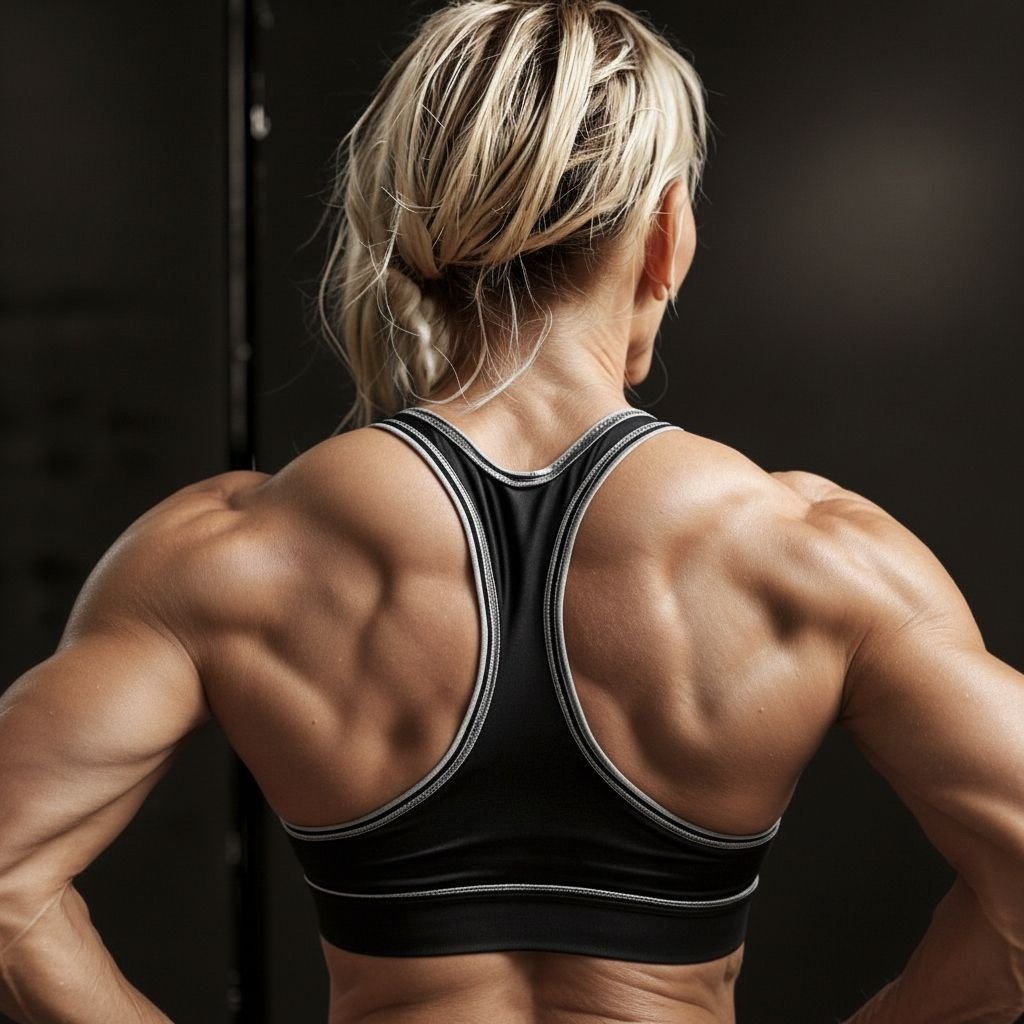
One of the realities of ageing is that the body naturally begins losing muscle mass over time. This gradual decline — known as sarcopenia — often begins earlier than many people realise and accelerates significantly after menopause. Hormonal changes, reduced activity levels, sedentary lifestyles, poor nutrition, and insufficient resistance training all contribute to the process simultaneously.
Muscle loss rarely occurs in isolation. As lean tissue decreases, metabolism often slows alongside it. Strength declines. Balance deteriorates. Posture weakens. Everyday activities become more physically demanding. Bone density may begin falling, increasing the risk of fractures and long-term mobility problems. This is one reason many women suddenly feel physically older seemingly overnight — the body becomes less resilient because it has lost the muscular foundation that once supported movement and stability.
The good news is that the body remains remarkably adaptable later in life when given the proper stimulus. Strength training allows women over fifty not only to slow muscle loss, but often to reverse significant portions of it entirely. This changes everything — because muscle building after fifty is not about vanity. It is about preserving capability, protecting the body, and maintaining the physical independence that good health demands.
Muscle supports the joints. Stabilises the body. Protects bone density. Improves posture. Enhances metabolism. Allows everyday movement to remain strong and capable as the years progress. Without it, physical decline accelerates. With it, ageing becomes something to navigate rather than something to surrender to.
Progressive resistance training that preserves and builds lean tissue — this is what the Minimum Effective Strength System delivers. Designed for natural trainees who want maximum benefit from minimum effective work, it applies equally effectively to women over fifty as to men.
Not bulk — but a firmer, leaner, stronger,
and more capable physique.
One of the great misunderstandings surrounding female muscle building is the belief that strength training produces excessive muscular bulk in women. In reality, the opposite is almost always true. Most women do not possess the hormonal environment required to develop large bodybuilder-style muscularity naturally. Instead, intelligent resistance training typically creates a firmer, leaner, stronger, and more athletic physique — one that looks and functions considerably better than the same bodyweight carried primarily as fat.
Benefits that extend far beyond appearance into physical function and long-term health.
Strengthens the muscles supporting the spine and shoulders — counteracting the forward rounding that sedentary ageing and desk work progressively reinforce.
The most effective non-pharmaceutical intervention for maintaining bone mineral density after menopause — reducing fracture risk and protecting long-term skeletal health.
Muscle tissue is the body's primary glucose disposal site. More lean muscle means better blood sugar regulation and a direct reduction in type 2 diabetes risk.
Metabolically active lean tissue raises resting energy expenditure — addressing the metabolic slowdown that frustrates traditional weight-loss approaches after menopause.
Reshapes the body far more effectively than endless cardio by building the lean tissue that gives shape and definition rather than simply reducing total weight.
Women consistently report greater energy, better movement quality, and renewed physical confidence once they begin building strength consistently — changes that compound over time.
This is not simply physical transformation. Many women describe it as restoration — the return of a physical capability and confidence that the combination of ageing and fitness culture had quietly taken away. Strength training changes how the body feels, not just how it appears.
Compound movements, carries, and bands —
effective training without endless complicated routines.
Effective strength training does not require endless gym sessions or highly complicated routines. Many of the best muscle-building exercises for women over fifty are wonderfully simple — compound movements that train multiple muscle groups simultaneously while reinforcing balance, coordination, and functional movement patterns.
-
Squats
Strengthen the legs, hips, and core while improving lower-body stability. Bodyweight, goblet squat, dumbbell, or resistance band variations all provide meaningful stimulus — the load can be adjusted to whatever the trainee's current capacity requires.
-
Rows
Strengthen the upper back and counteract the rounded posture that modern life encourages. Dumbbell rows, resistance band rows, and suspension trainer rows all develop the rhomboids, trapezius, and rear deltoids that support healthy shoulder mechanics and spinal alignment.
-
Pressing movements
Build shoulder and upper-body strength while supporting everyday pushing mechanics. Wall press-ups and incline press-ups progress naturally toward floor press-ups and dumbbell pressing variations as strength develops. The progression itself is the value — not any single variation.
-
Farmer's carries
One of the most underrated exercises for women over fifty. Simply carrying weight while maintaining upright posture strengthens the hands, arms, shoulders, core, and stabilising musculature in an entirely functional way — developing the grip strength that research associates with longevity and physical resilience.
-
Resistance bands
Provide excellent low-impact resistance while remaining highly joint-friendly. The variable tension profile — lighter at mechanically vulnerable positions, heavier at full contraction — makes bands particularly well-suited to mature trainees managing joint conditions alongside their training. For the full band training guide, see the resistance bands page.
The key throughout is intelligent progression rather than punishment. The goal is to stimulate the body gradually while allowing recovery and confidence to build alongside strength itself. Starting conservatively and building consistently produces better long-term results than beginning aggressively and being forced to step back through injury or exhaustion.
Recovery is not separate from progress —
recovery creates progress.
One of the biggest mistakes many women make is assuming more exercise automatically means better results. After fifty, this approach frequently becomes counterproductive. The body still adapts brilliantly to resistance training later in life, but recovery reserves become increasingly valuable. Joints tolerate reckless overuse less enthusiastically. Sleep quality becomes more important. Hormonal recovery may take longer after menopause.
Many women spend years exhausting themselves with daily high-volume workouts and calorie-burning routines that leave them fatigued without significantly improving strength or preserving muscle mass. Yet shorter, more focused strength sessions consistently produce far better long-term results. A few productive sets performed consistently stimulate more meaningful adaptation than marathon workouts driven by exhaustion alone.
Recovery is not rest. It is the process through which training adaptation actually occurs.
- Sleep quality — where tissue repair, hormonal regulation, and nervous system recovery occur
- Protein intake — providing the amino acids required for muscle repair and maintenance
- Daily walking — supporting recovery, cardiovascular health, and fat loss without taxing the nervous system
- Stress management — chronic stress directly impairs the hormonal environment that muscle building requires
- Hydration — supporting joint function, circulation, and the nutrient delivery that recovery depends upon
Rebuilding trust in the body —
how strength changes more than physique.
One of the most profound aspects of strength training is that the transformation is never purely physical. Something changes psychologically when a woman becomes stronger. Confidence grows. Fear diminishes. Movement feels more capable and controlled. Everyday tasks become easier. Physical independence begins feeling less fragile and more secure.
Many women who begin strength training after fifty discover they are not merely rebuilding muscle. They are rebuilding trust in their own bodies. This matters deeply in a culture that often encourages women to associate ageing with inevitable weakness and decline. Strength training quietly challenges that narrative by proving the body remains adaptable, trainable, and capable of growth later in life.
The discipline developed through resistance training frequently carries over into every area of life. Resilience improves. Self-image improves. Emotional wellbeing improves. The process of becoming physically stronger often changes how women view ageing itself. Strength stops being about appearance alone. It becomes about empowerment.
Strength becomes a form of insurance for the decades ahead — protecting posture, stabilising joints, preserving movement quality, improving metabolic health, and maintaining independence well into later life. And it is never too late to begin. The body remains astonishingly responsive to intelligent resistance training regardless of age.
Not vanity. Not aesthetics.
Vitality, resilience, and freedom of movement.
Modern society often treats ageing as a slow surrender — encouraging people to expect weakness, fragility, declining mobility, and loss of independence as though they are unavoidable consequences of growing older. Yet much of this decline is accelerated not by age itself, but by inactivity and muscular neglect.
Female muscle building after fifty is not simply about aesthetics. It is about vitality. It is about resilience. It is about maintaining the freedom to move confidently through life for as long as possible. Progress may not happen overnight, but consistency produces remarkable long-term change — and that change may be one of the greatest investments a woman can ever make in herself.
Abbreviated training. Compound movements. Progressive loading. Intelligent recovery. The same principles that build strength effectively for men over fifty build it equally effectively for women. The Minimum Effective Strength System is the structured framework for applying all four — and it is never too late to begin.