Building Muscle
Goals After 50 —
Why Longevity
Matters More
Than Size
The goal shifts after fifty — from building a body that looks powerful to building one that carries you through life
Modern fitness culture has a curious obsession with extremes. Transformation photos, impossible physiques, endless bulking diets, and the relentless message that bigger is always better — if you are not destroying yourself in the gym six days a week, you are somehow failing.
For the over-50 trainee, this mindset becomes deeply counterproductive. Because after fifty, the rules change. Recovery changes. Joint health changes. Sleep changes. Stress tolerance changes. And perhaps most importantly, priorities change too.
The mature lifter eventually realises that success is no longer measured purely by arm circumference or how much punishment the body can absorb in a single session. The true goal becomes preserving strength, vitality, mobility, and resilience for the decades still ahead.
Muscle as protective armour —
not decoration.
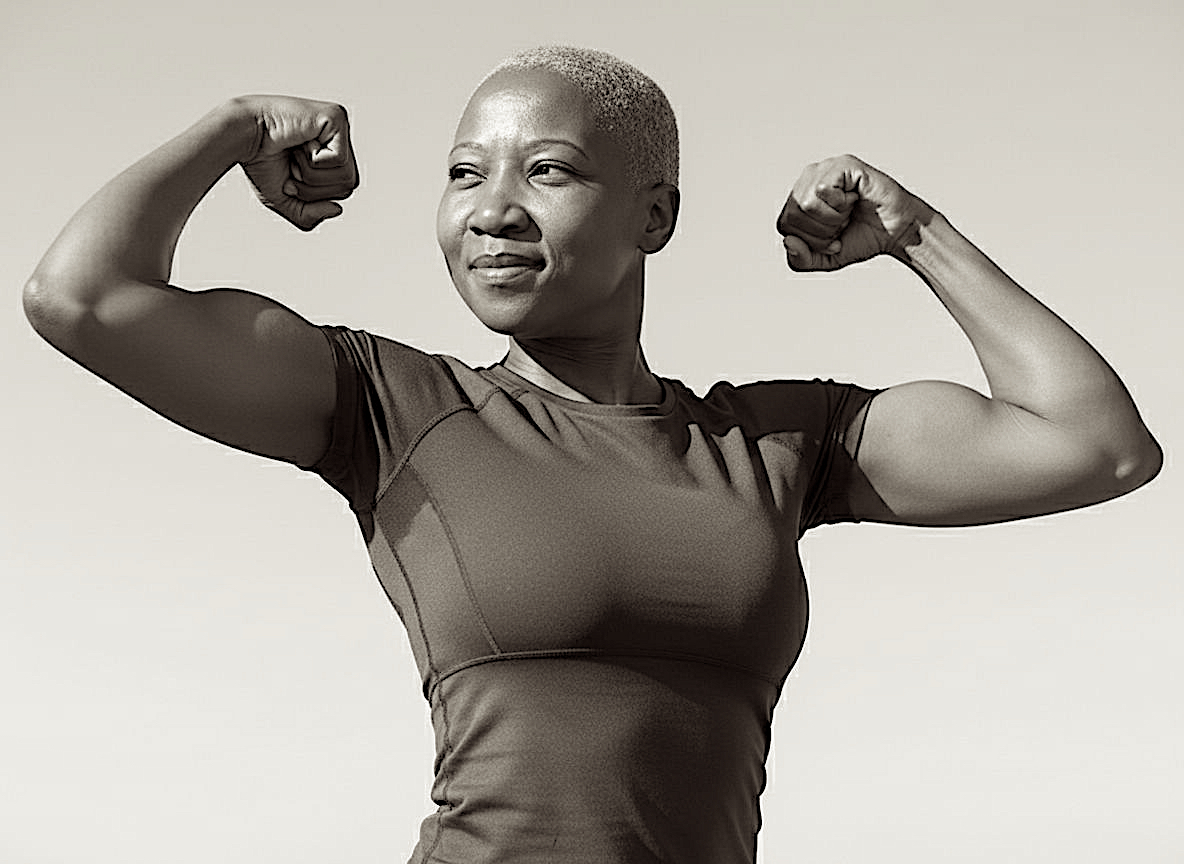
One of the great ironies of ageing is that the very thing most people neglect after fifty is precisely the thing they need most. Muscle. As the years pass, the body naturally begins losing lean tissue through sarcopenia — a gradual decline that contributes to slowing metabolism, weaker bones, reduced mobility, poorer balance, increased frailty, and declining physical independence.
Yet many people still think of muscle purely in cosmetic terms — vanity, aesthetic decoration, something useful only for bodybuilders. In reality, muscle becomes increasingly valuable as we age precisely because it acts as protective armour against physical decline.
Building muscle after fifty is preparation for life itself — not merely preparation for the gym.
- Joint stability — strong surrounding musculature reduces mechanical load on joint surfaces and protects against degeneration
- Posture — the upper back and core strength that prevents the forward rounding that sedentary ageing accelerates
- Blood sugar regulation — muscle is the body's primary glucose disposal site, directly reducing type 2 diabetes risk
- Injury resilience — stronger muscles absorb force that would otherwise be transferred to bones and connective tissue
- Mobility and independence — carrying shopping, climbing stairs, rising from a chair, walking freely — all depend on preserving leg and core strength
- Longevity markers — grip strength and muscular strength are among the most reliable predictors of all-cause mortality in older adults
This is why building muscle after fifty is about far more than appearance. The goal is not simply looking younger. The goal is remaining physically capable long after others have surrendered to weakness and inactivity.
The Minimum Effective Strength System is built for exactly this purpose — maintaining and building the lean muscle that protects metabolism, joints, and independence as the years advance, without the excessive volume or joint stress that ageing bodies cannot sustain.
Refusing to adapt training philosophy
to the realities of ageing.
Many trainees struggle because they attempt to pursue the same muscle-building goals they chased decades earlier — training with the mindset of a twenty-year-old despite the fact their recovery abilities have changed dramatically. Excessive bulking cycles encourage unnecessary fat gain. Marathon workouts inflame the joints and overwhelm recovery reserves. Ego lifting increases injury risk. Endless training volume creates chronic fatigue instead of growth.
For a short time these approaches may even appear productive. But eventually the body pushes back. Shoulders ache constantly. Knees begin protesting. Sleep quality worsens. Motivation declines. Nagging injuries accumulate. The trainee who once loved lifting slowly begins associating exercise with exhaustion and pain — and this is where many people quietly disappear from training altogether.
The tragedy is that the problem is rarely strength training itself. It is refusing to adapt the philosophy to the realities of the age. After fifty, intelligent restraint becomes a strength rather than a weakness. The mature trainee must learn to think strategically rather than emotionally — not to prove toughness through sheer punishment, but to stimulate progress while preserving the body's ability to recover and continue moving forward.
The best physique after fifty is not the one built through the most punishing approach. It is the one built through the most intelligent one — the approach that keeps the body strong, capable, and healthy for the decades still ahead.
The question that changes everything —
from size to capability.
Once the mindset shift occurs, muscle-building goals become far healthier and far more sustainable. The objective is no longer chasing endless mass at any cost. Instead the focus turns toward building a physique that remains strong, lean, capable, and resilient.
Preserving lean muscle becomes enormously important because muscle loss accelerates physical ageing. Improving functional strength matters because strength directly impacts quality of life. Maintaining mobility becomes critical because stiff, painful joints erode independence. Even body composition goals shift — rather than pursuing reckless bulking phases, many mature trainees find they feel and function better remaining relatively lean while slowly building quality muscle over time.
"How big can I get?"
"How strong, capable, and healthy can I remain?"
The body after fifty is no longer simply a display piece. It becomes the vehicle that carries you through the remainder of your life. And when the question changes, the entire approach to training changes with it — in ways that produce better long-term results than chasing the original question ever could.
Fewer exercises. Greater focus.
Sustainable progress.
Abbreviated training works so well for older trainees precisely because it aligns with the longevity goal rather than competing against it. Minimalist strength training strips away unnecessary volume and focuses on highly productive compound movements performed with effort and consistency — stimulating muscle growth while preserving recovery ability.
Shorter workouts reduce joint stress and nervous system fatigue. Squats, presses, rows, deadlifts, and carries recruit large amounts of muscle tissue efficiently without requiring dozens of isolation movements. Training becomes focused rather than excessive — and many mature lifters discover they progress better with less volume because the body finally has enough recovery reserve to adapt and grow stronger.
Consistency improves too. When workouts become manageable rather than exhausting, motivation stays higher. The body feels healthier. Injuries decrease. Training becomes something sustainable rather than something merely survived. And muscle is rarely built through a few months of extreme effort — great physiques are the result of years of intelligent consistency. For the specific programme structure, see the free weight training routines over 50 page.
Recovery, walking, and the boring
fundamentals that always win.
One of the biggest revelations for many older trainees is understanding that successful muscle building depends just as much on recovery habits as on training itself. Sleep quality matters enormously — this is where much of the body's repair and hormonal regulation occurs. Nutrition supports recovery and tissue repair. Stress management is critical because chronic stress directly impacts recovery reserves. And walking deserves particular respect — it remains one of the most effective conditioning tools available for mature trainees, improving cardiovascular health, aiding recovery, and supporting fat loss without taxing the nervous system.
These are the boring fundamentals that consistently outperform extreme approaches year after year. Steady effort. Sensible programming. Good sleep. Daily movement. Intelligent recovery. Consistency. Not glamorous on social media — but reliably, demonstrably effective across a long training life. For the measurable outcomes of daily walking, see the 10,000 steps page.
Build muscle.
Get stronger.
Challenge yourself.
But never lose sight of the larger objective. The best physique after fifty is not the one that leaves you broken. It is the one strong enough to carry you powerfully through the rest of your life.
Longevity. Capability. Resilience. These are the goals that matter most after fifty — and the Minimum Effective Strength System is the training framework built around them. Not training to impress for a season. Training to remain strong for a lifetime.