Deadlift Tips —
Three Ways to
Safeguard Your Spine
Research-backed advice that adds mass and protects your back
The deadlift is the greatest overall growth exercise available — but it is also one that demands respect for the spine. Most deadlift injuries are not the result of bad luck. They are the result of training at the wrong time, carrying too much tension from a sedentary lifestyle, or failing to manage loading intelligently.
Three simple, research-backed adjustments address all three problems.
What these adjustments address.
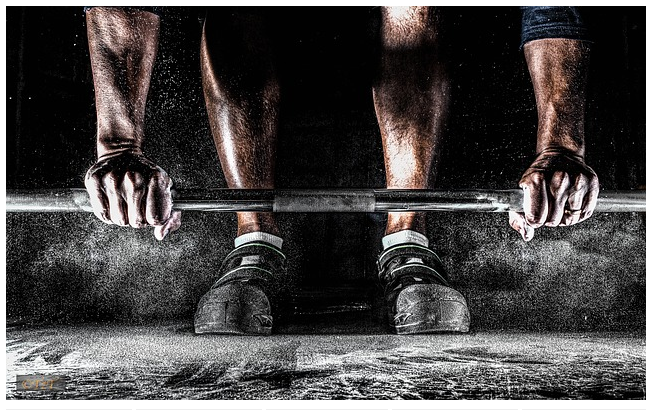
Each tip addresses a specific, commonly overlooked cause of deadlift-related back pain. None requires changing the movement itself — only when and how you train it. Together they form a straightforward protocol that makes the deadlift safer and more productive simultaneously.
Avoid spine-compression exercises
in the morning.
When you deadlift matters — and research suggests morning training is the riskiest time for spinal loading exercises.
Subjects who avoided bending activities in the early morning significantly reduced reported back pain days.
The study found that the early morning period — the first few hours after rising — represents a window of elevated spinal vulnerability. During sleep the intervertebral discs rehydrate and expand slightly, increasing their volume and changing the mechanical demands placed on the surrounding tissue. Spinal compression exercises performed before this morning fluid shift has stabilised place the discs under stress they are not yet prepared to handle.
The practical implication is clear. Allow at least two to three hours of upright movement before performing any spine-compression exercise — deadlifts, squats, loaded carries. This is not a suggestion to avoid morning training entirely. It is a suggestion to begin morning sessions with movements that do not load the spine axially until the discs have had time to normalise.
The best time to deadlift is not first thing in the morning. Allow your body to move for a few hours first — and the same lift becomes significantly safer.
Stretch the hip flexors —
sitting is the new smoking.
Professor Steven Bevan, director of the Centre for Workforce Effectiveness at the Work Foundation, made the observation that sitting is the new smoking — and for the deadlifting trainee, the hip flexors are where that sedentary damage accumulates most visibly.
Extended sitting tightens the hip flexors and causes them to lose range of motion. When the hip flexors are chronically shortened, they pull the pelvis into anterior tilt — forcing the lower back into an exaggerated arch and creating exactly the kind of pre-loaded tension that makes deadlift-related lower back injuries more likely. The lower back is asked to work harder than it should because the hips cannot hinge freely.
The solution is a targeted hip flexor stretch that can be performed in minutes and delivers immediate results. Regular practice before deadlift sessions — and throughout the working day for office-based trainees — substantially reduces this risk.
Performed before deadlift sessions and throughout the day.
- Drop into a lunge position on the floor — one knee on the ground, the other foot forward at 90 degrees
- Squeeze the glutes of the back leg deliberately — this posterior pelvic tilt is what produces the stretch in the hip flexor
- Push the hips gently forward until you feel a deep stretch through the front of the rear hip
- Hold for 30 seconds, breathing steadily throughout
- Switch sides and repeat
Protecting recovery capacity — including the hip and lower back health that makes the deadlift trainable long-term — is one of the four principles of the Minimum Effective Strength System.
Cycle your loads —
lighter sessions build more muscle.
The instinct to train heavy every session is understandable but counterproductive. For the deadlift in particular — a movement where the recovery cost is high and the injury risk from accumulated fatigue is real — training at maximum intensity without variation creates a pattern that ends in a setback.
The research on mixed loading is clear. Varying weights and rep ranges across sessions aids the recovery process, stimulates muscle growth through multiple adaptive pathways, and allows the connective tissue — tendons and ligaments — to recover between heavy loading sessions. The body does not respond only to maximum loads. It responds to progressive, varied challenge over time.
One adjustment at your next session.
At your next deadlift session, reduce all training weights by 20 percent. Perform the same number of sets and repetitions at this reduced load. The movement pattern is trained, the posterior chain is stimulated, and the lower back recovers from the previous heavy session. This is not a compromise — it is the correct response to how adaptation actually works. The following heavy session will benefit from the recovery the lighter session provided.
This is the same principle behind Bill Starr's heavy-light approach — discussed on the training too hard page — applied specifically to the deadlift. Training hard every session is not a sign of commitment. It is a sign of misunderstanding how strength is built.
Training at the right time, maintaining hip mobility, and cycling loads intelligently — these are not additions to a training programme. They are components of one that actually works long-term. The Minimum Effective Strength System is built on exactly these principles.