Fat Loss Over 50 —
Defusing the Creeping
Obesity Time-Bomb
Why fat loss feels harder after 50 — and the one change that reverses the process
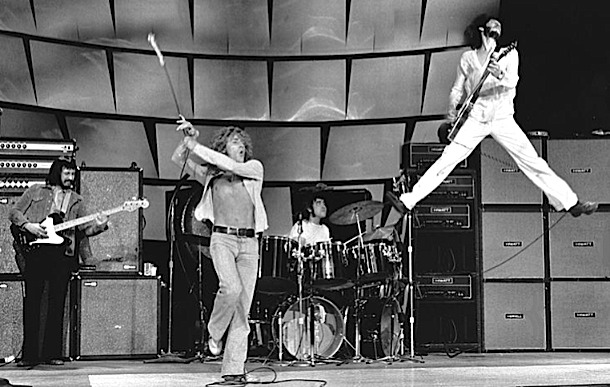
Roger Daltrey of The Who famously sang "Hope I die before I get old" in 1965. Today, he is well into his eighties — still performing, still moving, still proving that getting older does not have to mean fading away.
Getting older is inevitable. Getting weaker, fatter, and slower is not. Understanding why body composition changes after 50 is the first step toward reversing the process.
Creeping obesity — why it happens
and why most people miss it.
When you are young, staying lean feels almost effortless. Metabolism is high, muscles are full, and the risk of serious health conditions remains relatively low. But as the years pass, something subtle begins to happen — and because it is gradual, most people do not notice it until the effects are already significant.
The process works in two directions simultaneously. Muscle mass declines — and with it, the metabolic engine that burns calories around the clock. Body fat increases to fill the space the muscle has vacated. The scales may not register the change for years, because the weight of lost muscle is being replaced by the weight of gained fat. The number stays the same. The body underneath it is quietly transforming.
The rate of change — muscle lost and fat gained between 20 and 50.
Average muscle loss between ages 20 and 50 — approximately half a pound per year, continuing beyond 50 without intervention.
According to Darden's research, fat can be gained at up to three times the rate of muscle loss — compounding the body composition shift significantly.
You might weigh the same as you did fifteen years ago. But beneath the surface, the composition of that weight has shifted — less muscle, more fat. This is what experts call creeping obesity, and it is one of the most significant threats to health and quality of life after 50.
Why fat loss feels harder after 50 —
and why muscle is the answer.
The reason fat loss feels increasingly difficult with age is not willpower, not diet knowledge, and not the absence of the right exercise protocol. It is a straightforward physiological consequence of declining muscle mass. Muscle drives metabolism. When muscle mass falls, everything that depends on it falls with it.
- Metabolism slows — fewer calories are burned at rest as muscle tissue is replaced by metabolically inactive fat
- Daily caloric expenditure decreases — without any change in activity level, the body simply burns less
- Fat gain accelerates — a lower metabolic rate means the same diet produces more fat storage than it previously did
- Fat loss becomes harder — a caloric deficit that once produced steady fat loss now produces a smaller effect from the same effort
Because this decline is gradual — half a pound of muscle per year — most people attribute the creeping changes to ageing itself rather than to the reversible process of muscle loss. This distinction matters enormously. Ageing cannot be reversed. Muscle loss can be.
The Minimum Effective Strength System addresses the root cause of creeping obesity directly — building and preserving muscle through progressive compound training, raising the metabolic rate permanently rather than temporarily.
Add muscle — and let the metabolism
do the rest.
Creeping obesity is not inevitable. It can be stopped. It can be reversed. And the solution is direct — add muscle. Every pound of muscle built raises the resting metabolic rate, permanently increasing the number of calories burned every hour of every day without additional cardio, without dietary restriction, and without longer sessions in the gym.
The mathematics of this are worth understanding precisely, because they demonstrate why building muscle is a more effective fat loss strategy than any amount of additional cardio.
Each pound of muscle raises the resting metabolic rate by approximately 37 calories per day.
- 1 lb of muscle gained ~37 extra calories burned daily
- 5 lbs of muscle gained ~185 extra calories burned daily
- 10 lbs of muscle gained ~370 extra calories burned daily
- 20 lbs of muscle gained ~740 extra calories burned daily
These calories are burned at rest — not during exercise. The metabolic benefit of added muscle operates continuously, 24 hours a day, compounding over months and years into a profound change in body composition.
A trainee who gains ten pounds of muscle over twelve months of consistent training is burning approximately 370 additional calories every day — the equivalent of a 30 to 40 minute run, without running. This is why muscle burns fat more effectively than cardio as a long-term fat loss strategy, and why the Colorado Experiment produced simultaneous fat loss and muscle gain from weight training alone.
Compound movements. Progressive loading.
Consistency over time.
The training approach that produces the metabolic benefits described above is not complicated and does not require long sessions. The goal is to build and maintain the large muscle groups — legs, back, chest — through compound movements that demand the most from the most muscle simultaneously.
The barbell squat, the deadlift, the dip, and the chin up — trained progressively, with adequate recovery between sessions — address every major muscle group and produce the full metabolic benefit. Additional isolation exercises add recovery cost without meaningful additional muscle stimulus for the over-50 trainee. The compound movements are the programme.
For the complete framework for weight training over 50 — including the four practical steps and the specific guidance on starting loads, movement selection, and progression — the dedicated page covers everything required to begin.
Build muscle. Raise the metabolism. Let the fat loss follow. This is the correct sequence — and it is what the Minimum Effective Strength System delivers through brief, compound-movement sessions designed specifically around the recovery capacity of the over-50 trainee.