Higher Reps for
Size and Strength
A five-time Olympic champion shows you how
Lifting heavy all the time can be a slippery slope — often leading to stalled progress, overtraining, and injury. All the latest research confirms that mixing your loads and rep ranges not only aids recovery but helps you add muscle too.
The solution is simpler than most people expect. And the proof comes from some of the most capable athletes in history.
Lighten the load.
At your next workout, try cutting all your training weights by half.
Worried you will lose strength and size by going lighter? The research says otherwise. Varying your loads and rep ranges aids recovery and promotes muscle growth — both at the same time. The key is keeping the effort honest regardless of the weight on the bar.
Five Olympic gold medals.
Lighter loads. Higher reps.
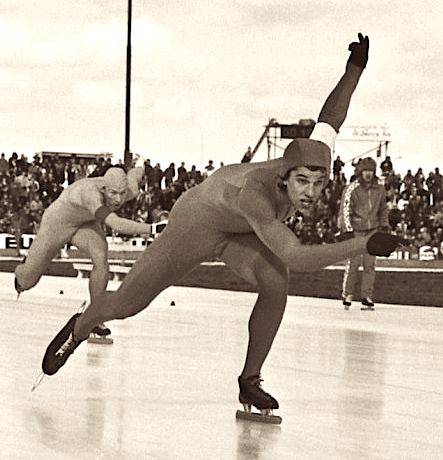
Long track speed skater Eric Heiden is one of the most remarkable physical specimens in sports history. This winter Olympics record-breaker carries 28-inch thighs and holds a combination of legendary stamina and strength that has never been surpassed.
Eric Heiden still holds the record for maximal wattage output.
The Wingate test has been performed repeatedly since the 1970s and measures maximal power output over 30 seconds. Every professional cyclist has attempted it. Even with modern sports science and training methods, no one has beaten Eric Heiden's record.
So what was Heiden's training secret? Lighter loads and higher repetitions. His leg press work ran to sets of 100 reps. His squats used 205 pounds — performed for 300 repetitions.
"We did a lot of squats, step-ups. We never did a lot of weights, but a lot of repetitions."
Eric HeidenVarying loads, protecting recovery, and focusing on what actually produces results — these are the same principles at the heart of the Minimum Effective Strength System.
The Golden Eagle and
the case for high reps.
Legendary bodybuilder Tom Platz — known as The Golden Eagle — built what many consider the greatest legs in bodybuilding history. His approach to rep ranges was equally unconventional.
Heavy day: 400 lbs × 50 reps.
Light day: 225 lbs for 10 minutes straight.
Platz rarely worked in a range lower than 12 to 15 repetitions. His results made the argument for high reps more convincingly than any research paper could.
The evidence from Heiden and Platz points in the same direction. High reps, applied with genuine effort, build both size and strength. The load on the bar is one variable among several — not the only one that matters.
If this approach to training resonates — varied loads, deliberate effort, sustainable over time — I have built these principles into a complete system. The Minimum Effective Strength System is where they live.