Lean Hollywood
Body — Why
Strength Without
Excess is
the Gold Standard
The physique people consistently admire communicates strength, health, and capability — not obsession, excess, or the pursuit of maximum size at all costs
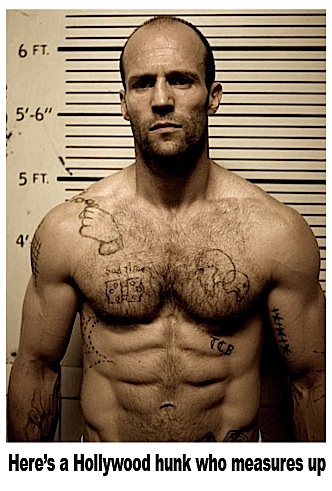
Browse fitness magazines, movie websites, or social media for five minutes and one thing quickly becomes obvious: the lean Hollywood physique continues to dominate popular culture. Whether it is Hugh Jackman preparing to play Wolverine, Chris Hemsworth wielding Thor's hammer, or Jason Statham looking effortlessly athletic in an action film, audiences consistently respond to the same type of physique.
These men are muscular, certainly. They possess broad shoulders, visible definition, strong arms, and athletic proportions. Yet they are rarely enormous by bodybuilding standards. They look powerful, healthy, capable, and athletic rather than oversized or extreme. This raises an interesting question — if bigger muscles are always better, why is the lean Hollywood physique consistently viewed as more desirable than the physiques displayed on professional bodybuilding stages?
Physical culture has always valued balance,
proportion, and athleticism over extreme size.
Contrary to popular belief, the popularity of the lean athletic physique is not a recent phenomenon. For most of the twentieth century, physical culture was centred around aesthetics, athleticism, health, and physical capability. Men trained to develop strong, balanced, visually impressive physiques that enhanced both appearance and performance — not to chase maximum weight on a barbell or maximum size on a competitive stage.
Early physical culture icons such as Eugene Sandow understood this principle perfectly. Sandow built his reputation not merely through feats of strength but through the development of a symmetrical, aesthetically pleasing physique. His goal was not to become the largest man possible. His goal was to create a body that reflected health, power, proportion, and physical excellence — and his approach produced results that still look impressive over a century later.
Somewhere along the way, many trainees lost sight of this objective. The conversation shifted away from how a physique looked toward how much weight could be lifted, or how much mass could be accumulated. Strength and size became ends in themselves rather than means toward a broader goal. A man can possess an impressive squat, bench press, or deadlift while carrying excess body fat, suffering from poor mobility, and displaying little of the athletic appearance that originally inspired him to start training.
Progressive compound strength training that builds the athletic framework without obsessing over maximum size — this is precisely the approach the Minimum Effective Strength System is designed around. Strength that serves appearance, health, and long-term capability.
Past a certain threshold, additional muscularity produces
diminishing aesthetic returns — then negative ones.
This is where many aspiring muscle builders fall into what might be called Meat-Head Madness. The logic seems straightforward enough. If gaining ten pounds of muscle improves a physique, then twenty pounds must be better still. If twenty is good, then forty must be better. Before long, the pursuit of improvement transforms into a relentless quest for maximum size at all costs.
The problem is that aesthetics simply do not work this way. There is a point where additional muscularity begins producing diminishing returns. Past a certain threshold, the physique may become larger without necessarily becoming more attractive, athletic, or visually impressive. In fact, excessive size often obscures the very qualities that made the physique appealing in the first place.
Each of these is a direct consequence of prioritising maximum size over proportion, health, and athletic balance.
- Broad shoulders lose their visual impact when the waist thickens to match
- Muscularity becomes less noticeable when definition disappears beneath additional body fat
- Athletic proportions become distorted when overall mass becomes the primary objective
- Mobility and physical capability often decline as excessive size accumulates
- Training becomes dominated by ego lifting rather than productive strength development
- The physique begins communicating obsession and excess rather than health and capability
This helps explain why many people admire the physiques of Jason Statham, Daniel Craig, or Chris Hemsworth while showing little desire to emulate the appearance of a modern professional bodybuilder weighing 280 pounds. The lean Hollywood body strikes a balance between muscularity and athleticism. It communicates strength without excess. It suggests health, vitality, confidence, and physical competence.
The lean Hollywood body remains popular for a simple reason. It represents a powerful combination of strength, muscularity, athleticism, health, and visual appeal — without the extremes that define much of modern fitness culture.
Symmetry, proportion, and health —
the qualities that endure beyond any particular training trend.
One reason the lean Hollywood physique enjoys such enduring popularity is that it reflects qualities people instinctively value. A lean, muscular body signals discipline without obsession. It demonstrates that the individual takes genuine care of themselves physically. It suggests energy, vitality, competence, and self-respect. Most importantly, it appears both attainable and functional rather than extreme or manufactured.
Research consistently shows that most people — men and women alike — find athletic, lean, and proportionate physiques more appealing than extremely muscular ones. The physique most often associated with attractiveness falls closer to the athletic actor than the professional bodybuilder. This should not be surprising. Attractiveness is not simply a matter of muscle size. Symmetry, proportion, posture, body fat levels, confidence, and overall health play a far larger role than sheer muscular bulk.
Of course, attracting others should never be the sole reason anyone trains. Strength training offers countless benefits beyond appearance — improved health, increased confidence, better mobility, stronger bones, enhanced longevity, and greater physical capability. Nevertheless, there is nothing wrong with acknowledging that appearance matters and that the lean athletic physique represents a genuinely sensible target for most trainees.
Strength and aesthetics are not enemies —
they work together beautifully when approached intelligently.
One of the biggest mistakes in modern fitness culture is treating strength and aesthetics as opposing goals. In reality, the two work together naturally when approached intelligently. Getting stronger leads to increased muscularity. Increased muscularity contributes to a more impressive physique. The key is ensuring that strength serves appearance rather than replacing it as the sole objective.
None of these require living in the gym. All of them require consistency and patience across months and years.
Compound exercises — squats, presses, rows, chin-ups, deadlifts — build the muscular framework that gives the body its athletic shape. Not the strongest human alive. Consistently stronger over time.
Even the most impressive musculature remains hidden beneath excessive body fat. Maintaining a reasonable level of leanness allows definition and athletic proportions to become visible.
Walking, daily activity, and sensible cardiovascular exercise support recovery, improve health, and contribute to maintaining leanness without requiring endless exhausting cardio.
The physiques people admire are not built in twelve weeks. They are the product of years of consistent training, sensible nutrition, and disciplined daily habits applied without obsession.
Avoid the trap of Meat-Head Madness. Train for genuine strength. Stay lean. Focus on proportion. Prioritise health and long-term sustainability. Build a body that looks capable because it genuinely is capable. Do that consistently, and the physique admired on the cinema screen proves far more attainable than the fitness industry would have you believe.
Both approaches produce muscular bodies. Only one produces a physique that most people genuinely admire.
Muscular but not oversized — proportions intact
Communicates strength, health, and capability
Athletic and functional in real-world terms
Suggests discipline without obsession
Attainable for the natural trainee with consistent effort
Proportions distorted by the pursuit of maximum size
Communicates obsession and extreme sacrifice
Often accompanied by reduced mobility and joint problems
Requires pharmaceutical assistance to achieve and maintain
Widely admired in specific subculture, rarely outside it
Progressive strength. Sensible nutrition. Daily movement. Patience. These are the four foundations of the lean Hollywood physique — and the approach the Minimum Effective Strength System is designed to deliver consistently for the natural trainee who wants to look as capable as they are.