Lower Back Pain
Remedy — How Exercise
Defuses the Time-Bomb
The sedentary epidemic is costing the UK over £1 billion annually — and strength training is the most effective response
Lower back pain is one of the most widespread and costly health conditions in the UK. The statistics are stark — and the cause, in the majority of cases, is the same thing: a sedentary lifestyle that leaves the structures supporting the spine undertrained, underused, and chronically vulnerable.
The remedy is not complicated. But it requires more than the chiropractor's standard advice of stretching and short walks.
Over 10 million working days lost.
Every year. In the UK alone.
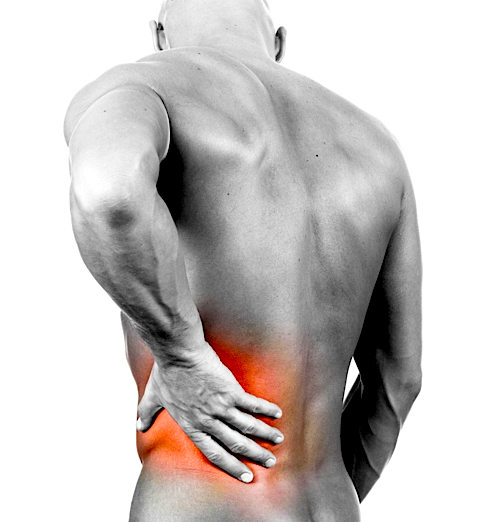
UK Statistics Authority figures make for uncomfortable reading. More than 10 million working days are lost annually to back pain, driven primarily by what experts are now calling the country's sedentary epidemic. The over-50s are hit hardest — but no age group is spared.
- Ages 25–34 1.89 million days
- Ages 35–49 3.86 million days
- Ages 50–64 4.2 million days
- Total annual cost Over £1 billion
Source: UK Statistics Authority. These figures represent direct productivity loss only and do not include healthcare costs, reduced quality of life, or the longer-term impact of chronic pain on training capacity.
"Sitting is the new smoking. The more sedentary you are, the worse it is for your health."
Professor Steven Bevan — Director, Centre for Workforce Effectiveness, The Work FoundationThe increasingly sedentary nature of modern work has led chiropractors to call for a step change in how people treat their lower backs — recommending regular stretching and frequent movement breaks. This is sensible advice. But it addresses the symptom, not the cause. The cause is a spine that has been insufficiently loaded and inadequately supported by the surrounding musculature for years.
Strength training — the most effective
lower back pain prevention available.
The most effective long-term lower back pain remedy is not passive recovery — it is progressive loading. Studies consistently show that regular weight training safeguards the spine by strengthening the musculature that supports it, increasing bone density, and training the posterior chain to handle the demands of daily life without breaking down.
The mechanism is straightforward. The lower back is vulnerable when the muscles surrounding it — the erectors, glutes, and hamstrings — are too weak to share the load of everyday movement. Sitting for extended periods both shortens the hip flexors and allows these posterior chain muscles to weaken through disuse. The spine then bears loads it was never designed to carry alone.
Progressive strength training reverses this pattern directly. It strengthens the posterior chain, restores hip mobility, and teaches the body to distribute load efficiently across the entire musculoskeletal system rather than concentrating it in the lumbar spine. For specific guidance on protecting the back during training, see the deadlift tips page — the hip flexor stretch and morning training guidance there apply equally to general back health.
Training the posterior chain consistently, with adequate recovery between sessions — the approach the Minimum Effective Strength System is built around — is one of the most effective things a trainee can do for long-term spinal health.
407 pounds. American record.
Age 75.
Inspiration for what is possible at any age is not hard to find — if you know where to look. Vladimir Tsatsouline, father of kettlebell coach Pavel Tsatsouline, provides one of the most compelling examples on record.
At 75 years old and 193 lbs bodyweight, Vladimir deadlifted 407 lbs — an American record.
This was not a young man's lift performed in his prime and recalled fondly in old age. This was a 75-year-old setting a national record — in a movement that requires a strong, healthy, well-trained posterior chain and spine. The record itself is the argument. You cannot deadlift 407 pounds at 75 with a fragile back. You deadlift 407 pounds at 75 because decades of progressive training have built a back that is anything but fragile.
As American powerlifter Scott Mendelson observed when he saw the lift: "That man is a stud." The response captures something important — genuine strength at any age commands respect precisely because it is rare, and it is rare because most people stop building it long before they need it most.
You are never too old to begin. The research on strength training over 50 is unambiguous — progressive resistance training produces strength and muscle gains at every age studied, with the additional benefit of protecting the spine and reducing back pain risk significantly compared to sedentary controls.
Three practical steps toward
a pain-free back.
-
Begin strength training — now, not later
The most important step is the simplest — begin. A basic barbell programme built around compound movements works the posterior chain, strengthens the erectors and glutes, and begins reversing the sedentary damage immediately. Start with movements you can perform with correct technique at a manageable load and progress from there. See the muscle building exercises page for the three compound movements that cover the most ground most efficiently.
-
Learn correct deadlift technique
The deadlift is the single most effective posterior chain strengthening exercise available — and the one most directly implicated in back pain when performed incorrectly. Learning to deadlift correctly is therefore both the best remedy and the best prevention for lower back problems. A correctly performed deadlift builds the back; a poorly performed one injures it. The technique is learnable in a single session with appropriate guidance.
-
Move consistently throughout the day
Structured weight training sessions address the strength deficit. What happens between sessions matters too. Brief, frequent movement breaks throughout the working day — standing, walking, the hip flexor stretch described on the deadlift tips page — counteract the hip flexor shortening and disc compression that accumulate during prolonged sitting. These two approaches — training and daily movement — work together. Neither alone is as effective as both combined.
A sustainable strength training practice — brief, focused sessions built around compound movements, applied consistently — is what the Minimum Effective Strength System provides. It is also, as the evidence makes clear, one of the most effective investments you can make in your long-term back health.