Muscle Loss in
Adults — The
Hidden Cause of
Age-Related
Fat Gain
Half a pound of muscle lost annually sounds trivial — until you understand what happens to the metabolism over ten or twenty years
How much muscle will you lose this year? For the average adult who performs little or no resistance training, the figure is often estimated at around half a pound annually. At first glance this sounds insignificant — less than the weight of a loaf of bread and far less than the fluctuations seen on the bathroom scales after a hearty Sunday dinner.
Yet hidden inside this seemingly harmless number is one of the most important health and fitness lessons available. That tiny amount of lost muscle could be the reason so many men and women find themselves steadily gaining body fat as they age, despite eating much the same foods they have always eaten. The truly unsettling part is that the process happens so slowly most people never notice it until years have passed and the effects are already well established.
Sarcopenia begins earlier than most people realise —
and advances without warning signs.
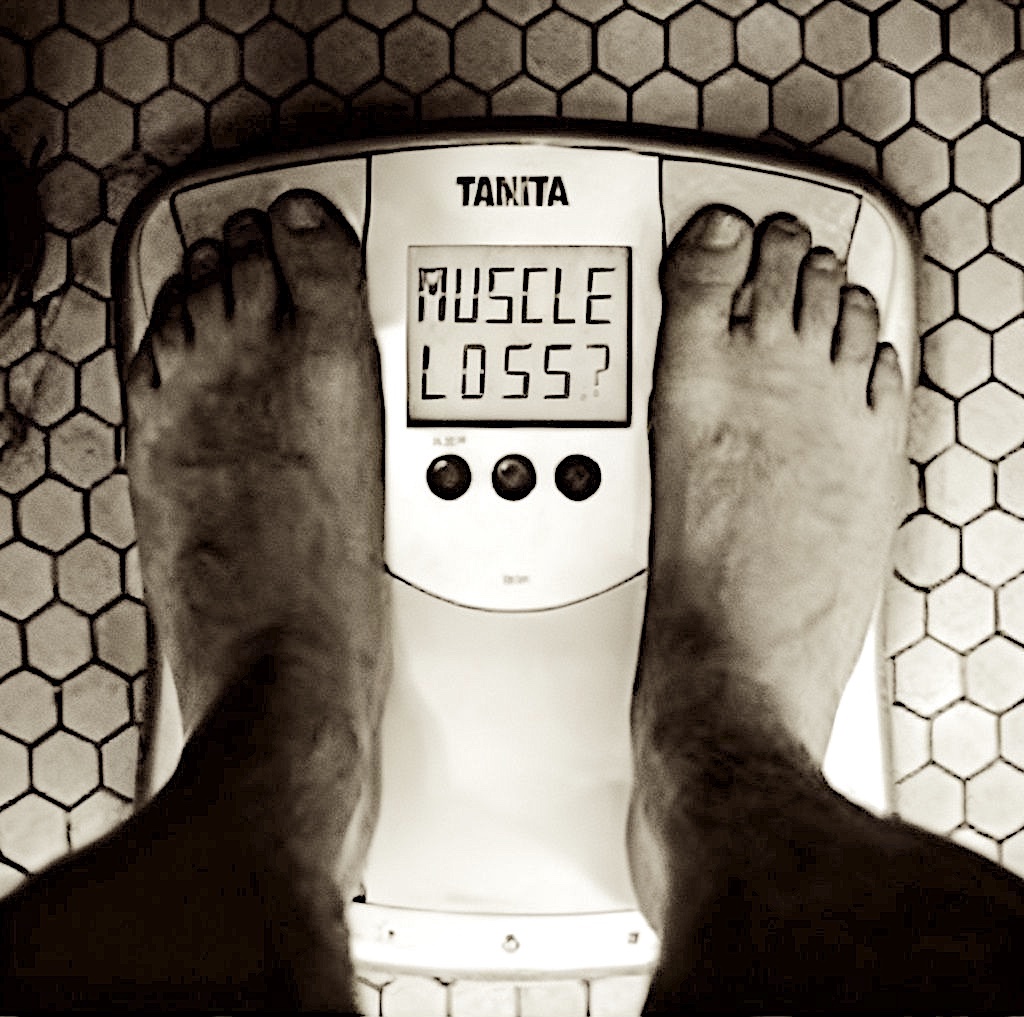
When most people think about ageing, they focus on visible changes. What they rarely consider is the gradual loss of lean muscle tissue occurring beneath the surface. This age-related decline in muscle mass is known as sarcopenia. Research suggests it can begin surprisingly early — adults may start losing muscle mass from their thirties onward if they fail to engage in regular strength-building activity.
Two landmark research sources that established the scale of age-related muscle loss in ordinary adults.
Among the early researchers to highlight disuse atrophy, Forbes observed that average adults not performing consistent heavy exercise experienced measurable losses in muscle tissue over time — laying the groundwork for sarcopenia as a recognised clinical concern.
Researchers at the Nutrition, Exercise Physiology, and Sarcopenia Laboratory at Tufts University reinforced these concerns, demonstrating that age-related muscle loss is genuine, widespread, and directly addressable through resistance training.
Unlike dramatic weight gain or sudden illness, muscle loss creeps into life quietly. There are no flashing warning lights. No dramatic symptoms. Instead, year after year, a little strength disappears. A little muscle vanishes. A little vitality fades. By the time many people notice, decades have already passed.
Progressive resistance training is the most direct intervention against sarcopenia — and the Minimum Effective Strength System applies it with the minimum effective dose that preserves muscle without overwhelming recovery.
Time magnifies small actions —
and compound interest works in both directions.
The reason muscle loss is so difficult to detect lies in its astonishingly slow pace. Imagine standing on your bathroom scales while fully clothed. In your pocket sits a small paperclip. You remove it and toss it aside. Would the scales register the difference? Almost certainly not — the weight is simply too small. This is an excellent analogy for muscle loss.
Spread half a pound of annual muscle loss across an entire year and the daily amount becomes almost microscopic. Day by day, nothing appears to change. Week by week, the difference remains invisible. Yet time has a way of magnifying small actions.
What seems invisible year by year becomes impossible to ignore across a lifetime.
Barely detectable annually — like a paperclip removed from the scales.
A meaningful reduction in metabolic rate and physical capability begins to manifest.
Hundreds of fewer calories burned daily. A direct cause of the expanding waistline many attribute purely to diet.
What seemed insignificant at the beginning now has major consequences for health, strength, and body composition. The tiny paperclip has become something far more substantial.
Many people insist they are eating the same as twenty years ago —
and in many cases, they are telling the truth.
Muscle is metabolically active tissue. Even at rest — sleeping, reading, watching television — muscles require energy to sustain themselves. This continual demand contributes significantly to daily calorie expenditure. As muscle gradually disappears, the body's energy requirements begin to fall. The amount of food required to maintain weight becomes lower than before.
Yet most people continue eating exactly as they always have. Calories once utilised by active muscle tissue now become surplus energy. Over time, that surplus is stored as body fat. What appears to be an age-related slowing of metabolism is often, at least in part, the direct consequence of losing lean muscle tissue.
An individual who loses five or ten pounds of muscle over several decades may find themselves burning meaningfully fewer calories each day than they once did. Without adjustments to food intake or activity levels, the body gradually accumulates the excess energy as fat. The expanding waistline that appears during middle age is often blamed entirely on poor eating habits — but muscle loss frequently plays an equally important role. This is why many people insist they are eating no differently than they did twenty years ago yet continue gaining weight. In many cases they are telling the truth. The problem is not necessarily that they are eating more. It is that their bodies are burning less.
The human body responds remarkably well to resistance training
even later in life — this is not inevitable decline.
Fortunately, this story has a productive conclusion. Unlike many aspects of ageing, muscle loss is not something that must simply be accepted. Study after study has shown that men and women can build strength and muscle well into their sixties, seventies, and beyond. The human body responds remarkably well to resistance training at any age. When muscles are exposed to progressively demanding exercise, they receive a clear signal: stay useful. The body responds by preserving existing muscle tissue and, in many cases, building additional muscle as well.
The same habits that build muscle also defend against the metabolic consequences of losing it.
- Preservation and development of lean muscle tissue — directly countering the annual half-pound loss
- Maintenance of a higher resting metabolic rate — more calories burned daily without additional effort
- Improved strength, mobility, and balance — the functional capabilities sarcopenia erodes most noticeably
- Better insulin sensitivity and glucose disposal — larger muscles provide greater capacity for metabolic health
- Hormonal support — progressive resistance training stimulates testosterone and growth hormone production
- Improved body composition — less fat accumulation as metabolic rate is maintained over decades
Most people approach fat loss backwards — becoming obsessed with cutting calories, following restrictive diets, and spending endless hours on cardiovascular exercise, while ignoring the tissue that plays a crucial role in determining how many calories are burned each day. The battle against body fat is not won merely by eating less. It is won by preserving the engine that burns those calories in the first place.
Just as compound interest quietly builds wealth, muscle loss quietly erodes health. Year after year, the effects accumulate until what was once invisible becomes impossible to ignore. One paperclip means nothing. Ten years' worth tells a very different story.
The next time someone tells you half a pound is not worth worrying about, remember the paperclip. The Minimum Effective Strength System gives the muscles the only signal they need — a reason to stay.