PHA Training —
Build Muscle and
Cut Fat Simultaneously
The 1960s training system used by the man who defeated Schwarzenegger
Peripheral Heart Action training is one of the most effective methods available for simultaneously building muscle and reducing body fat — combining the strength stimulus of compound weight training with the cardiovascular demand of circuit work.
It was popularised by one of the most accomplished physique athletes of the 1960s — and it remains as effective today as it was then.
Bob Gajda — one of only three men
to defeat Arnold Schwarzenegger.
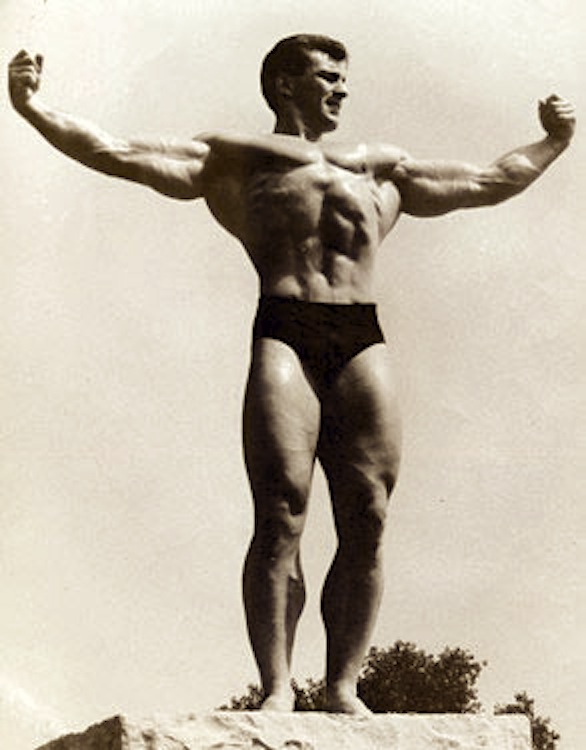
Bob Gajda is not a widely remembered name in mainstream fitness circles — but among serious students of strength training history, his credentials are exceptional.
- 1967 Mr America — overall title
- Mr Universe — international title
- One of only three men ever to defeat Arnold Schwarzenegger in competition
- Pioneer of Peripheral Heart Action training in competitive bodybuilding
Gajda did not simply win titles — he brought a training methodology with him that was unlike anything most competitors of his era were applying. Where others relied on conventional split routines, Gajda trained using the PHA system developed by Dr Arthur Steinhaus, alternating upper and lower body compound movements in a continuous circuit that kept the heart rate elevated throughout the session.
The physique Gajda built using PHA training was developed simultaneously for strength, size, and cardiovascular efficiency — three qualities rarely found together at the level he achieved.
What Peripheral Heart Action
training actually is.
Peripheral Heart Action Training
PHA was developed by Dr Arthur Steinhaus on a simple physiological principle: by alternating upper and lower body exercises with no rest between movements, blood is continuously forced to travel from one extremity to the other — keeping the heart rate elevated throughout the entire session. As the upper body muscles work, the lower body muscles temporarily rest, and vice versa. The constant circulatory demand produces a cardiovascular training effect on top of the muscular stimulus, making PHA one of the most time-efficient training methods available.
The goal of this system is threefold — improved strength, increased muscle size, and elevated cardiovascular efficiency. What separates PHA from standard circuit training is the deliberate physiological rationale behind the exercise sequencing. This is not simply moving between exercises to save time. It is a specific application of circulatory mechanics to produce a training adaptation that neither pure strength training nor pure cardio can match alone.
PHA is a distinct methodology from the Minimum Effective Strength System — it is higher frequency and higher volume by design. But both share the compound movement foundation and the principle that isolation exercises are inefficient compared to movements that demand full-body engagement.
Setting up a PHA workout —
exercise selection and structure.
The setup is straightforward but the execution demands effort. Choose two compound upper body exercises and two compound lower body exercises. Isolation exercises are deliberately excluded — they do not produce sufficient cardiovascular demand to maintain the elevated heart rate that makes PHA effective. Move from upper to lower body with no rest between exercises. The only rest occurs at the end of each complete circuit.
Upper, lower, upper, lower. No rest within the circuit.
- Goblet squat — 10 repetitions Lower body — quads, glutes, core. Initiates the blood flow downward.
- Chin up — 6 repetitions Upper body pulling — lats, biceps. Forces circulation back to the upper body.
- Stiff-leg deadlift — 8 repetitions Lower body — hamstrings, glutes, lower back. Redirects blood flow to the posterior chain.
- Barbell floor press — 6 repetitions Upper body pressing — chest, shoulders, triceps. Completes the upper-lower circuit.
Why PHA and complexes share
the same underlying principle.
Experienced trainees will recognise similarities between PHA and barbell complexes — another time-efficient training method built on continuous loading. Both systems exploit the same two mechanisms to produce their results.
Why both methods build muscle and burn fat simultaneously.
- More work completed in less time By removing rest periods between exercises, total training volume — weight lifted multiplied by repetitions — increases significantly within the same session duration. The body must process a greater demand without additional recovery time.
- Extended time under tension Sequencing exercises without rest keeps the muscles under continuous load for longer. Increased time under tension is a primary driver of muscle hypertrophy — and both PHA and complexes exploit it directly through their structure rather than through adding sets.
These two elements combined produce what coaches refer to as training density — more work in less time, with the body under load for longer. The result, as Gajda demonstrated with his competition physique, is simultaneous muscle gain and fat loss from a single training session.
PHA is one approach. The Minimum Effective Strength System is another — built for the trainee who wants consistent, sustainable progress from a minimum of sessions rather than the higher-frequency, circuit-based demand that PHA requires. Both are effective. The right choice depends on your recovery capacity, your schedule, and your goals.