Ross Enamait —
Fighting Fit with
a Champion
Physique
The founder of RossTraining.com on boxing, bodyweight conditioning, patience, and why equipment is optional
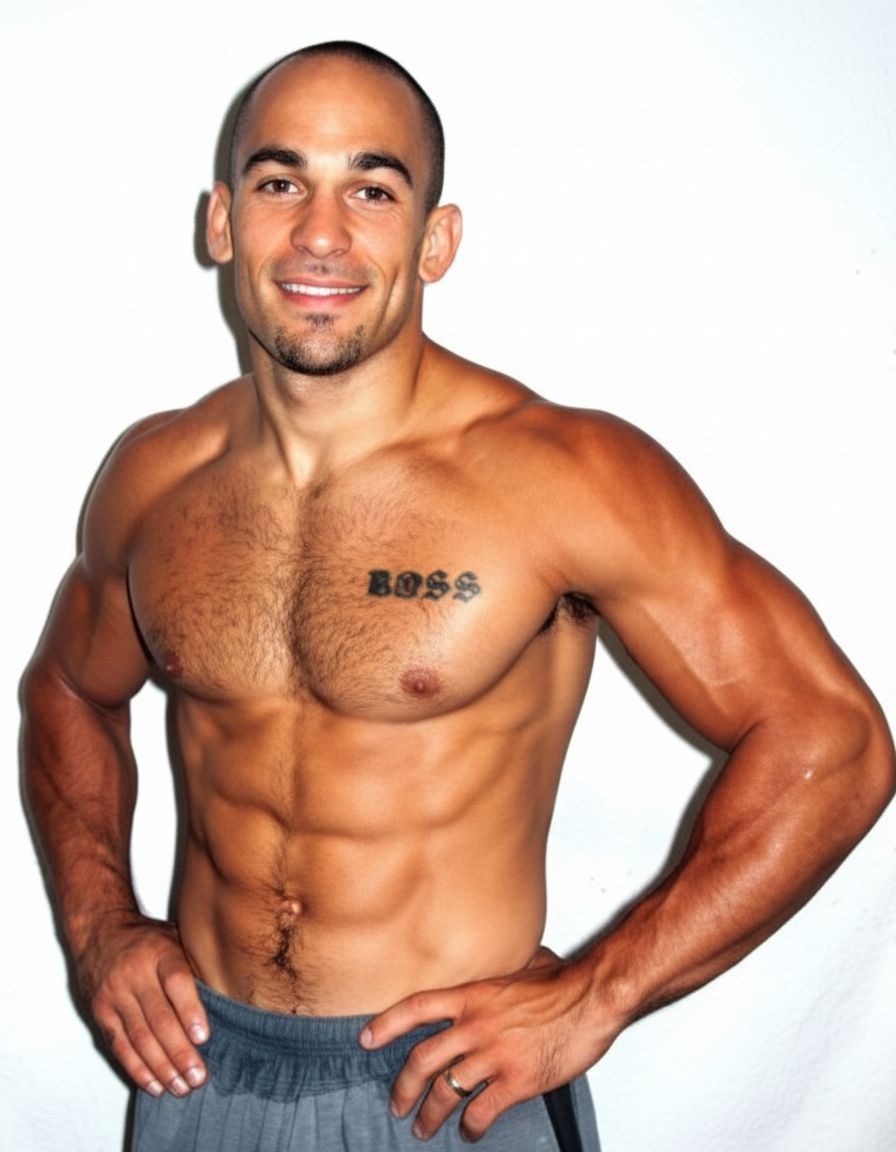
Ross Enamait has been involved in boxing for more than half his life — first as a fighter, then as a trainer and coach whose methods have influenced a generation of conditioning practitioners. His website, RossTraining.com, is one of the longest-running and most respected independent resources on high-performance conditioning on the internet.
What distinguishes Ross from many coaches is his insistence that genuine physical capability requires neither expensive equipment nor complicated programmes — a philosophy that aligns closely with the approach this site is built on.
Six questions —
Ross Enamait in his own words.
As a trainer and coach, what is your favourite thing about your job?
Ross EnamaitI have been involved in the sport of boxing for more than half my life. Just waking up every day and being back in the gym with the fighters is a reward in itself.
I enjoy training the athletes and helping them improve themselves in and out of the gym. Having someone rely on me to help them is both an honour and a privilege.
There isn't a day I take for granted. Therefore, I couldn't pinpoint a single aspect about my job that I enjoy the most. I just enjoy it, period.
The absence of a specific answer is itself instructive. A coach who cannot identify a single favourite aspect of their work because all of it is rewarding is a coach who has found their calling rather than their occupation.
Who would you say has been your biggest training influence and why?
Ross EnamaitI have had so many influences that it would be impossible to list them all.
A few that come to mind are some of my previous trainers and mentors such as Rollie Pier, Harry Figueroa, Pepe Vasquez, Cisco Zayas, and Kent Ward. These are all men that I was around in the boxing gym as a young fighter.
I certainly learned from them all and am happy to pass on the knowledge that they so willingly shared with me.
The gym as a knowledge transmission network — coaches learning from coaches, each generation passing on what worked to the next. This is the tradition that Hardgainer magazine and the abbreviated training community represent in the strength world.
As a father and husband in your 30s, how has your training changed from when you were a teenager?
Ross EnamaitMy training has not changed because I am a father and husband. The greatest change for me is a shift in focus.
As a teenager, I was a competitive fighter so I was only focused on myself. As a trainer to others, my own training is more of a hobby.
I certainly work hard but I don't make a living by working out. I train early in the morning before my day begins — I then shift my focus towards my athletes. They are my primary concern.
Training before the day begins and subordinating personal training goals to the needs of the people being coached — this is the structure most serious trainees who also hold full-time responsibilities eventually arrive at. Ross has been living it from the beginning.
If you could travel back in time, what training advice would you pass on to your teenage self?
Ross EnamaitI'd certainly stress the importance of patience. I didn't have it as a youngster.
I had multiple hand injuries as a fighter and would always rush back to training before my body was ready. I never gave myself time to heal — I lived in the moment, and didn't think about the future.
Perhaps it was a blessing in disguise, however, as I wouldn't have begun training others if it weren't for my previous injuries.
Patience — the advice every experienced trainer eventually gives their younger self. The irony Ross identifies is real: the injury that slowed him as a fighter redirected him toward the work that has produced his greatest contribution. Not every setback is a mistake in disguise, but some are.
If you were shipwrecked on a desert island, what single piece of training equipment would you take with you and why?
Ross EnamaitI'd be fine without equipment. Bodyweight exercise has no limits. There is always a way to make an exercise more difficult.
I'd also welcome the challenge of building my own homemade tools from whatever was available on the island. Even in our civilised world, more than half of the equipment in my gym is homemade. It is rare that I purchase exercise equipment. Almost every video that I have on YouTube is based on a homemade design.
The most direct possible answer to the desert island question — and the most revealing. A coach whose training philosophy is so thoroughly independent of equipment that a desert island represents a challenge to relish rather than a problem to solve. The bodyweight principle taken to its logical conclusion.
What are your training goals for the future?
Ross EnamaitI am always working on new challenges, but I can't say there is a specific goal that I'm looking to achieve in the immediate future.
Most of my goals are related to my athletes and where I'd like to take them in the future. Once again, they are my priority.
I'll keep working hard in the gym as well, but I just follow wherever my passion leads me. It is difficult for me to say what I'll be working on from month to month.
Following the passion rather than the plan — this is consistent throughout the interview. Ross's clarity about what matters to him produces a kind of directional certainty that does not require specific future goals to maintain its momentum.
Ross Enamait's insistence that bodyweight exercise has no limits — and that equipment is optional — is the same stripped-back philosophy that the Minimum Effective Strength System applies to barbell training. Different implements, identical principle — the minimum required to produce the maximum result.
Patience. Gratitude. Equipment-free resourcefulness. A coaching focus that subordinates personal training goals to the development of others. Ross Enamait's answers circle the same set of values from six different angles — and every one of them applies as directly to the ordinary trainee as to the competitive boxer.
To discover more of Ross Enamait's training methods — including his extensive bodyweight conditioning resources and homemade equipment library — visit his website. It remains one of the most practically useful independent training resources available.
Visit RossTraining.com →For the other interviews in the series, return to the muscle building tips hub page.