Strength Standards —
Are You Strong
Enough to Gain Size?
The Willoughby and McCallum benchmarks — what strength targets predict in terms of muscular development
One of the most frequently asked questions in strength training is this: how much stronger do I need to be before I start seeing serious improvements in size? It is a genuinely important question — and there is a specific, data-backed answer.
The strength-to-size relationship has been studied and charted by some of the most serious researchers in the iron game. What they found produces a clear set of benchmarks worth knowing.
Strength first — size follows.
The sequence that cannot be skipped.
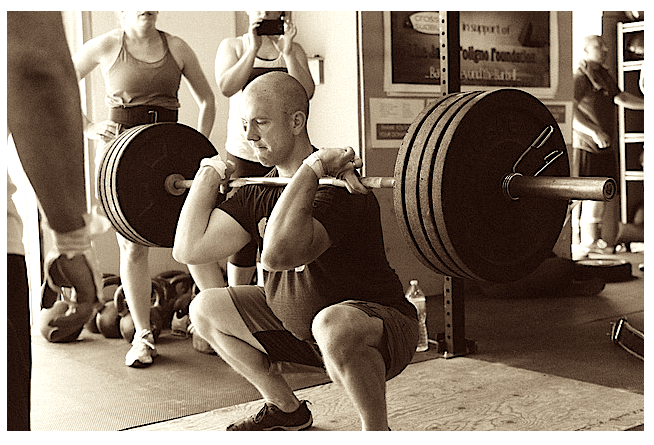
The relationship between strength and size is not a coincidence. It is a physiological sequence. Muscle grows in direct response to the demands placed on it — and those demands are expressed most precisely as load. A muscle that cannot lift more weight than it could three months ago has not received sufficient stimulus to grow significantly.
This is why the most reliable predictor of muscular development is not the number of sets performed, the number of exercises used, or the hours spent in the gym — it is the progressive increase in the weight lifted across the compound movements. Get significantly stronger on the squat, the bench press, and the deadlift, and size gains follow as a natural consequence. This is what the strength-to-size charts document — the predictable relationship between specific strength levels and the muscular development they produce.
The strength-to-size relationship is not uniform among all individuals — some trainees will need to get considerably stronger to hit a given muscular girth. But the direction of the relationship is consistent. Stronger means larger, without exception.
Progressive loading on the compound movements — the mechanism that produces the strength gains the standards below describe — is the core operating principle of the Minimum Effective Strength System. The standards are the destination. The system is the route.
Minimum strength standards —
the foundation that makes everything else possible.
These minimum standards represent the first meaningful threshold — the point at which consistent muscular development becomes reliably achievable. For a trainee starting from scratch, these are the targets that should occupy the first twelve to eighteen months of progressive training.
Reach these before expecting consistent size development.
| Lift | Bodyweight ratio | Example — 180 lb trainee |
|---|---|---|
| Squat — 1RM | Bodyweight × 1.5 | 270 lbs |
| Deadlift — 1RM | Bodyweight × 2 | 360 lbs |
| Bench press — 1RM | Bodyweight × 1 | 180 lbs |
| Overhead press — 1RM | Bodyweight × 0.75 | 135 lbs |
| Barbell row — 1RM | Bodyweight × 1 | 180 lbs |
These are intermediate benchmarks — not elite targets. A trainee who reaches all five will have built a foundation that looks like the work it represents, and will have the muscular development to show for it.
The Willoughby and McCallum standards —
what these numbers produce in size.
Iron Man's David Willoughby and The Complete Keys to Progress author John McCallum both produced detailed strength-to-size charts from research across large numbers of trainees. Their findings converge on a consistent set of benchmarks — the numbers a trainee needs to reach in order to see a specific level of muscular development.
These are the most specific and well-researched strength-to-size targets available. They represent what the majority of serious natural trainees will achieve when their training is correctly structured and their strength has been built progressively on compound movements.
Squat 400 lbs. Bench 300 lbs. Deadlift 500 lbs.
At a lean bodyweight of 190 lbs.
- Bicep circumference 16 inches
- Chest circumference 45 inches
- Lean bodyweight ~190 lbs
If maximum singles feel remote, these rep targets are the working equivalent.
- Bench press 250 lbs × 6 reps
- Squat 300 lbs × 10 reps
- Deadlift 350 lbs × 10 reps
- Barbell curl 100 lbs × 5 reps

If these numbers sound distant, consider what they actually represent in context. Reaching them would place a trainee ahead of 95% of gym members anywhere in the world. They will not win a professional competition — but they represent the genuine upper boundary of what most committed natural trainees can achieve with well-structured progressive training over years.
If they sound unreachable from where you currently stand, the starting point is the minimum standards table above. Work steadily toward those first. The Muscle Growth Stories page covers the specific experience of progressing through this sequence — including Mike Mentzer's four-month period of strength gains without visible size improvement, and why that is part of the process rather than a sign that it is not working. See muscle growth stories for the full account.
The strength standards above are the map. The Minimum Effective Strength System is the route — progressive loading on compound movements, managed frequency, and the patience to allow the strength-to-size sequence to complete at its own pace.