The Dip Exercise —
How to Build Pecs
Like Marvin Eder
The upper body equivalent of the squat — and just as productive
The parallel bar dip will do for your upper body what the squat will do for the rest of you. It is an excellent alternative to the bench press — and for building the chest, shoulders, and triceps simultaneously, it is the number one choice.
Like the squat, it takes practice. Like the squat, the mastery more than repays the effort.
What the parallel bar dip produces.
The parallel bar dip works the pectorals, deltoids, and triceps in a single compound movement — making it one of the most efficient upper body exercises available. Need convincing? Let history make the case.
- Full chest development across the entire pectoral range
- Broad, strong shoulders from deltoid engagement
- Well-developed triceps — the largest muscle of the upper arm
- Increased pressing power that transfers to every upper body lift
- Improved posture through shoulder girdle strengthening
434 pounds. At 197 lbs bodyweight.
In 1953.
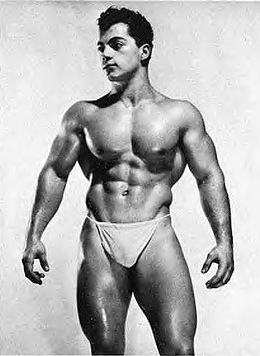
There are few physiques from the golden era of strength training that would still draw admiration by today's standards. Marvin Eder — The Biceps from the Bronx — is one of the rare exceptions.
Eder built his physique primarily on compound movements — the bench press, the squat, and the parallel bar dip. His dip was among the most impressive upper body strength feats in the history of the lift.
Marvin Eder performed a parallel bar dip of 434 pounds at a bodyweight of 197 pounds.
A pound-for-pound upper body strength performance that has rarely been matched. The dip was not a secondary movement for Eder — it was a cornerstone of his training and a primary driver of the physique that earned him his reputation.
The parallel bar dip is one of the primary upper body movements in the Minimum Effective Strength System — chosen for precisely the reason Eder proved: maximum upper body development from a single compound movement.
How to get the most from the dip exercise.
-
Abandon the flyes
The parallel bar dip is a compound mass-builder for the upper body. Dumbbell and machine flyes are isolation exercises that produce inferior results for the time invested. If building a full, powerful chest is the goal, the dip delivers what flyes cannot — genuine pressing strength and whole-shoulder development.
-
Progress to weighted dips
Work up to the point where you are adding weight around your waist. This is the same progressive loading principle that made Eder exceptional — a little more iron every few workouts, applied consistently over time. A dipping belt makes this straightforward. The loaded dip is one of the most productive upper body exercises available to the serious trainee.
-
Invest in solid equipment
Your choice of dip station matters. Select equipment of solid construction that will provide unyielding service — a freestanding dip station, a chin-dip station, or a power rack with dip attachments. The movement should never be limited by the stability of the equipment under it.
-
Earn every repetition
Effective strength training demands precise form — the dip is no different. Never cheat the weight up. For the beginner trainee who lacks the strength to perform full parallel bar dips, substitute the bench press and build toward it. The dip's strength requirements make the foundation worth building properly before adding load.
-
Try the 21s technique
Add a technique variation once basic strength is established. The 21s method divides a set into three segments of seven repetitions each — the first seven covering the bottom half of the movement, the second seven the top half, and the final seven the full range. This ensures comprehensive stimulation across the entire movement arc and creates a genuinely demanding set from a modest total repetition count. It works particularly well on compound movements like the dip.
If the dip appeals as part of a focused, compound-movement approach to upper body strength, the Minimum Effective Strength System shows exactly how to build it into a complete, sustainable training framework.