Top Muscular
Strength Exercises —
Why Isolation
Exercises Hurt
Your Gains
Before you worry about polishing the finer details of your physique, you must first build the physique itself
Walk into almost any commercial gym in the world and you will see people spending vast amounts of time performing the wrong exercises. Curling, extending, raising, and isolating individual muscles from every conceivable angle, they attack their bodies with endless variations of secondary movements while neglecting the very exercises that actually build muscular strength.
This is not because these trainees are lazy. Far from it. Most are highly motivated and genuinely want to improve their physiques. The problem is that they have fallen victim to one of the oldest mistakes in bodybuilding: confusing what finishes a physique with what builds one. The answer to their frustration often lies not in doing more — but in doing the right things.
Most trainees spend the majority of their time working
the smallest muscles in their bodies.
One of the greatest ironies of modern bodybuilding is that most trainees spend the majority of their time working the smallest muscles in their bodies. Walk through a gym and you will see countless lifters performing concentration curls, cable kickbacks, wrist curls, lateral raises, triceps extensions, and a seemingly endless variety of machine-based isolation exercises. Yet despite all this activity, very few possess the level of muscular development that would justify such specialised work.
The truth is that isolation exercises were originally intended to supplement a foundation built upon heavy compound movements. They were never designed to replace them. Unfortunately, many trainees reverse the process entirely. They spend enormous amounts of time on assistance exercises while neglecting the major lifts that stimulate the greatest amount of muscle mass.
It is rather like spending hours choosing curtains for a house whose foundations have not yet been built.
Recovery is finite — and every isolation exercise you add
consumes resources that could have gone somewhere more productive.
At first glance, isolation exercises seem harmless enough. After all, how could a few sets of curls or leg extensions possibly interfere with your progress? The answer lies in recovery.
Every exercise you perform places demands upon your body's recuperative resources. Recovery is not unlimited. It is a finite commodity. The more work you perform, the greater the demand you place upon your muscles, nervous system, joints, connective tissues, and energy reserves. When recovery demands exceed your ability to recuperate, progress slows or stops altogether.
This is where isolation exercises become problematic. While they do stimulate individual muscles, they often contribute little to overall strength development while still consuming valuable recovery resources. In effect, they rob your body of energy that could have been directed toward the primary movements responsible for most of your growth. The problem becomes even worse when combined with high-frequency training. Trainees often perform excessive numbers of exercises several times per week, creating a recovery debt from which they never fully escape. Over time, fatigue accumulates, strength stalls, and muscle gains grind to a halt.
Maximum stimulus from the minimum productive exercises — this is the principle behind the Minimum Effective Strength System. Every exercise earns its place. Nothing consumes recovery resources without delivering proportionate return.
If your goal is to build substantial muscle mass and impressive strength,
you must select exercises capable of recruiting the greatest amount of tissue.
Building muscular strength is serious business. It requires stimulating large amounts of muscle tissue while forcing the body to adapt to progressively greater workloads. This is not a task accomplished through tiny movements performed with tiny loads.
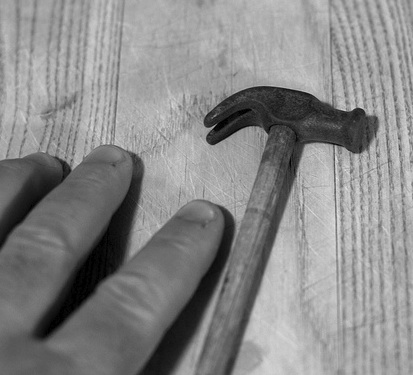
Imagine you were tasked with breaking up a section of concrete road. Would you choose a lightweight tack hammer — or a powerful pneumatic jackhammer capable of tearing through asphalt, rock, and concrete? The answer is obvious. Big jobs demand big tools. The same principle applies directly to strength training. The top muscular strength exercises are the jackhammers of the iron game. They stimulate dozens of muscles simultaneously, allow heavy weights to be used, and create the conditions necessary for genuine physical transformation. Isolation exercises, by comparison, are little more than tack hammers.
Not all exercises are created equal — these three qualities
separate the jackhammers from the tack hammers.
The best muscular strength exercises share three important characteristics that separate them from lesser movements. These qualities explain why the strongest and most muscular athletes throughout history have consistently relied upon a relatively small number of fundamental lifts rather than an endless variety of machine-based alternatives.
An exercise that satisfies all three deserves the centre of your programme. One that satisfies none deserves removal.
The more muscle tissue involved, the greater the training stimulus. Movements recruiting multiple major muscle groups simultaneously produce hormonal responses that single-joint exercises cannot trigger.
Heavy compound movements place significant demands on the body, triggering the hormonal adaptations — growth hormone, testosterone — that support both strength and muscle development throughout the body.
Progressive overload remains the cornerstone of strength training. The best exercises allow resistance to be increased consistently and safely over months and years — which is what actually produces long-term results.
Strip away the marketing hype and a handful of movements
stand head and shoulders above the rest.
If you strip away the marketing hype, the fancy machines, and the endless exercise variations, a handful of movements stand head and shoulders above the rest. They are the same movements that built powerful physiques fifty years ago — and they continue to dominate because they work.
Combined, these movements cover every major muscle group, every fundamental movement pattern, and every quality that makes an exercise worthy of your limited recovery resources.
Perhaps the greatest strength-building exercise ever devised. Challenges the quadriceps, glutes, hips, core, and lower back while allowing significant progressive loading. Few exercises stimulate overall body growth as effectively.
This legendary lift develops the posterior chain, strengthens the back, hips, legs, and grip, and teaches the body to generate tremendous force from the floor. A complete strength movement.
Classic bodyweight movements that build impressive upper-body strength while developing the lats, biceps, shoulders, and upper back — and providing the most honest measure of relative strength available.
One of the finest upper-body pushing exercises available. Effectively trains the chest, shoulders, and triceps while allowing progressive resistance to be added as strength improves.
Combined with the movements above, pressing and rowing patterns complete the balanced upper-body framework that builds durable strength across the shoulders, chest, back, and arms.
An underused movement that builds grip strength, total-body conditioning, and functional power — training every stabilising muscle simultaneously while creating a cardiovascular demand few other exercises match.
The secret to building more muscle is not adding more exercises —
it is having the courage to remove the ones you never needed.
One of the most attractive features of compound exercises is their efficiency. Instead of performing multiple isolation movements to train individual muscles separately, compound exercises allow you to train entire regions of the body at once. A heavy set of squats does not merely train the thighs. It challenges the hips, core, lungs, heart, nervous system, and countless stabilising muscles throughout the body. Likewise, a set of pull-ups does far more than work the arms. It develops the entire upper back while improving grip strength and overall athleticism.
This efficiency means you can achieve better results while spending less time in the gym. For busy adults, mature trainees, and hardgainers whose recovery resources are limited, this approach is not merely convenient — it is essential.
The fitness industry has always had a fascination with complexity. New exercises appear every year. New machines promise miraculous results. New training systems claim to reveal previously undiscovered secrets. Yet the fundamentals remain unchanged. If your goal is greater strength, more muscle, and better long-term progress, resist the temptation to major in the minors. Focus instead on the movements that build the substance of your physique. Train them hard. Train them progressively. Recover properly.
The secret to building more muscle is not adding more exercises to your routine. It is having the courage to remove the ones you never needed in the first place.
Squat. Deadlift. Press. Pull. The jackhammers. The Minimum Effective Strength System is built from exactly these movements — and nothing else. Because nothing else is needed.