Train Less for
Muscle Gain —
The 80/20 Lesson
Every Lifter Needs
Being busy and being productive are not the same thing — in politics or in the gym
Want to train less for muscle gain without sacrificing results? Then let me introduce you to an unlikely source of training wisdom: Ronald Reagan.
At first glance, the former President of the United States seems an odd choice. He was not a bodybuilder. He did not spend his days discussing protein intake or arguing about squat technique. Yet Reagan understood something about performance that many modern trainees still fail to grasp. He understood that more effort does not automatically produce better results. In fact, some of the greatest achievements in business, politics, athletics, and life come from focusing on the few activities that matter most while ruthlessly eliminating the rest. This is the exact lesson many frustrated lifters need to hear.
He understood that being busy and being productive
are not the same thing.
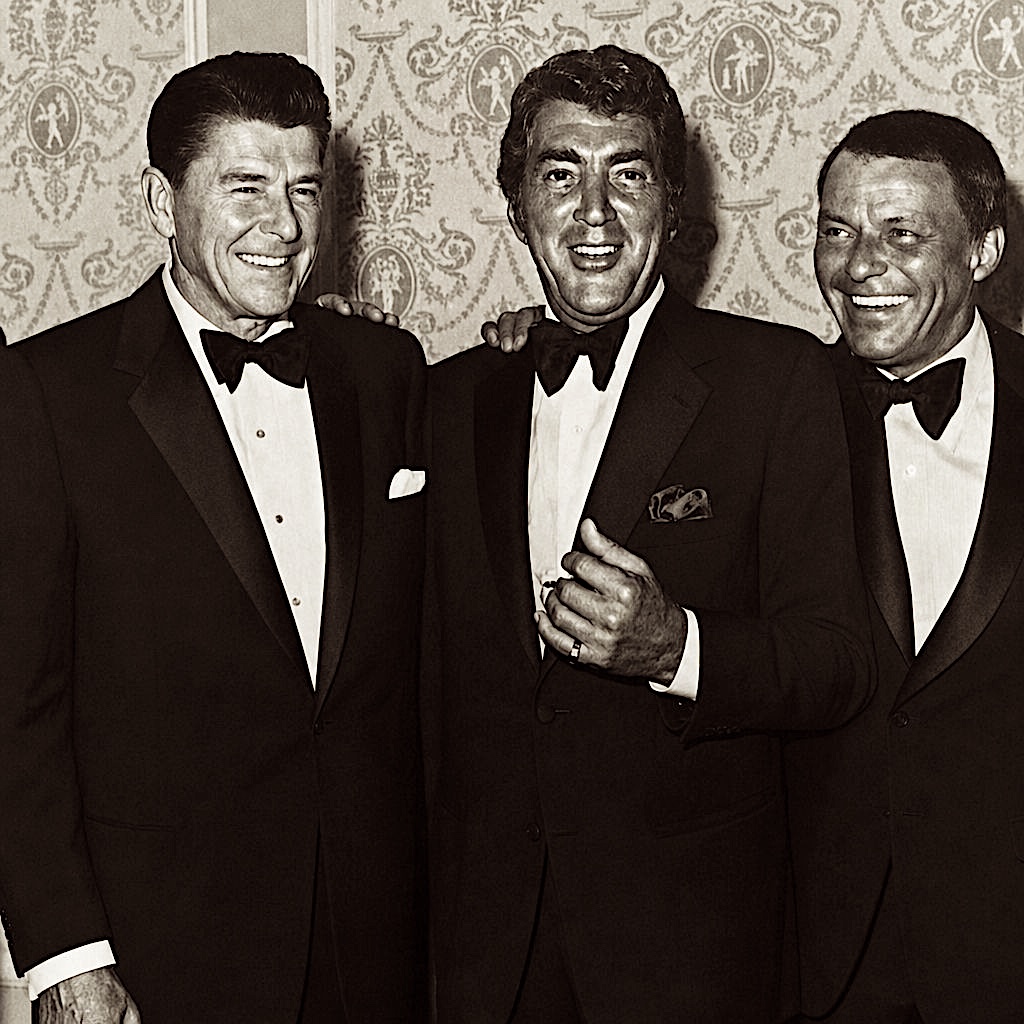
"Don't just do something, stand there."
Often attributed to Ronald ReaganUnlike many politicians who prided themselves on appearing endlessly busy, Reagan believed effectiveness mattered more than activity. While others worked themselves into exhaustion, he often finished his day at a reasonable hour and spent his evenings relaxing. To outside observers this sometimes appeared lazy. Critics wondered how someone with such enormous responsibilities could afford to work in such a relaxed manner.
Yet they missed the point entirely. Reagan was not avoiding work. He was concentrating on the work that mattered most. He understood that being busy and being productive are not the same thing. Many gym-goers make exactly the same mistake — confusing the appearance of hard work with the reality of productive training.
If only a small percentage of your efforts create most of your results,
then much of what occupies your time may contribute very little.
The philosophy Reagan embraced aligns closely with what is commonly known as the Pareto Principle, or the 80/20 Rule. The concept is remarkably simple. Roughly 80 percent of outcomes are produced by 20 percent of causes. In business, a small percentage of customers typically generate the majority of profits. In sales, a handful of activities produce most results. In productivity, a small number of tasks create the majority of meaningful progress.
The implications are profound. If only a small percentage of your efforts create most of your results, then much of what occupies your time may contribute very little value. That reality can be uncomfortable — because most of us like to believe every minute of effort is equally productive. Unfortunately, it is not. Research conducted by the Boston Consulting Group examined productivity across numerous organisations and revealed a startling conclusion. In many cases, only a small fraction of total effort produced meaningful value. Large amounts of time were consumed by unnecessary processes and activities that contributed little to the final outcome. The same pattern appears repeatedly in the gym.
The 80/20 principle applied to strength training produces the Minimum Effective Strength System — the 20 percent of training that produces 80 percent of results, stripped of everything that consumes recovery without building muscle.
Like a company drowning in unnecessary paperwork, they have become
so busy doing things they have forgotten what actually matters.
Walk into any commercial gym and you will see people performing endless sets of exercises. They move from machine to machine, attack muscles from every conceivable angle, and spend hours chasing a pump that disappears before they even reach the car park. The assumption is simple: more work must produce more results. Yet reality often tells a different story.
Despite spending five or six days per week training, many lifters remain stuck. Their strength stagnates. Their muscle gains slow. Their enthusiasm fades. The problem is not a lack of effort. The problem is that much of their effort is being directed toward low-value activities. Many trainees devote enormous amounts of time to things that contribute very little to muscle growth — endless exercise variations, excessive training frequency, marathon workout sessions, and unnecessary isolation exercises — all consuming recovery resources without proportionately increasing results.
The vital few produce 80 percent of results. The trivial many consume recovery resources and deliver very little in return.
Heavy compound movements — squat, deadlift, press, pull
Progressive overload consistently applied over time
Adequate recovery between sessions
Quality sleep and nutritious whole food
Endless isolation exercises and machine variations
Excessive training frequency that prevents recovery
Marathon sessions that dilute focus and drain resources
Chasing novelty instead of pursuing measurable progress
The objective is not to do less work for the sake of doing less.
The objective is to eliminate waste.
This is where the 80/20 principle becomes a powerful practical tool. If most muscle-building results come from a relatively small number of activities, then the goal is straightforward — identify those activities and prioritise them relentlessly while removing everything that consumes resources without delivering proportionate return.
Not doing less for its own sake. Removing low-value activity so that high-value activity can produce its full effect.
- Focus on a handful of proven compound movements rather than trying to perform every exercise under the sun
- Allow the body sufficient time to recover and grow — rather than returning before adaptation has occurred
- Consider whether fatigue is the real problem when progress slows — before adding more volume
- Make every set count rather than extending sessions until effort becomes meaningless busywork
- Protect recovery resources with quality sleep, adequate nutrition, and managed life stress
This approach explains why abbreviated training has remained effective for generations. From the old-time strongmen to modern high-intensity advocates, many of the most successful strength coaches have reached the same conclusion — productive training does not require endless hours in the gym. What it requires is focused effort directed at the right activities. An abbreviated workout strips away the unnecessary and concentrates exclusively on the exercises that deliver the greatest return on investment. The result is shorter workouts, improved recovery, and often superior long-term gains.
This is especially valuable for mature trainees, hardgainers, and busy adults whose recovery capacity is no longer limitless. As we grow older, recovery becomes increasingly precious. Every unnecessary exercise carries a cost. Every extra workout competes for resources that could otherwise be directed toward growth and repair. The smartest trainees learn to protect those resources.
Success is rarely about doing more. It is about doing what matters most. Focus on the vital few rather than the trivial many. Train hard, recover fully, and make every exercise earn its place in your routine. Sometimes the fastest way to gain more muscle is to train less.
The 80/20 principle embodied as a training system. The vital few compound movements. Adequate recovery. Progressive loading. The Minimum Effective Strength System — designed from the ground up around the activities that produce results and nothing else.