Arginine Foods —
Give Your Diet
the Bird
L-arginine, nitric oxide, and why lean poultry earns its place in a serious training diet
Arginine is an amino acid that sits quietly in the background of most nutrition conversations — mentioned in passing, rarely examined. For serious trainees, particularly those over forty, it deserves more than a passing mention.
Here is what it is, why it matters, and which foods deliver the most of it.
L-arginine — the conditionally
essential amino acid.
Proteins are constructed from amino acids — the building blocks the body uses to synthesise tissue, enzymes, hormones, and the structural components of muscle. Of the twenty amino acids involved in human protein synthesis, most can be produced internally. Several cannot — these are the essential amino acids that must come directly from food.
Arginine occupies a specific category: conditionally essential. In healthy adults under normal circumstances, the body can produce arginine in adequate quantities. But during periods of stress — intense training, illness, injury, or ageing — the body's production capacity falls short of demand. Dietary arginine becomes increasingly important precisely when the need for it is highest.
For trainees over forty, this matters in a specific way. The body is continuously breaking down and rebuilding protein tissue, including muscle. When dietary protein — and the amino acids within it, including arginine — is inadequate, the body draws on existing tissue to meet its needs. Adequate protein from high-quality sources is not a supplement consideration at this stage. It is a preservation strategy.
You do not need exotic supplements to obtain meaningful arginine. A diet built around high-quality, protein-rich whole foods will provide ample amounts — and delivers far more alongside it.
What arginine does —
and why trainees benefit most.
Arginine plays several distinct physiological roles — the most significant for trainees being its function as a precursor to nitric oxide. Nitric oxide is a vasodilator — it relaxes and widens blood vessels, improving circulation throughout the body. For a trainee, this means improved delivery of oxygen and nutrients to working muscle during training and improved removal of metabolic waste products during recovery.
The practical effects of adequate arginine intake are not dramatic or immediate in the way supplement marketing would suggest — but they are consistent and meaningful over time in a diet that is otherwise sound.
- Nitric oxide production — supporting healthy blood flow and vascular function
- Cardiovascular health — arginine's vasodilatory effect benefits the heart and circulatory system
- Immune system support — arginine is involved in immune cell function and wound healing
- Exercise performance and recovery — improved nutrient delivery to muscle during and after training
- Hormone support — arginine is involved in growth hormone secretion, particularly relevant during sleep
Training produces the stimulus. Nutrition provides the raw materials. Recovery allows adaptation to complete. Adequate protein — including arginine-rich sources — is part of the nutritional foundation the Minimum Effective Strength System is designed to work alongside.
High-arginine foods —
starting with the bird.
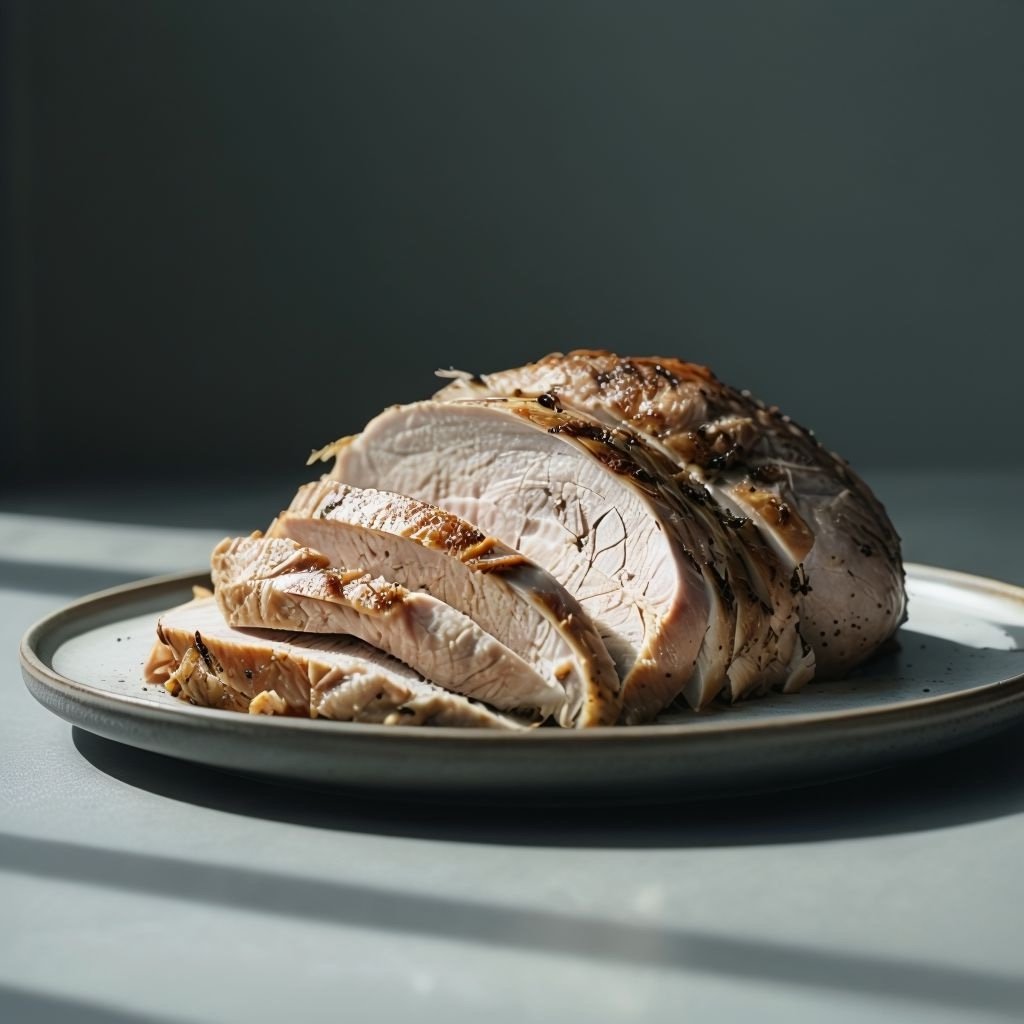
Turkey breast is among the most practical arginine-rich foods available — lean, versatile, and delivering a meaningful dose of high-quality protein per serving. It earns its place in a serious training diet on multiple grounds.
A practical, efficient arginine-rich protein source.
- Approximately 20g of high-quality complete protein
- Meaningful naturally occurring arginine — no supplementation required
- Very low fat content when skinless
- Complete amino acid profile supporting muscle repair and recovery
Variety is sensible. These are the most useful sources.
- Turkey breast The headline choice — lean, complete protein, high arginine density per serving.
- Chicken breast Comparable to turkey in protein quality and arginine content. The most accessible lean protein source for most trainees.
- Lean pork Pork loin and tenderloin are among the higher-arginine animal proteins — and higher in creatine than most poultry sources.
- Pumpkin seeds The highest plant-source arginine per gram — a useful addition for trainees who want plant-based arginine between animal protein meals.
- Peanuts and almonds Practical, calorie-dense sources of arginine and healthy fats. Useful for trainees who need to increase total caloric intake.
- Lentils and chickpeas Plant-based arginine with the added benefit of dietary fibre. Less arginine-dense than animal sources but contribute meaningfully across the week.
- Milk and dairy products Whole milk, Greek yogurt, and cottage cheese provide arginine alongside casein and whey — the slow and fast proteins that support continuous muscle protein synthesis.
- Salmon and tuna Fish are excellent arginine sources with the additional benefit of omega-3 fatty acids that support recovery and reduce training-related inflammation.
Animal proteins generally provide the highest arginine density per serving. Plant sources contribute meaningfully, particularly pumpkin seeds, but typically require larger serving sizes to match animal protein totals. A diet varied across both categories covers the full spectrum comfortably.
Protein quality, recovery nutrition, and dietary consistency are the foundations that allow the training stimulus of the Minimum Effective Strength System to produce its full effect. The foods listed above are where that foundation is built — one meal at a time.