Benefits of Regular
Exercise — Why a
Little Dab'll Do Ya
Consistency beats duration — and the research proves it by a margin most people do not expect
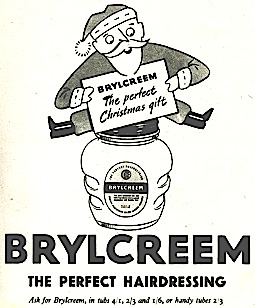
In the 1950s, Brylcreem ran a simple slogan: "A little dab'll do ya." It was an advertising line. It is also, it turns out, a remarkably accurate description of the relationship between exercise dose and health outcomes.
The biggest misconception about fitness is that meaningful results require long, intense workouts. The evidence says otherwise — and by a wider margin than most people realise.
Seven times more likely to age healthily —
from consistent, moderate exercise.
An eight-year British study tracking over 3,500 adults with an average age of 64 produced findings that reframe the exercise conversation entirely. The study did not examine elite athletes or intensive training regimens. It tracked ordinary adults and their everyday activity levels — and what it found was striking.
The compounding effect of consistent exercise on healthy ageing — measured over eight years.
Regular exercisers were three times more likely to be classified as healthy agers compared to sedentary adults at the four-year mark.
At eight years, that advantage had grown to seven times more likely — demonstrating the compounding effect of sustained, consistent activity over time.
Healthy ageing was defined across four dimensions: lower disease risk, better mobility, improved mental health, and greater independence in daily life. Regular exercisers showed measurable advantages across all four.
The benefits of regular exercise come from consistency — not extremes. A training practice maintained across years compounds into results that no short-term intensive programme can replicate.
Every ten minutes counts —
Dr Mark Hamer on exercise dose.
The question most people ask when they encounter these findings is a reasonable one: how much exercise is actually required to produce this effect? The answer from the research is more accessible than most people expect.
"Every 10 minutes counts."
Dr Hamer's research suggests that even modest amounts of movement contribute meaningfully to long-term health outcomes. This does not mean that more is not better — the study's seven-times advantage at eight years was produced by consistent activity, not by minimal activity. It means that the threshold for benefit is lower than most people assume, and that brief, regular bouts of exercise are a genuine contribution rather than a token gesture.
- A brisk ten-minute walk — counts
- A brief focused strength session — counts
- Climbing stairs instead of the lift — counts
- Any deliberate movement throughout the day — counts
The implication for trainees who use time as a barrier — and it is the most cited barrier in fitness research — is direct. Ten minutes of purposeful movement is meaningful. Twenty minutes of focused strength training is a complete session for the over-50 trainee applying abbreviated training principles. The research does not support the belief that anything under an hour is not worth doing.
Brief, focused sessions that can be completed in under 30 minutes — performed consistently rather than occasionally — produce the compounding results the study documents. This is precisely the training model the Minimum Effective Strength System is built around.
The specific benefits that short,
consistent workouts deliver.
Short workouts work not because they are a concession to limited time but because the physiological mechanisms behind exercise adaptation do not require extended sessions. The stimulus for adaptation — the signal that prompts the body to become stronger, more metabolically efficient, and more resilient — can be delivered in a brief, focused session that most people can maintain consistently.
- Muscle mass preservation Even short resistance training sessions provide sufficient stimulus to maintain and build lean muscle tissue — the primary driver of long-term metabolic health and physical independence.
- Metabolic support Brief training sessions raise the resting metabolic rate through the muscle tissue they preserve, producing a calorie-burning effect that extends well beyond the session itself.
- Cardiovascular improvement Consistent moderate-intensity exercise — including short strength sessions — improves heart efficiency, vascular function, and resting blood pressure over time. For the evidence on this, see the exercise and high blood pressure page.
- Inflammation reduction Regular exercise reduces systemic inflammatory markers that contribute to the chronic disease risk associated with sedentary ageing — an effect produced by consistent moderate activity rather than occasional intense training.
- Mental wellbeing The psychological benefits of regular exercise — improved mood, reduced anxiety, better cognitive function — are well-documented and appear consistently in the research regardless of session duration.
For the over-50 trainee, these benefits become increasingly important rather than less so. Preserving muscle mass and metabolic health after 50 is not a vanity goal — it is the foundation of physical independence, cardiovascular health, and quality of life in the decades that follow. For a detailed look at what this means in practice, see the weight training over 50 guide.
Start small. Stay consistent. Build over time. This is the conclusion the research points to — and it is the principle the Minimum Effective Strength System applies within a structured, progressive framework for the long-term trainee.