Bruce Lee Bodybuilding —
A Guide to Mastery
in the Gym
What a judo master's dying wish and a psychologist's research reveal about training properly
Most trainees spend years accumulating exercises, programmes, and systems — adding complexity in the hope that more will produce better results. Bruce Lee spent his training life doing the opposite. He removed, refined, and focused until what remained was precisely what worked.
The philosophy behind that approach has a name. It is mastery — and it applies to the gym as directly as to any other discipline.
Jigoro Kano and the white belt —
why the journey never ends.
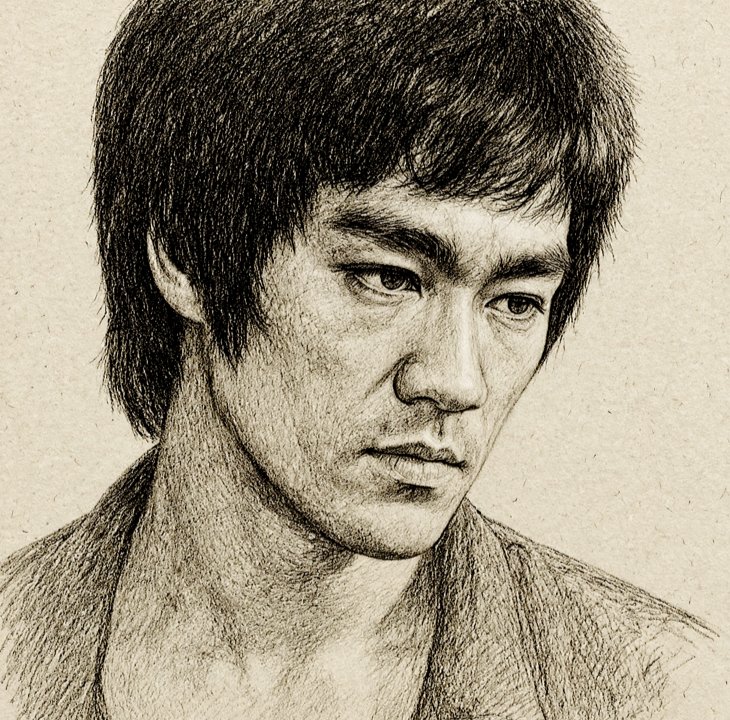
In his book Mastery, George Leonard tells the story of Jigoro Kano — the founder of judo. As Kano approached death, he gathered his students around him and made a final request: he asked to be buried in his white belt.
The white belt is the emblem of the beginner — the lowest rank in the discipline that Kano himself had created and mastered. Why would the highest-ranking practitioner of his art choose to be remembered as a novice?
For Kano, the journey of mastery never ends. The white belt was not a symbol of where he began. It was a symbol of what the pursuit of mastery requires — perpetual openness, perpetual curiosity, perpetual willingness to learn.
This is the foundation of the mastery mindset — and it applies to strength training as directly as it applies to any martial art. The trainee who believes they know enough stops improving. The trainee who approaches each session with a beginner's mind — open to adjustment, attentive to feedback, always refining — is the one who keeps progressing.
K. Anders Ericsson and the
truth about elite performance.
Psychologist K. Anders Ericsson spent his career studying what separates elite performers from merely good ones — in music, chess, sport, and medicine. His findings fundamentally challenged the idea of innate talent.
Talent takes you so far. Deliberate practice is what creates the elite.
Ericsson's research showed that elite performers across every discipline had accumulated roughly ten thousand hours of deliberate practice — practice that was focused, purposeful, and consistently aimed at specific weaknesses rather than repetition of existing strengths. This finding debunked the prodigy myth. What distinguished the elite was not that they had more natural ability. It was that they had practised more deliberately, for longer, on the right things.
The critical phrase is deliberate practice. Not all practice produces mastery — only practice that is precisely targeted, honestly assessed, and progressively demanding. The trainee who attends the gym three times per week and repeats the same routine without progressive overload is accumulating hours. The trainee who progresses the load, assesses what is and is not working, and adjusts accordingly is accumulating mastery.
To excel at anything, you must narrow things down to their core elements. Only then can you take your first steps on the path to elite performance.
Narrowing to core elements — deliberate, progressive application of the minimum effective stimulus — is precisely what the Minimum Effective Strength System asks of a trainee. Mastery and minimum effective stimulus are the same principle expressed in different contexts.
How Lee applied mastery
to his weight training.
Bruce Lee understood the mastery principle early and applied it with characteristic intensity. His approach to weight training was a direct expression of the same philosophy he brought to martial arts — study everything, keep what works, eliminate what does not.
His personal library of over 2,500 books included the writings of every significant authority on strength and physical development — from Eugene Sandow to contemporary exercise scientists. He read not to accumulate knowledge but to refine his practice. Each book was a source of potential adjustment to what was already working. By the time his programme was fully developed, it had been stripped of everything that did not earn its place.
The one question that changes everything.
Before your next session, ask yourself: what is the single most important thing you can do in the gym today that will make everything else more effective? Not the ten things. Not the five. The one. When you can answer that question clearly and honestly, you have begun to train with the same focus that Lee brought to his weight work — and the same focus that produces genuine, compounding progress over time.
The domino principle is worth holding onto. Knowledge builds on knowledge. Skills build on skills. One thing mastered becomes the foundation for the next. The trainee who masters the squat, the deadlift, and the press — truly masters them, with progressive loading and consistent technique — does not need a library of exercise variations. Those three movements, done well, are enough.
Ninja Strength Secrets
The Reforged EditionIsometric Exercise Routines for a Bruce Lee Body
Kindle £6.99 · Paperback £12.99
Order on Amazon