Muscle Growth
Stories — Strength
Comes First
Mike Mentzer went four months gaining strength without gaining size — and nearly quit
If you are training consistently, gaining strength session to session, and still seeing no visible change in muscle size — you are not failing. You are experiencing exactly what Mike Mentzer experienced in the early part of his training career, before he became Mr Olympia.
Arthur Jones eventually explained why it happens. The answer changes how you look at every training session that does not yet show in the mirror.
Four months gaining strength
without gaining a pound.
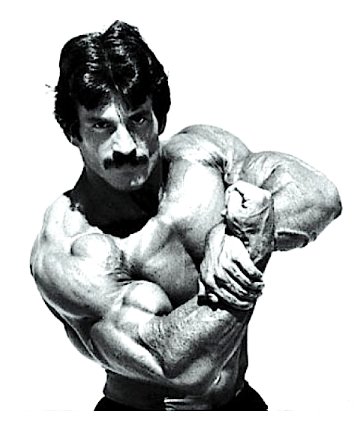
No one — not even championship bodybuilders — is completely satisfied with their training results. Frustration with slow size gains is the universal experience of every serious trainee, at every level. What separates those who persist from those who do not is understanding what the frustration actually means.
Mentzer's experience is the most instructive example available — not because he is exceptional, but because he is honest about the process.
"I was one of those individuals who gained strength prior to size increases. I can remember in the early part of my training career especially, there would be periods of even as long as four months — I can remember this very clearly — during which I would get stronger on a regular basis and not gain any weight. As a result, I grew enormously frustrated and almost gave up, more times than I care to remember. And when I say 'frustrated', I mean painfully, agonisingly frustrated. It was only years later that Arthur Jones pointed this out — and I saw it was true in so many cases — that for most people, strength comes first."
Mike MentzerThe man who would go on to become one of the most celebrated physiques in bodybuilding history nearly quit during four months of invisible progress. The lesson is not that Mentzer was unusual. The lesson is that what he experienced is normal — and understanding it as normal is what allows you to continue when every visible signal is telling you to stop.
Consistent strength gains, session to session — without necessarily seeing immediate size changes — is the progression model the Minimum Effective Strength System is built around. Strength first. Size follows. The timeline cannot be forced.
Why strength comes before size —
and why this cannot be hurried.
Arthur Jones's observation — that for most people, strength comes first — is not a consolation. It is a description of the actual adaptive sequence the body follows when building muscle under load.
Neural adaptation precedes hypertrophy. Always.
When a muscle is first subjected to progressive loading, the initial adaptation is neural — the nervous system becomes more efficient at recruiting existing muscle fibres, and the trainee gets stronger without the muscle fibres themselves growing. This is why strength gains precede visible size changes. The muscle fibres are being trained to fire more completely and more efficiently before the body invests in adding new contractile tissue. Only when neural adaptation is sufficiently established does the body begin the slower, more metabolically expensive process of growing new muscle tissue. This sequence is the same for every trainee, regardless of age or experience. It cannot be bypassed. It can only be waited out — with consistent training and adequate recovery.
This is what Mentzer eventually understood, and what Jones pointed out across so many cases. The four months of invisible progress were not wasted. The neural adaptations occurring during that period were the necessary foundation for the size that followed. The trainee who understands this continues. The trainee who does not — quits.
The process is the same whether you are twenty-five or fifty-five. Age affects the rate of adaptation but not the sequence. Both the beginner and the experienced lifter must be stronger than they are right now in order to see any improvements in size. There is no shortcut to this, and no supplement that changes it.
How much stronger do you need
to be before size follows?
The answer Mentzer gives is simple: stronger than you are right now. One more rep. A little more weight. Session by session, with the patience to allow the adaptive sequence to complete. The minimum strength standards below provide a benchmark for beginner-to-intermediate trainees — targets that, when reached through progressive loading, reliably produce the visible muscle development that slower approaches do not.
Targets worth building toward on the compound movements.
- Squat Bodyweight × 1.5
- Deadlift Bodyweight × 2
- Bench press Bodyweight × 1
- Overhead press Bodyweight × 0.75
- Barbell row Bodyweight × 1
These are not elite standards — they are meaningful intermediate benchmarks that require consistent progressive loading to reach and that reliably produce visible muscular development when achieved. A trainee who reaches all five will have built a foundation that looks like the work it represents.
Strength first. Size follows. Session by session, with adequate recovery between each one. This is the progression model the Minimum Effective Strength System applies — and the patience it asks of you is exactly the patience Mentzer nearly did not have.