Soloflex Review —
The Rise of the
Soloflex Muscle
Machine
Twenty years of use, no injuries — a frank appraisal of Jerry Wilson's home gym
There are home gyms that look impressive in advertisements and disappoint in use. There are home gyms that look unassuming and outlast everything else in the garage. The Soloflex Muscle Machine, conceived by Jerry Wilson and brought to market in the 1980s, belongs firmly in the second category.
This review is based on over twenty years of personal use. It is frank about the limitations and specific about the strengths.
How the Soloflex arrived —
a used machine from a van in a garage.
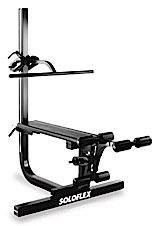
"Be careful, it's heavy." My dad wasn't kidding. Reaching into the back of the van, I gave a heave. The bar was an elegantly-shaped J, and if my calculations were correct, was the home gym's mainframe. "Mind the paintwork!" my dad barked as the bar connected with the van roof — the squeal of metal against metal sounding like fingernails down a blackboard — then I had the bar in my arms, and the curl of the J over my shoulder.
Propping the bar against the wall, I made a quick inventory. "Is that everything?" my dad asked. An assortment of steel parts crowded the garage floor alongside a padded bench and a box of ham-shaped resistance straps. I gave a nod. "And now you've just got to put it together." My dad gave a chuckle as he handed the instruction booklet over: "Good luck, son."
Despite being entirely unfamiliar with the Soloflex's construction, the machine went together quickly. By mid-afternoon I had the butterfly station locked into place with the exercise chart taped beside it. The number of exercises available was immediately striking. Eager to begin, I reached for the resistance straps.
That was over twenty years ago. The original owners were returning from London to Canada and the machine had been well maintained. Since acquiring it I have never missed a workout on it and have never sustained an injury training on it. That combination — over two decades of consistent use and zero injuries — is not a coincidence.
Jerry Wilson's Soloflex —
the home gym that changed the market.
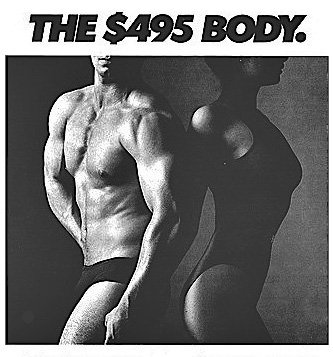
Jerry Wilson conceived the Soloflex Muscle Machine as a genuine alternative to the commercial gym — a home training system capable of delivering the exercises that matter most, in a form that could be assembled, stored, and used in a domestic environment without compromising on the movements that build real strength.
The machine achieved critical and commercial success, finding a loyal following among serious trainees who wanted to train at home without accepting the compromises that most home gym equipment imposed. Its longevity in the market — and the fact that machines built decades ago are still in regular use — is the most credible testimony available to the quality of the build.
Four credible voices from different corners of the fitness world.
Four people from four different disciplines — bodybuilding, NFL football, and Olympic gymnastics — endorsing the same home gym. Their needs were different. Their verdict was the same.
Home training on compound movements — squats, dips, pull-ups, pressing — is the foundation of the Minimum Effective Strength System. The Soloflex's genuine versatility on these movements is what separates it from most home gym alternatives.
What the Soloflex offers —
the features that distinguish it.
Four design decisions that set the Soloflex apart from conventional home gym alternatives.
- Ergonomic design The machine's geometry is designed around natural human movement patterns — not around the constraints of conventional weight stack machines. This is the foundation of its safety record.
- The floating barbell The Soloflex's most distinctive engineering feature — the barbell moves through a guided arc that follows the natural path of the pressing and rowing movements rather than constraining them to a fixed vertical plane. The result is a compound movement that feels closer to free weight training than any other machine-based alternative.
- Barbell and bodyweight exercises The machine accommodates both loaded barbell movements and bodyweight exercises — pull-ups and dips in particular — without modification. This combination is rare in home gym equipment and directly relevant to the trainee who wants a complete abbreviated training programme at home.
- Build quality Soloflex's stated confidence that their machines will still be in use in 100 years is not empty marketing — the machines built in the 1980s and 1990s are still in regular use today, which is more than can be said for most of their competitors from the same era.
Three benefits that matter —
for the serious home trainee.
-
Genuine versatility on compound movements
The test for any home gym is whether it allows the exercises that produce the majority of results — the barbell squat, the deadlift, the parallel bar dip, the chin-up, and the barbell press. Most home gym equipment fails this test at one or more of these movements. The Soloflex passes it across the board. The squat station is rock-solid. The floating barbell handles the pressing and rowing movements effectively. Dips and chin-ups are both directly accommodated. This is the versatility argument that most home gym reviews never make clearly enough — the question is not how many exercises the machine claims to support but whether it supports the specific compound movements that matter most.
-
Safety without compromise
Twenty years of consistent use without injury is a meaningful data point in a home gym review — not because twenty years of use is itself remarkable, but because the combination of consistent compound training and zero injuries is. The Soloflex's ergonomic design eliminates the joint stress that fixed-path machines typically impose, and the floating barbell allows the natural movement arc that prevents the shoulder and elbow problems that conventional Smith machine training produces over time. The machine is safe in the way that good free weight training is safe — because it allows rather than constrains natural movement.
-
Full-size adjustable bench
The adjustable bench allows bench pressing at multiple angles — flat, incline, and decline — alongside incline sit-ups and other core movements. For a home gym this is a practical advantage over fixed-bench alternatives. The ability to vary pressing angle is not a luxury for the over-50 trainee managing shoulder health — it is a meaningful injury prevention tool that most compact home gym systems cannot provide.
Twenty years on —
the frank appraisal.
A home gym that delivers on the exercises that matter, built to last, with minor leverage limitations that do not affect the core compound movements.
The Soloflex is not a perfect machine. The resistance straps create minor leverage issues at specific points in certain movements that a conventional barbell does not produce. For a trainee who has access to a full barbell setup, a power rack, and a commercial gym, the Soloflex is not the superior option. But for the home trainee who wants a single machine that safely and effectively delivers squats, dips, pull-ups, pressing, and rowing — in a compact form that has demonstrated genuine longevity — the Soloflex Muscle Machine remains one of the most credible home gym options available. Twenty years and zero injuries is not a marketing claim. It is a training record.
A home gym that allows compound movement training — squats, presses, pulls, and dips — removes the last practical barrier between the over-50 trainee and a complete strength programme. The Minimum Effective Strength System includes a home training movement library specifically for trainees without access to a commercial gym.