Seven Strength
Training Exercise
Routines —
Simple, At Home,
Effective
From three-movement full programmes to two-lift ultra-simple options — seven abbreviated routines that work without complexity, expensive equipment, or endless hours
The fitness industry profits from complexity. Every season brings new training systems, revolutionary splits, and elaborate periodisation schemes. Yet the most productive strength routines in history have consistently been among the simplest. Powerlifters have built extraordinary strength using the same three lifts for years. Old-time strongmen developed legendary physiques with two or three exercises and a barbell.
The following seven routines are built on this principle. They are designed for the natural trainee who trains at home or in a basic gym, values efficiency over complexity, and wants a straightforward answer to the question: what should I actually do in my next session? Each routine is short, basic, and founded on the compound movements that have reliably produced results for generations.
Short, basic, and recoverable — the three qualities
that make a routine effective for the natural trainee.
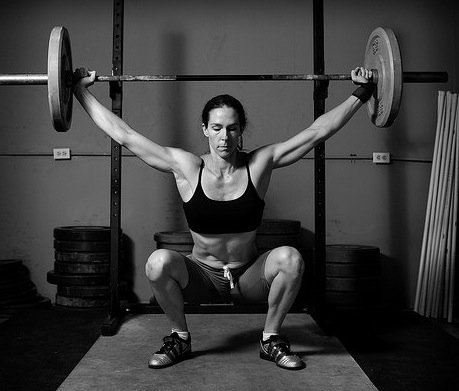
The typical natural trainee must be cautious about imitating the training methods of the genetically gifted minority. High-volume programmes designed for elite athletes — or pharmaceutical-assisted bodybuilders — often produce frustration, fatigue, and stalled progress when applied by ordinary people with ordinary recovery resources.
Abbreviated routines sidestep this problem entirely. By focusing on a small number of highly productive compound movements, they deliver the maximum muscle-building stimulus with the minimum recovery cost. The result is more consistent progress, better energy levels, and a training schedule that fits into real life. For proof, consider powerlifters who train with nothing other than three basic lifts — yet develop extraordinary levels of strength and muscularity. The principle scales to every experience level.
These benefits apply whether you choose a three-exercise routine or a two-exercise one — provided the movements are the right ones.
Compound movements recruit multiple muscle groups simultaneously — delivering the whole-body stimulus that isolation exercises cannot replicate.
Progressive loading on compound lifts strengthens tendons, ligaments, and connective tissue alongside the muscles they support.
Mechanical loading through the skeleton stimulates bone remodelling — directly addressing the bone density decline that accelerates with inactivity.
Muscle tissue is metabolically active — building it improves insulin sensitivity, glucose disposal, and the metabolic environment that body composition depends upon.
The abbreviated approach taken further — with the specific exercises, loading scheme, and progression model that produce the best results for the natural trainee over fifty — is the Minimum Effective Strength System.
From three-movement programmes to two-lift pairings —
choose the one that matches your time, equipment, and goal.
The Classic Three — Push, Pull, Squat
- Squat or deadlift — alternating at successive workouts
- Bench press
- Close-grip pulldown or chin-up
The foundational abbreviated routine — covering every major movement pattern with one lower-body hinge or squat, one horizontal push, and one vertical pull. Alternating the squat and deadlift across sessions keeps lower-body stimulus varied while managing recovery. An excellent entry-point routine and a complete programme in its own right.
The Hex Bar Option
- Trap bar deadlift
- Parallel bar dip
- Bent-over row
An excellent alternative for trainees who prefer the hex bar's more upright pulling position — particularly useful for those managing lower back issues or limited ankle mobility. The parallel bar dip provides strong pressing stimulus without requiring a bench. Bent-over rows complete the upper-body pull. A well-balanced three-movement routine requiring minimal floor space.
The Peary Rader Hardgainer Solution
- Bench press
- Twenty-rep breathing squat
- Rader chest pull or dumbbell pullover
- Bent-over row
Promoted by Peary Rader — founder of Iron Man magazine and himself a hardgainer — specifically for trainees who struggled to gain from more exercises. The twenty-rep breathing squat is the centrepiece: a single all-out set that demands extraordinary effort and produces extraordinary results. The pullover expands the thoracic cage and complements the squat breathing. This routine has a legendary reputation among hardgainers for good reason.
Ultra-Abbreviated: Squat and Row
- Squat
- Bent-over row
Two movements. Lower body and upper-body pull. Entire posterior chain trained alongside the quadriceps and core. This pairing has a deceptively complete training stimulus — the squat covers the legs, hips, and lower back; the row covers the upper back, biceps, and rear shoulders. Ideal for extremely time-limited sessions or as a starting point for trainees returning to training after a break.
Ultra-Abbreviated: Trap Bar and Dip
- Trap bar deadlift
- Parallel bar dip
The trap bar deadlift trains virtually every major muscle in the posterior and anterior chains simultaneously. The parallel bar dip adds pressing strength for the chest, shoulders, and triceps. Together these two exercises cover the entire body with an efficiency that few combinations rival. A session of heavy trap bar deadlifts followed by heavy dips is brief and brutal — and more productive than many hour-long routines.
Ultra-Abbreviated: Squat and Chin-Up
- Squat
- Pull-up or chin-up
The most equipment-minimal pairing on the list — requiring nothing more than a barbell with plates for the squat and a doorframe or ceiling bar for the chin-up. The squat covers the entire lower body and core; the chin-up develops the lats, biceps, and grip through the full bodyweight pulling range. Together they provide a complete push-pull balance that supports long-term joint health.
The Mark Berry Classic
- Squat
- Overhead press
Championed by 1930s strongman and coach Mark H. Berry — an influential figure in early American physical culture. This two-movement pairing has a purity that more elaborate routines lack. The squat builds the lower body and posterior chain. The overhead press builds the shoulders, triceps, and upper back. Together they represent the most fundamental push-pull of strength training: lift from the ground, press overhead. Two movements. The complete human expression of strength.
The best routine is the one you perform consistently —
with genuine effort, progressive loading, and adequate recovery.
These seven routines are not ranked by effectiveness. The best routine for any individual depends on available equipment, physical condition, recovery capacity, and personal preference. What they share is the abbreviated philosophy — a small number of productive movements, performed with genuine effort, loaded progressively over time, and recovered from fully before the next session.
Begin with Routine 1 or 2 if you want a complete starting point. Move to the ultra-abbreviated options on time-restricted days. Try the Peary Rader Hardgainer Solution if progress on other routines has stalled. Revisit the Mark Berry Classic when you want to return to first principles and strip everything back. Above all — pick one, commit to it, and measure progress through the only metric that matters: whether you are becoming stronger over time.
These seven routines provide excellent starting points. The Minimum Effective Strength System takes the abbreviated philosophy one step further — with the specific exercises, loading scheme, and progression model refined for the natural trainee who wants the most productive version of this approach.