Three Doors to the Iron
Three Training Places That Helped Shape My Iron Game Journey
Every lifter carries a mental map of the places that shaped them. Not just the exercises, the programmes, or the numbers on the bar — but the rooms themselves. The smell of chalk and old leather. The sound of iron on iron. The specific atmosphere of a particular gym at a particular point in a life.
In this latest piece from The Robert Sparkman Archive, Robert takes us through three such rooms: the Universal Gym at Syosset High School, where a bench-press contest introduced him to a Golden Era champion he would never forget; the legendary Future Man Gym in Amityville, run by the remarkable Tony Pandolfo; and the North Shore Health Club, a different kind of place entirely — polished, upscale, and yet equally formative in its own way.
This piece comes with something special. Two photographs — of Tony Pandolfo and Jeff King — have been generously provided by Wayne and Tina Gallasch of GMV Productions, whose extraordinary archive of Golden Era bodybuilding imagery is without parallel. Wayne personally rescanned and restored the Jeff King photograph at high resolution for this piece. That care shows. These are images worth pausing over.
Robert's writing has always had the quality of making you feel as though you were there. This piece is no exception. By the time you reach the memorial passage for Glenn Wulpern — the classmate who competed that day at Syosset High and went on to become an accomplished natural bodybuilder before passing away in November 2024 — you'll understand why the Iron Game, at its best, is about far more than the iron.
The Universal Gym Experience
Leaving behind the little garage and basement gyms of my youth, my Iron Game journey was about to introduce me to an entirely different training environment. I had already discovered the magic of free weights and had begun to understand the discipline, effort, and camaraderie that came with lifting alongside my best friends. But there was another world waiting for me at Syosset High School.
And standing in the middle of that weight room was an enormous piece of equipment that seemed almost otherworldly to me at the time — the Universal Gym.
Universal multi-station machines were a defining feature of many high-school weight rooms, YMCAs, and military fitness facilities during the 1970s. To a young lifter, they were massive, imposing machines that seemed capable of doing almost everything.
The Universal was an all-in-one strength-training system built around a heavy steel framework and a central cable-and-pulley system. Several people could train on different stations at the same time, making it particularly well suited to busy school weight rooms. Instead of loading and unloading individual weight plates for every exercise, resistance could be changed quickly by moving a metal pin into the desired position on the weight stack.
There were stations for lat pulldowns, presses, leg extensions, leg presses, and other basic movements. The machines were built with heavy-duty steel and, to my young eyes, an almost indestructible combination of steel and chrome. They looked like they could withstand anything a generation of high-school athletes could possibly throw at them — and probably did.
Of course, the Universal Gym wasn't the only equipment in our high-school gym. Scattered around the room were a few barbells, dumbbells, and weight plates — the basic tools that had already captured my heart.
And that was important to me.
Because even though the Universal was impressive, I was already beginning to understand something that would stay with me throughout my entire Iron Game journey: there was something special about free weights. There was something wonderfully honest about picking up a barbell or dumbbell and having to control the resistance yourself.
For many young people, however, the Universal Gym was their first introduction to serious resistance training. It was a bridge between athletic participation and the world of strength training — a place where countless young men first discovered the challenge and satisfaction of becoming stronger.
And then, one day, something happened at our Syosset High School gym that would have an even greater impact on me.
I was about to get my first close-up look at a genuine Golden Era bodybuilding champion.
His name was Tony Pandolfo.
Tony was a prominent competitive bodybuilder from New York and the owner of the legendary Future Man Gym in Amityville, Long Island. He was known not only for his impressive physique and strength, but also for the kindness, generosity, and mentoring spirit that so many people remembered about him.
Tony came to our high-school gym to put on a bench-press contest, with the two winners receiving memberships to his legendary gym.
For Lew, Jamie, Dave, and me, this was a huge event. We already considered ourselves lifters, but the students who entered the contest were among the school's more accomplished and elite athletes. We knew we were about to see something special.
And when the contest began, the entire atmosphere of the gym changed.
The room suddenly took on an aura of competitiveness unlike anything I had witnessed before. It was as if we had been transported back in time to the Roman Colosseum, watching our own modern-day gladiators prepare for battle.
The energy was palpable.
The excitement was electric.
The sound of cheering and encouragement seemed almost deafening.
One by one, each participant stepped forward and gave everything he had. We watched an extraordinary display of determination, grit, effort, and pure, unadulterated heart. These young athletes weren't simply moving weights. They were testing themselves — seeing how far they could push beyond the point where their bodies were begging them to stop.
When the gruelling display of sheer will finally came to an end, two incredible athletes had emerged victorious.
Kevin benched an impressive 150 pounds for 18 repetitions, while Glenn completed 15 repetitions — a tremendous performance by both young men. They were incredibly well-built, and you could see immediately that they were lifters. They had earned their way to a free membership at one of Long Island's premier Golden Era gyms.
And as exciting as the contest was, something else had happened to me that day.
I had seen the Iron Game in an entirely different light.
I had seen what dedicated athletes could accomplish.
And I had seen the man who represented the gateway to an entirely new training experience.
Tony Pandolfo.
By this point, you already know what was going through my mind.
I absolutely had to become a member of Future Man Gym.
There was nothing holding me back.
I had to experience it for myself.
I had to know what it felt like to walk through the doors of that legendary gym and train among serious bodybuilders and lifters.
And then there was Tony himself.
He was truly a sight to behold.
I had never seen a bodybuilder — or any athlete — of his stature up close and personal before. He was wearing a tight-fitting polo shirt and a pair of nicely pressed slacks, but his enormous muscularity seemed almost impossible to contain. His muscles appeared to be bursting through the fabric.
To me, as a young lifter, he was larger than life.
I felt as though I were standing in the presence of a Greek god.
I would learn much more about Tony Pandolfo in the years that followed, including what so many others already knew: behind that extraordinary physique was a genuinely good man who cared deeply about people and was willing to share his knowledge and experience with those who sought his guidance.
And I would soon discover that Future Man Gym was going to become another important chapter in my own Iron Game journey.
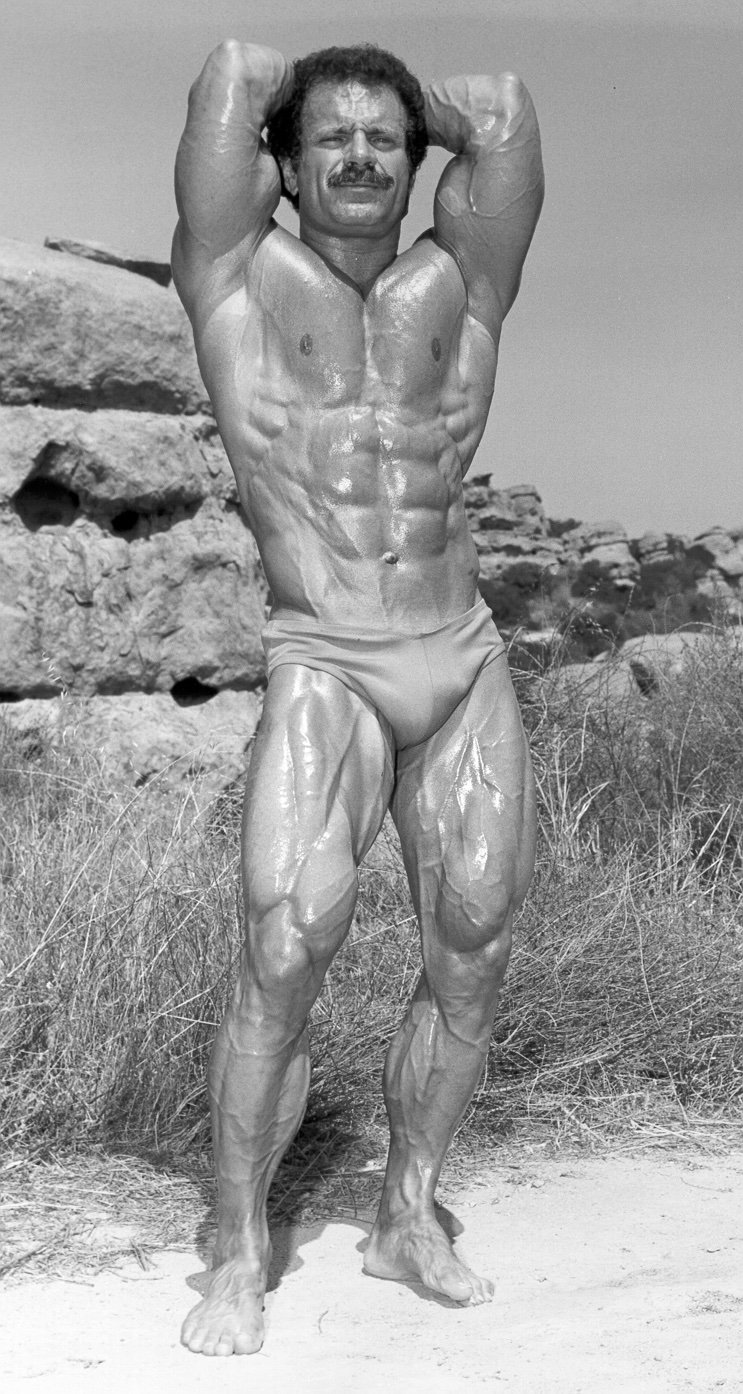
Photograph courtesy of Wayne R. Gallasch, GMV Productions · gmvbodybuilding.com
There was one other person from that day whose story deserves to be remembered.
Glenn Wulpern, one of the young athletes who competed in that bench-press contest, would go on to become an accomplished natural bodybuilder himself. He dedicated his life to bodybuilding and competitive weightlifting, becoming a fellow Iron Warrior and, most importantly to me, a former classmate.
Sadly, Glenn passed away in November 2024.
So as I look back on those memories today, I don't simply remember the young athlete who pressed 150 pounds for 15 repetitions. I remember a fellow Iron Warrior who shared a small but meaningful chapter of my life.
Rest in peace, my brother.
The iron may have brought us together, but the memories are what remain.
And that is the beautiful thing about this journey.
The places may disappear.
The equipment may eventually rust away.
The bodies we worked so hard to build will change with time.
But the friendships, the lessons, and the memories forged through the Iron Game can remain with us forever.
And throughout this period, the four of us — Lew, Jamie, Dave, and I — continued training together in my home gym while also working out occasionally at the school's Universal Gym. We simply couldn't get enough of it all. Looking back now, I realise just how fortunate and grateful we were to have two places where we could pursue our passion for strength training. We had our own little home gym, where the four of us could train together in that rustic, intimate environment, and we had the school's Universal Gym, which opened the door to an entirely different training experience. For four young guys who had fallen completely in love with the Iron Game, having two places to train felt like having the best of both worlds.
Future Man Gym
A Glimpse of Tony Pandolfo
To appreciate the extraordinary physique of the man who made such a lasting impression on me as a young lifter, I invite you to visit the Tony Pandolfo Photo Gallery at the GMV International Museum of Bodybuilding.
Stepping into Tony Pandolfo's Future Man Gym for the very first time, I felt the heavy, iron-scented air hit my lungs like a revelation. In an instant, my teenage obsession with the Iron Game had been transformed into a gritty reality of clanging steel, chalk-dusted sweat, and the raw, resonant power of the Golden Era of bodybuilding.
Future Man embodied that classic, no-nonsense East Coast attitude. It was tight, intensely focused, fiercely passionate, and possessed a distinct "iron dungeon" intimacy. From the beginning, it was apparent to me that many of the members were serious local athletes and seasoned lifters. The benches were covered in old leather upholstery, some of it patched with duct tape, and much of the equipment appeared to be dusted with a heavy coating of chalk. To me, that spoke volumes. This was a place where the equipment wasn't there for show — it was there to be used.
The walls were heavily plastered with signed photographs of Golden Era legends, creating the feeling that you were surrounded by the very people who had inspired the generation of lifters who came before us. If my recollection serves me well, the hand-welded plate racks held solid dumbbells that went well beyond 130 pounds — far heavier than anything I could lift at the time. Classic '70s rock was always playing in the background, competing with the unmistakable sounds of heavy iron plates and weight stacks banging against the rudimentary pulley systems.
One thing I noticed early on was that Tony was a man of few words, but he had a giant presence. To me, he ran the gym as both a mentor and a father figure. I was truly in awe of the man. When Tony spoke, it seemed as though the entire gym would quiet down to listen. Over time, I began to look up to him as a teacher. He helped me learn more about the absolute fundamentals of raw, heavy, and properly executed training, including the importance of establishing that all-important mind-muscle connection.
What I loved most about Future Man was its powerful, family-like culture. Lifters didn't simply come through the doors to train; they became part of something. There was a genuine sense of brotherhood and mutual respect. Tony routinely took young, aspiring lifters under his wing, creating an environment where competitive bodybuilders could train alongside neighbourhood blue-collar workers and everyday people who simply shared the same love of the Iron Game.
During the time I trained there, I experienced some of the most brutal and productive workouts I had ever known up to that point in my young lifting career. For those few years, Future Man became an iron sanctuary for me — a place filled with heavy dumbbells, chalk, pooling sweat, and the unmistakable clang of raw iron plates. Even now, I can almost smell that thick, hot, poorly ventilated air that permeated the gym. The hard work was everywhere. The brutal effort was palpable. You could feel it the moment you walked through the door.
Future Man wasn't polished. It wasn't glamorous. And it certainly wasn't designed to make training comfortable. It was something far more valuable to a young lifter like me: a genuine home of the Iron Game, where the equipment showed its scars, the lifters earned their respect, and every workout demanded that you bring everything you had.
Looking back now, I realise that Future Man was more than just another gym on my journey. It was one of those rare places where the atmosphere, the equipment, the people, and the philosophy all came together to create something unforgettable. Tony Pandolfo had built more than a gym. He had created a place where young lifters could learn, grow, work, sweat, and discover what they were truly capable of becoming.
"The physique may have captured my attention, but the character of the man earned my admiration."
North Shore Health Club
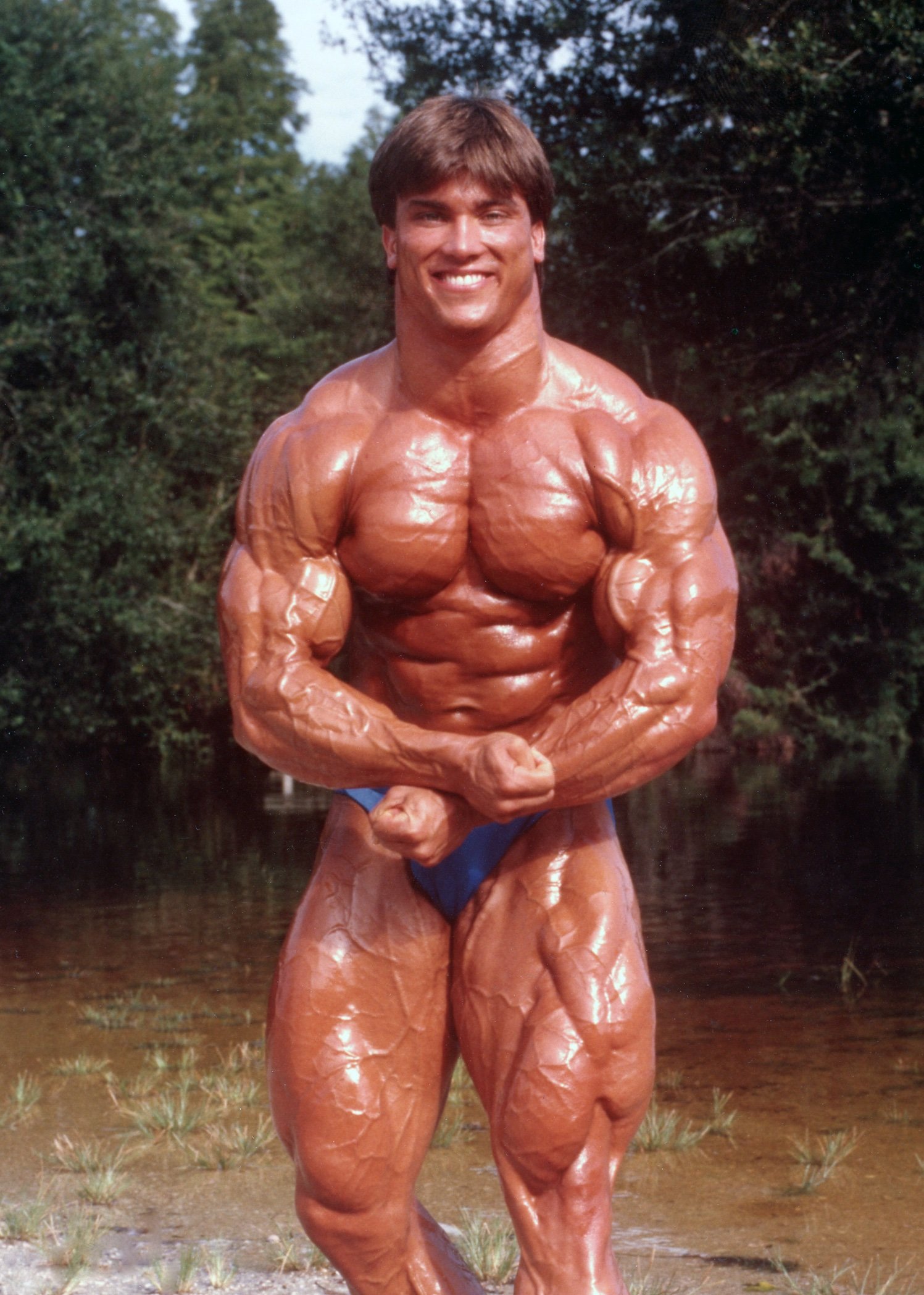
Photograph courtesy of Wayne R. Gallasch, GMV Productions · gmvbodybuilding.com
When I arrived at the North Shore Health Club, I would step off the sidewalk of Manhasset's Miracle Mile, open one of the double doors, walk up to the front desk just inside the entrance, check in, and head straight down the stairs into the club. The entire facility was located in the basement, where the atmosphere blended suburban sophistication with genuine workout grit. It wasn't one of those gritty, old-school bodybuilding meccas where the iron seemed to have a personality of its own, but it had something different — a polished, upscale environment that still respected the importance of hard training.
In the fully equipped free-weight room, I'd hear the steady clink of iron plates mixed with the muffled thumping of runners on the indoor jogging track. To me, that combination represented two different expressions of the same pursuit: building a stronger, healthier body. As a strength athlete, I loved it. It was a high-end, fully functional health club that, in many ways, embodied the broader physical-culture philosophy that Jack LaLanne had championed for decades. I could easily imagine Jack approving of the emphasis on exercise, conditioning, nutrition, cleanliness, and overall wellbeing.
The wet area was always kept exceptionally clean. After my battle with the iron, I frequently used the indoor heated pool, two bubbling Jacuzzis, and the traditional sauna to get a jump-start on my recovery. There was something wonderfully restorative about moving from the intensity of the weight room into that quieter world of heat, water, and relaxation. Training wasn't simply about lifting the weights and walking out the door. Recovery was part of the ritual, too.
The locker room had its own touch of old-fashioned service and class. The attendants would open my locker and hand me fresh towels whenever I needed them. They also sold cans of juice and soda, while toiletries and flip-flops were available upon request. It was a level of personal service that seems almost foreign by today's standards.
The club even had a separate health-food bar that offered delicious healthy snacks, protein shakes, and freshly made fruit and vegetable juices. For someone immersed in the physical-culture lifestyle, it was another welcome part of the experience — a place where training, nutrition, recovery, and health all came together under one roof.
And then came one of my favourite rituals.
To finish off my visit, I would often indulge in what I affectionately called my "Gentlemen's Workout" — sauna, shave, and a shower. Afterwards, I would completely unwind in the dimly lit rest and sleep lounge, allowing my body and mind to settle down before heading home for the final — and perhaps most anticipated — part of the ritual: a post-workout, protein-packed feast.
North Shore Health Club may not have possessed the raw, no-frills atmosphere of some of the legendary bodybuilding gyms I would experience along my journey, but it offered something equally memorable. It was a place where serious training could coexist with health, recovery, nutrition, cleanliness, and a little bit of old-fashioned class.
It was another chapter in my Iron Game journey — and another place where I learned that physical culture could take many different forms.
Once an Iron Warrior, always an Iron Warrior.
Steel is unbreakable.