Squat Technique —
How to Squat
Like a Thunder
God
Few movements can rival the squat when it comes to building strength, muscle mass, athleticism, and rugged physical resilience — but only when performed correctly
For generations of strongmen, powerlifters, bodybuilders, and athletes, the squat has occupied a special place in training halls around the world. Men such as Paul Anderson, Doug Hepburn, and Joseph Curtis Hise built their extraordinary physiques around this single movement — and the reasons they trusted it so completely have not changed.
Yet despite its unmatched reputation, the squat is also one of the most misunderstood exercises in the gym. Performed correctly, it can transform your physique and strength levels. Performed poorly, it delivers little more than aches, pains, and frustration. This guide will help you separate squat facts from squat fiction so you can build stronger legs, a more powerful body, and perhaps even a pair of thunderous thighs worthy of a Norse god.
Unlike isolation exercises, the squat recruits virtually
every major muscle group simultaneously.
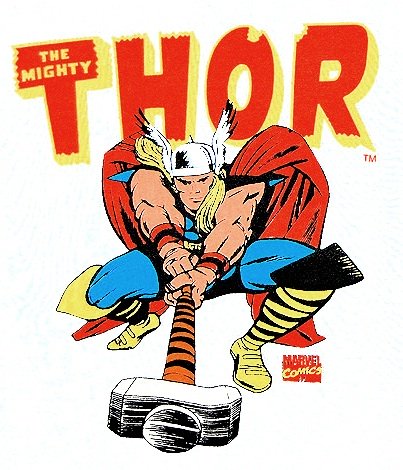
The squat works. Unlike isolation exercises that target a single muscle group, the squat recruits the quadriceps, hamstrings, glutes, lower back, abdominals, hips, and upper back simultaneously. It challenges the cardiovascular system, improves coordination, stimulates muscle growth, and develops functional strength that carries over into everyday life.
Joseph Hise built entire training systems around it. Stuart McRobert has championed it for decades. The reasons have not changed.
Quadriceps, hamstrings, and glutes trained together under progressive load — the most powerful lower-body stimulus available from a single movement.
Lower back and hip complex trained under demanding conditions — developing the foundational strength that carries over to virtually every athletic movement.
The abdominal and trunk musculature brace heavily under heavy squat loads — developing real functional core strength that no crunch machine can replicate.
Hard sets of squats challenge the cardiovascular system profoundly — building conditioning as a natural by-product of muscular effort.
Heavy squatting teaches the nervous system to recruit maximum muscle fibres under load — an adaptation that transfers to every other lift in the programme.
The large muscle recruitment of the squat produces one of the most significant acute hormonal responses available from any single exercise — growth hormone and testosterone included.
The squat forms the lower-body foundation of the Minimum Effective Strength System — because no other single movement produces an equivalent whole-body training stimulus in the same amount of time.
Your ideal depth is the deepest position you can achieve
while maintaining excellent form and complete control.
One of the most fiercely debated topics in strength training concerns squat depth. Should you squat until your thighs are parallel to the floor? Should you descend deeper? Or stop short? The truth is that there is no universal answer that applies equally to every trainee.
As squat depth increases, so too can the demands placed upon the hips, knees, ankles, and lower back. Lifters blessed with excellent mobility and favourable leverages may thrive with very deep squats. Others may find the same depth places unnecessary stress upon vulnerable joints and connective tissues. The purpose of the squat is not to impress spectators or win arguments online. The purpose is to build muscle and strength safely. Your ideal squat depth is therefore the deepest position you can comfortably achieve while maintaining excellent form, spinal alignment, and complete control of the weight. For most trainees this will mean squatting until the thighs reach parallel or slightly below.
Think of the squat as controlled aggression. Attack the weight with intensity — but never at the expense of technique. Your muscles do not care about your ego. They respond to tension, effort, and progressive overload.
Master these five principles and the squat becomes
one of the most productive movements you will ever perform.
-
Choose sensible weights
This may not sound particularly exciting, but it is where success begins. Too many lifters allow their ego to dictate their loading — resulting in poor form, reduced muscle stimulation, and increased injury risk. Start with a weight you can comfortably control and increase the load gradually and consistently over time. The strongest lifters are not those who move the heaviest weights today. They are the ones who continue training productively year after year without injury.
-
Maintain a strong, flat back
A rounded lower back places excessive stress on the lumbar spine and should be avoided whenever possible. While every lifter's body structure differs slightly, the goal should always be to maintain a stable, neutral torso position from start to finish. Brace the core before unracking the bar and keep that tension throughout every repetition. A strong back is both the foundation of good squat technique and the safeguard against the injuries that poor posture accumulates over time.
-
Ban the bounce
This common mistake occurs when trainees descend rapidly and rebound off the bottom position using momentum rather than muscular strength. Not only does this reduce muscular tension, but it also increases stress on the knees, hips, and lower back. A controlled turnaround at the bottom keeps the work where it belongs — on the muscles. The squat should never resemble an uncontrolled free-fall. Every repetition should be deliberate, every inch of movement owned. Descend with control. Ascend with strength.
-
Fix your eyes ahead
Fix your eyes on a point directly ahead at approximately head height throughout the lift. This simple cue helps maintain proper posture and encourages a strong spinal position from setup to lockout. Many experienced lifters describe this as "leading with your head" — and it remains one of the easiest technique adjustments available for immediately improving squat mechanics. Looking down invites the chest to follow. Looking up encourages the torso to stay tall.
-
Keep your feet firmly planted
Flat-footed squats provide a stable foundation and allow maximum force production through the legs and hips. If your heels lift excessively during the movement, ankle mobility may need attention. Improving flexibility through stretching and mobility work is a far better solution than compensating with poor mechanics. Heel elevation may mask the problem temporarily but addresses nothing — and creates new technique flaws as it does so.
If you want to squat like a thunder god, focus less on loading the bar and more on mastering the movement. Choose sensible weights. Maintain a strong back. Eliminate momentum. Keep your feet planted. Squat as deeply as your structure and mobility safely allow. Do these things consistently and the rewards can be extraordinary — stronger legs, greater muscle mass, improved athleticism, and enhanced overall strength that carries over into everything else you do.
Master the fundamentals, respect the process, and before long you may find that your own thighs are beginning to rumble with a little thunder of their own.
Controlled. Progressive. Technically sound. These are the qualities that make the squat productive for decades — and the same qualities built into every session of the Minimum Effective Strength System.