Body Weight
Exercises — Your
Budget-Friendly
Portable Home Gym
No equipment, no membership, no restrictions — seven foundational movements and an advanced shoulder progression
The most portable gym in existence requires no bag, no membership, no commute, and no monthly fee. It travels everywhere you do and is available at any hour. Bodyweight training has produced strong, capable physiques for centuries — from the calisthenics traditions of ancient Greece to the training halls of Indian wrestlers whose Hindu squats and pushups we have already covered on this site.
Seven foundational movements cover every major muscle group. One advanced progression takes the press-up to its most demanding variation — step by step.
What bodyweight training offers —
and what it does differently from weighted work.
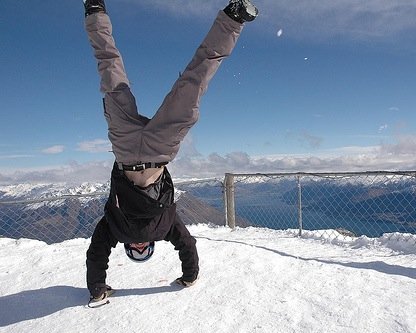
Bodyweight training is not simply a substitute for gym training when equipment is unavailable. It develops qualities that barbell and machine training do not directly address — control, coordination, proprioception, and the relative strength that determines how well the body manages its own weight in space. A trainee who is strong relative to their own bodyweight moves differently from one who is only strong under external load.
Accessible, transferable, and uniquely challenging in its own right.
Available anywhere, anytime. Rest days, travel, early mornings, late evenings — the only requirement is floor space.
Unlike machine-guided resistance, bodyweight movements demand active stabilisation throughout — developing the neuromuscular coordination that external loading cannot replicate.
Bodyweight movements scale by angle and leverage rather than by adding external load — making them particularly adaptable for trainees managing joint conditions.
From a standard press-up to a handstand press-up is a progression as significant as any barbell advancement — the same movement, dramatically increased difficulty.
The bodyweight approach is not a replacement for progressive barbell training — it is a complementary tool that fills the gaps barbell training leaves. For the complete case on building muscle without weights, the dedicated page covers the research and the practical application in full.
Bodyweight conditioning on rest days complements the barbell training of the Minimum Effective Strength System without creating recovery competition — the same principle of maximum stimulus, minimum recovery cost, applied to a different implement.
Seven bodyweight exercises —
covering every major muscle group.
These seven movements form a complete bodyweight training framework. Each can be scaled upward in difficulty by adjusting the leverage — elevating the feet, slowing the tempo, reducing the rest period, or progressing toward a more advanced variation.
-
Press-up
Chest, triceps, anterior deltoids, core
The foundational upper body pushing movement. Begin flat, progress to feet elevated on a chair or box to increase the loading on the upper chest and shoulders. For the full press-up progression through to handstand work, see the advanced section below.
-
Chair dip
Triceps, chest, anterior deltoids
Grip the backs of two sturdy chairs and lower the full bodyweight between them. Unlike the press-up, the feet leave the floor and the upper body performs the entire movement — producing a significantly greater triceps and chest demand. Progress by adding a weighted backpack or slowing the descent phase. For full dip technique guidance, see the dip exercise page.
-
Chin-up or pull-up
Lats, biceps, rear deltoids, grip
The most demanding and most rewarding upper body pulling movement available without equipment — provided access to a bar, a door frame pull-up bar, or a suitable overhead structure. Supinated grip targets the biceps more directly. Pronated grip shifts emphasis to the lats. For the complete progression from first rep to advanced work, see the pull-up progression page.
-
Bodyweight squat
Quadriceps, glutes, hamstrings, core
The foundational lower body movement. When bodyweight squats become easy, progress to single-leg variations — the Bulgarian split squat and the pistol squat both produce significant lower body stimulus without external loading. The Hindu squat provides the aerobic variant that the conventional bodyweight squat does not.
-
Hindu squat
Quadriceps, hamstrings, cardiovascular system
The Indian wrestlers' conditioning exercise — continuous, rhythmic, and aerobically demanding at high repetitions. Unlike the conventional squat, the Hindu squat develops muscular endurance and cardiovascular fitness simultaneously. Forty to sixty repetitions every other day is the practical starting programme. See the Hindu squats benefits page for the complete programme and benefits.
-
Hindu push-up
Chest, shoulders, triceps, back, core, hips
The upper body equivalent of the Hindu squat — a sweeping arc from inverted-V through a forward and upward movement that engages virtually every muscle from the fingertips to the heels. The most complete single bodyweight upper body exercise available. For the full six-step technique guide, see the Hindu pushups page.
-
Plank and side plank
Core, abdominals, obliques, spinal erectors
The anti-extension and anti-lateral flexion core exercises that develop the trunk stability every other movement on this list depends upon. Performed with genuine full-body tension rather than slack endurance, a 20-second plank is more productive than a three-minute one. For the full core training framework, see the best core exercises page.
The handstand press-up —
four steps from static hold to full repetition.
The handstand press-up is one of the most demanding bodyweight shoulder exercises available — requiring extraordinary strength, body control, and the specific neurological adaptation that only comes from consistent progression through the stages below. Each step should be fully mastered before the next is attempted.
A wall is required for all four stages — not as a crutch but as a safety measure that allows the nervous system to adapt to the inverted position without the anxiety of an unsupported hold interfering with the training stimulus.
-
The static hold
Kick up to a wall-supported handstand and hold the position. Begin with a 15-second hold, progressing to 30 seconds, then 60 seconds. This stage develops the shoulder stabilisers, the proprioceptive awareness of the inverted position, and the wrist and forearm strength that the subsequent stages will demand. Do not progress until a 30-second hold is comfortable and consistent. This stage alone produces genuine shoulder development and is worth pursuing for its own conditioning benefit.
-
The partial lowering
From the static hold position, begin slowly lowering the head toward the floor — aiming for two to three inches of descent before pressing back up. This partial range introduces the eccentric demand of the full movement without requiring the strength to complete a full descent and ascent. Hold the lowered position for a count of five before pressing back to the start. Progress until the hold at the partial lowered position is steady and the press back up is controlled throughout.
-
The half repetition
Lower to the halfway point — elbows at approximately 90 degrees — and press back to the start position. This is a genuine partial repetition targeting the range where the shoulders and triceps are most challenged. The descent should take four to five seconds and the ascent should be deliberate rather than explosive. Progress until three to five clean half repetitions can be completed with continuous muscular control throughout.
-
The full repetition
Lower the head fully to the floor — gently, under complete control — and press back to the full lockout position. This is the complete handstand press-up. The first clean full repetition is a significant milestone that takes most trainees weeks or months of consistent practice through the previous stages to reach. It delivers an extraordinary shoulder, triceps, and upper chest stimulus that no machine exercise approaches — because the trainee is pressing their entire bodyweight overhead from a fully inverted position.
The progression from static hold to full handstand press-up is as significant as any barbell advancement — the same movement pattern, dramatically increased demand, built through patient and deliberate practice at each stage. No equipment required beyond a wall and the floor beneath it.
Press-ups, dips, chin-ups, Hindu squats, Hindu push-ups, planks — and for those who want to take it further, the handstand press-up progression. Bodyweight training covers the full training spectrum when approached with the same progressive intent as barbell work. The Minimum Effective Strength System provides the barbell framework. These seven movements provide everything else.