Shoulder Strengthening
Exercises — Press to
Success 1960s Style
The best shoulder exercises are not shoulder-specific
Lateral raises are widely considered the best shoulder exercise. The shoulder press is a close second. Yet the typical trainee consistently struggles to make meaningful gains on isolation-focused shoulder work.
The 1960s approach offers a more effective solution — building shoulder strength without directly training the shoulders at all.
Get strong all over —
the shoulders follow.
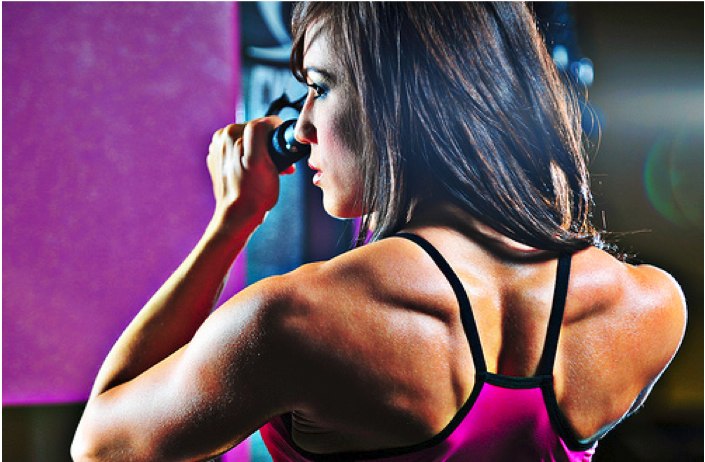
Concern about individual body parts — the size of the arms, the width of the shoulders — should come only after developing considerable whole-body size and strength. Attempting to isolate and develop shoulders before this foundation is in place produces poor results for the effort invested.
The reason abbreviated training is so effective for shoulder development is the same reason it is effective for everything else. Reducing the workout to its skeleton minimum allows complete focus — no distractions, no energy wasted, no excessive demands on recovery. That concentrated effort allows significant loading progression. And significant loading progression in the major compound movements builds the shoulders as a necessary consequence.
Get strong in the compound movements and your shoulders will gain in strength along with the rest of you — without a single isolation exercise.
Make these gains — and how can your shoulders fail to grow?
- Squat +100 lbs
- Deadlift +150 lbs
- Bench press +60 lbs
- Parallel bar dip +50 lbs
- Chin up +30 lbs
Building whole-body strength through a small number of compound movements — and allowing every muscle group to benefit — is the principle at the centre of the Minimum Effective Strength System.
The best shoulder strengthening exercises — in four steps.
-
The deadlift — your primary shoulder builder
The deadlift is one of the best shoulder strengthening exercises available — and most trainees have no idea it qualifies as one. No other exercise works the body's musculature as thoroughly, including the arms and shoulders, making it the natural cornerstone of any strength programme. For technique, see deadlift technique.
-
The shrug — rotate with the deadlift
To minimise excessive inroads into recovery, consider substituting a barbell shrug for the deadlift every few workouts. The shrug directly develops the traps and upper back while giving the posterior chain a partial recovery window. Ignore upright rows and other direct shoulder isolation movements in favour of this proven mass builder — it delivers better results with less joint stress.
-
The dip — the best upper body shoulder builder
If building shoulder strength and chest mass simultaneously is the objective, the parallel bar dip is the first choice. Marvin Eder built one of the finest physiques of his era primarily on the dip. Work up to added weight around the waist as quickly as good form allows. An excellent abbreviated routine for shoulder and overall upper body development pairs the hex bar deadlift with the parallel bar dip — two movements that between them cover every major muscle group including the shoulders and arms.
-
The overhead press — if recovery allows
The barbell shoulder press — standing military press or press behind the neck — is an excellent addition if your recovery capacity accommodates it. The strongmen of the 1960s demonstrated what the movement is capable of: Mel Hennessey at 215 pounds bodyweight performed a strict standing press behind the neck with 300 pounds. Paul Anderson and Doug Hepburn approached 400 pounds. Use big weights on these movements. But only if the rest of your programme is not already exhausting your recovery — the overhead press added to an already full abbreviated programme can accumulate shoulder stress quickly.
These four movements — deadlift, shrug, dip, press — form the core of any serious compound shoulder programme. The Minimum Effective Strength System draws from the same movement library and applies the same principle: get strong in the movements that matter most, and everything else follows.