Best Ways to
Gain Weight —
Start with Training
The best weight gain diet in the world is redundant without the correct training stimulus
Most people searching for ways to gain weight begin with diet — the best foods, the right calories, the optimal macros. The science says they have the order wrong. Training comes first. Diet serves training. Without the correct training stimulus, surplus calories become fat, not muscle.
Here is the correct sequence — and the evidence behind it.
Why training comes first —
and diet serves it.
If anyone tells you that diet is more important than training for weight and muscle gain, their advice has no practical value. This is not a controversial claim — it is a logical one.
The best weight gain diet in the world becomes redundant if the training is ineffective. An excess of calories without the training stimulus to direct them into muscle growth will ultimately be stored as fat. Diet only becomes meaningful in the context of the correct training — as a tool to support recovery and rate of progress after training, not before it.
Training is the first primary requirement. Nutrition is secondary — it only matters in the context of having first employed the correct training stimulus.
The correct training stimulus has one definition: a routine that consistently promotes size and strength increases while allowing sufficient recovery. If your current programme fails to produce measurable progress session to session, the most nutrient-rich diet available will not compensate for it. Fix the training first. The science of muscle building is clear on this point.
A training stimulus that is intense enough to trigger growth, brief enough to preserve recovery, and infrequent enough to allow adaptation — this is the framework the Minimum Effective Strength System is built around. Training that actually produces the stimulus. Diet that serves it.
What the correct training stimulus
produces — two case studies.
Two of the most striking weight gain case studies in strength training history both arrive at the same conclusion: abbreviated training, applied correctly, produces gains that no diet alone could explain.
109 lbs to 185 lbs — 76 pounds gained on three exercises.
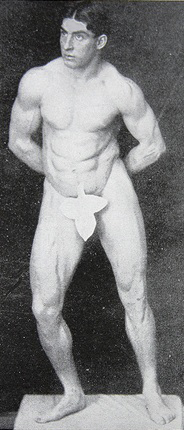
Vim magazine editor Roger Eells — given three months to live following a propeller accident and advanced tuberculosis — built his body from 109 pounds to a muscular 185 pounds using only three exercises and the benefits of deep breathing squats. His programme was abbreviated by necessity. The results were extraordinary by any standard. The training came first. The food that fuelled it followed.
62 pounds gained in one month — 17 pounds converted from body fat.
Nautilus inventor Arthur Jones documented the Colorado Experiment with bodybuilder Casey Viator — one of the most remarkable body composition studies ever conducted. Viator only consumed enough calories to account for 45 pounds of gain. He added 62 pounds. The difference — 17 pounds — came from body fat converted to muscle. The same abbreviated high intensity training approach subsequently produced equivalent results in members of the Denver Broncos professional football team. The evidence for simultaneous fat loss and muscle gain through correct training is compelling.
Healthy weight gain foods —
once the training is right.
Once the training stimulus is established, nutrition serves a specific purpose — providing the raw materials for recovery, repair, and growth. Nutritionist Patrick Holford, writing in The Optimum Nutrition Bible, describes the goal plainly: giving the body exactly what it needs and no more.
For the trainee whose goal is to gain weight and muscle with minimal fat gain, this means nutrient-rich foods in sufficient quantity to fuel lean tissue growth — drawn from the four basic food groups that between them cover every macronutrient and micronutrient requirement.
Balanced, nutrient-rich, sufficient. No more and no less.
- Cereals and grains Complex carbohydrates that fuel training and replenish glycogen stores after sessions. Oats, rice, and wholegrain bread are the most practical sources for most trainees.
- Fruit and vegetables Micronutrients, antioxidants, and anti-inflammatory compounds that support recovery and immune function. Seven or more portions daily is the target for serious trainees — see the five a day research for the evidence behind this.
- Meat, fish, and poultry The primary source of complete protein — the essential building block for muscle repair and growth. Lean sources such as chicken, turkey, salmon, and eggs provide high-quality protein without excessive saturated fat.
- Milk and dairy products Protein, calcium, and caloric density that supports muscle building. Whole milk in particular has a long and well-documented association with weight and strength gain in abbreviated training programmes — from the squats and milk protocol to contemporary research.
Fad diets, extreme caloric restriction, and diet drinks are all counterproductive for the trainee whose goal is weight and muscle gain. For the specific risks involved, see the risk of dieting and gain weight diet pages. The nutritional goal is simple in principle — consistent, nutrient-rich eating in support of a training programme that is producing results.
Training that produces the stimulus. Nutrition that supports recovery. Rest that allows adaptation. These three elements, consistently applied, are the complete answer to the weight gain question — and the foundation of the Minimum Effective Strength System.